The Age of the Chermayeffs: The Hollowing-Out of the Bauhaus and American Cold War Modernism

On 4 December 2017, the Russian-American designer Ivan Chermayeff died at his home in New York, aged 85.
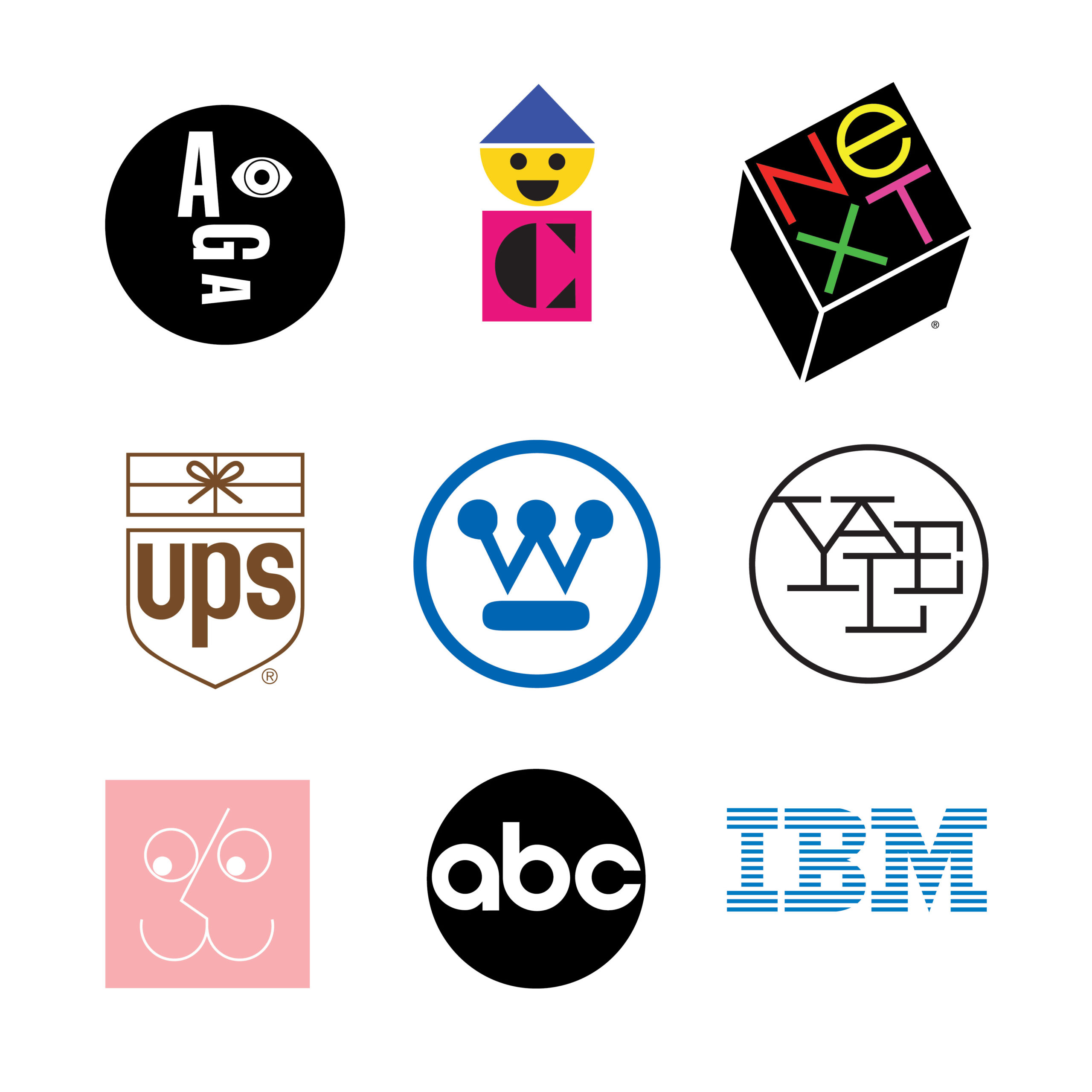
Chinese readers may not be very familiar with the name Chermayeff, but most have seen work that passed through his hands. In 1957 Chermayeff founded the graphic design firm Chermayeff & Geismar with his classmate Thomas Geismar, setting out on a legendary path in the history of graphic design. Chermayeff & Geismar’s work is everywhere on American streets: Chase Manhattan’s blue octagon, National Geographic’s yellow rectangle, NBC’s rainbow peacock, the positive–negative profiles of the Public Broadcasting Service (PBS), the petals of the Environmental Protection Agency (EPA), the red and blue star of the American Bicentennial… Even their short-lived identity system for Pan Am remains a hot item among design collectors today. These identity systems and logos transcended the present of their era. Chermayeff and Geismar were not merely two designers; they became the makers of that era’s collective visual memory.
If readers assume Ivan Chermayeff was a self-made, inspirational success story, they would be badly mistaken.
The entire Chermayeff family belonged to the very top elite of the cultural and creative industries. Ivan Chermayeff’s grandfather, Ivan Issakovitch, was a figure of nineteenth-century Russian high society. Ivan Issakovitch sent his son Serge Issakovitch to boarding school in London, but the October Revolution of 1917 wiped out the family fortune completely. Yet there is always a way out: Serge supported himself by dancing in bars, and actually did rather well at it.
After the October Revolution, Ivan Issakovitch went into exile in Paris, which in turn gave Serge access to the Parisian cultural elite. Serge not only designed and made furniture in Paris but also brought the newest, most fashionable Parisian styles back to Britain. This enormous cultural advantage let Serge rapidly enter British high society. While frequenting London’s private clubs he also met his future wife, Barbara Maitland May. Britain in the early twentieth century was still enjoying the economic afterglow of the Industrial Revolution and imperial colonial expansion, and Serge, with both insight and connections, won fame and fortune alike. He designed the interiors of the BBC’s studios, was a regular designer for the upscale Claridge’s hotel, worked alongside Eric Gill, and was even on brotherly terms with Frank Lloyd Wright. In 1924 Ivan Issakovitch died. The same year, Serge changed his surname to Chermayeff.
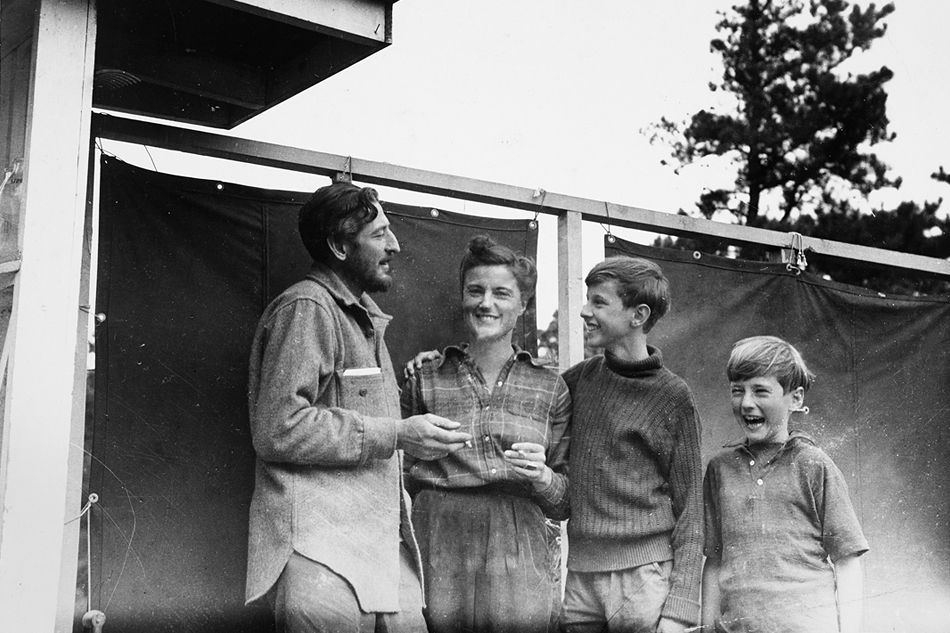
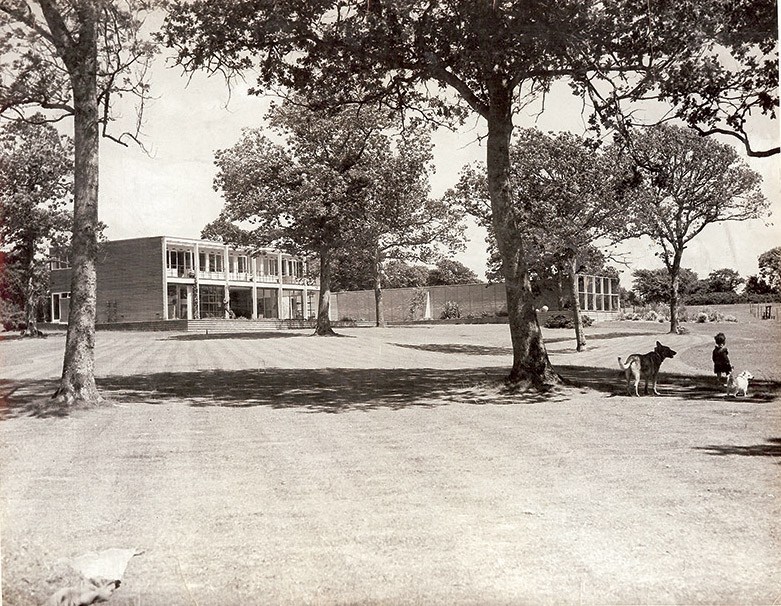
In 1932 he and Barbara welcomed their first son, Ivan Chermayeff. Their second son, Peter Chermayeff, was born in 1935. In 1938 they bought a luxurious estate on the outskirts of London called Bentley Wood, spending their weekends golfing or watching tennis. But the good times did not last: Germany was sinking into the abyss of fascism. In 1939 Hitler brazenly invaded Poland, Churchill took office at a moment of crisis, and 1940 brought the evacuation of Dunkirk. The rapid scarcity of materials left Serge, who made his living from industrial and interior design, with nowhere to turn, and he had to emigrate with his family to the United States. Having gone from luxury to frugality, Serge and Barbara had to run around looking for work, and fortunately a friend was willing to look after their two sons. This babysitting friend was no ordinary person either: Walter Gropius, one of the “Bauhaus refugees” and a resounding name in the history of modernist design. At the time, Ivan was only eight.
Serge soon built up a high-society network in America again. Philip Johnson (the modernist architect) served as witness for their American naturalisation, and Bertrand Russell was a regular guest at their home. Serge first took charge of the Institute of Design in Chicago, and later, at Gropius’s invitation, began teaching at Harvard’s Graduate School of Design in 19521. Ivan and Peter were also their father’s students. After graduating in architecture from Harvard, the two joined several like-minded classmates to form the “Cambridge Seven” (Cambridge Seven), and began taking on architectural commissions.
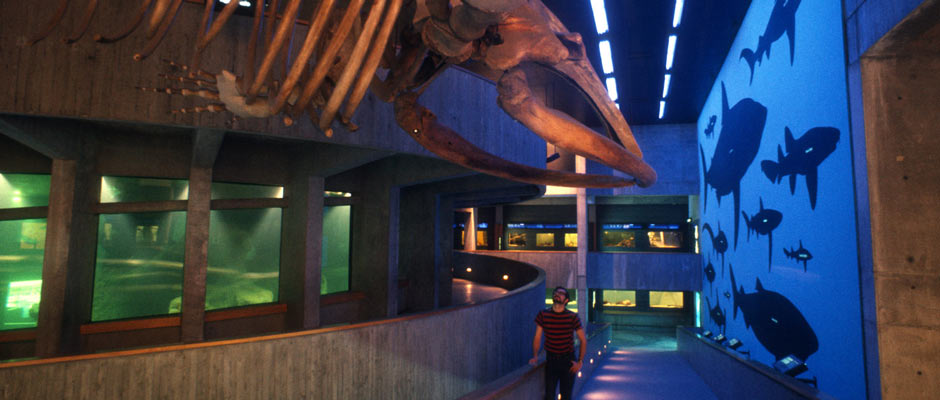
An important early project of the Cambridge Seven: the New England Aquarium in Boston.
But after a while, Ivan felt that architecture took too long to get from idea to reality, and he lacked the patience to follow through and wait. In graphic design, by contrast, the distance between idea and realisation is very short. So in 1957 he brought in his classmate Thomas Geismar and his father’s star pupil from Chicago, Robert Brownjohn (Robert Brownjohn), and founded the graphic design firm Chermayeff & Geismar & Brownjohn in Manhattan. Brownjohn had learned directly from László Moholy-Nagy (the constructivist artist who taught at the Bauhaus) and was Serge’s star pupil; his future had looked bright, but he developed a drug addiction and in 1960 left for Britain, where drug controls were looser.
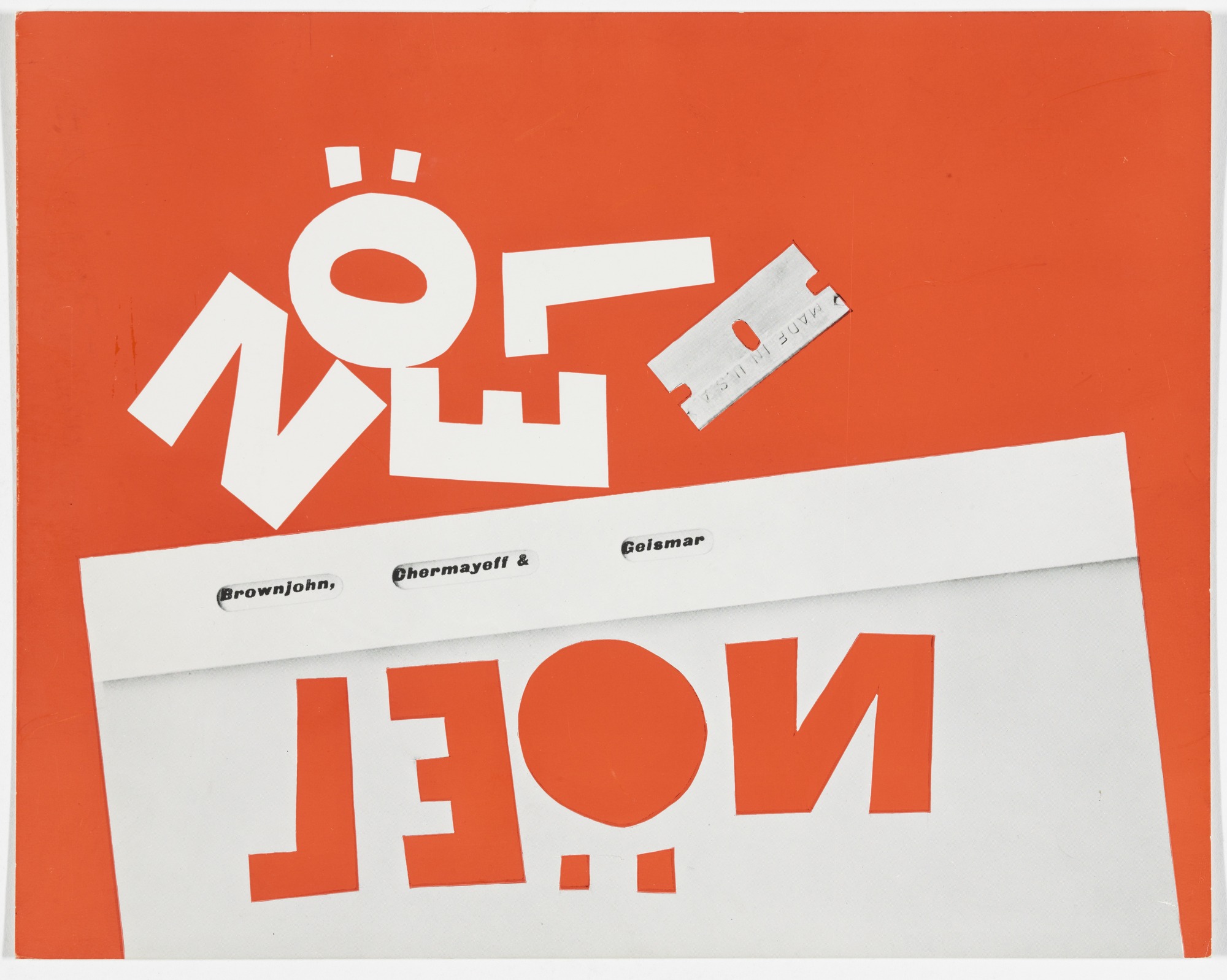
Christmas card by Brownjohn, Chermayeff and Geismar, lithograph (c. 1957–1960) (Image: MoMA)
So the firm’s name became Chermayeff & Geismar. Ivan came from a prominent family and Thomas was a Yale graduate; moving in high society, the two quickly landed business. In 1961 came Chase Manhattan, and three years later they designed Mobil. PBS, Pan Am, Xerox, Time Warner, the Museum of Modern Art, Barneys New York… The combination of talent, connections and savvy made Chermayeff & Geismar’s business soar unstoppably. Their extremely simple and direct approach, cool and rigorous grid systems and control of proportion laid the foundations of twentieth-century corporate identity. Those logos, carried by the forces of commerce, culture and technology, spread to every corner of America.
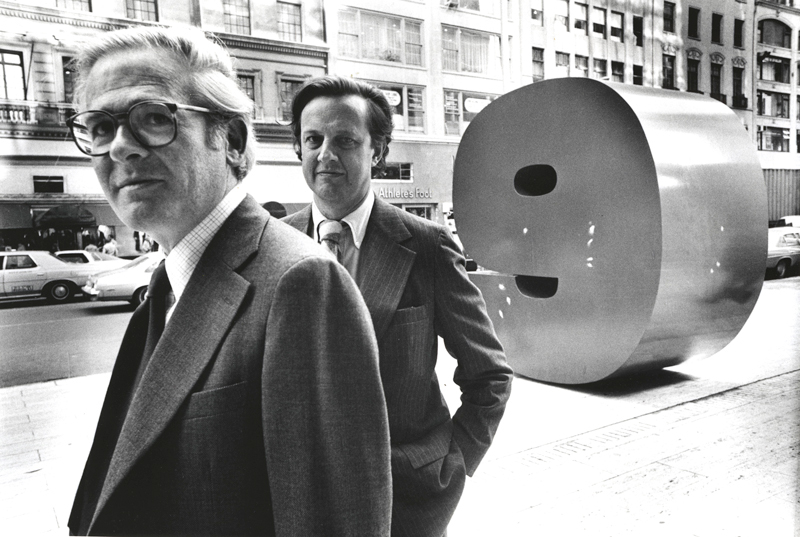
Most design history articles would wrap up here, or perhaps mention Ivan’s accomplished children2. But let us pause here: any history of graphic design is a history of society, culture, politics and economics, and even more a history of people. Let us look back at the historical context in which Chermayeff & Geismar operated.
Cold War Modernism: Origins
While Serge Chermayeff was still dancing the tango in London’s dance halls, the world order was undergoing tumultuous change. In the first two decades of the twentieth century, the First World War had just ended; machines had for the first time shown their power to kill, and all of Europe trembled. Capitalism was flourishing, and with labour protections still inadequate, the resentment and anger of the poor at the bottom of society were ready to explode. Japan had already undergone the Meiji Restoration, and its economic and military strength rose along with its imperialist ambitions. China was suffering colonial aggression, and the May Fourth Movement in Beijing had just ended. In this historical setting, Russia’s famous October Revolution broke out in 1917 and established a communist regime. In 1919 and 1922 the Comintern and the Soviet Union were founded in turn. A state under the dictatorship of the proletariat rising in the east of Europe was undoubtedly a shot in the arm for the lower classes everywhere. Not only was the Chinese Communist Party founded in 1921, but Germany, close on the heels of the October Revolution, erupted in the November Revolution of 1918, clearing the way for the Weimar Republic while also planting the seeds of the Nazis’ later rise. This revolution swept the whole country, and some regions even saw autonomous regional republics, such as the Bavarian Soviet Republic in Munich. The founding of the Soviet Union also fired up the Hungarians, who established a Budapest soviet in 1919; even the famous literary theorist György Lukács served in that regime’s education ministry.
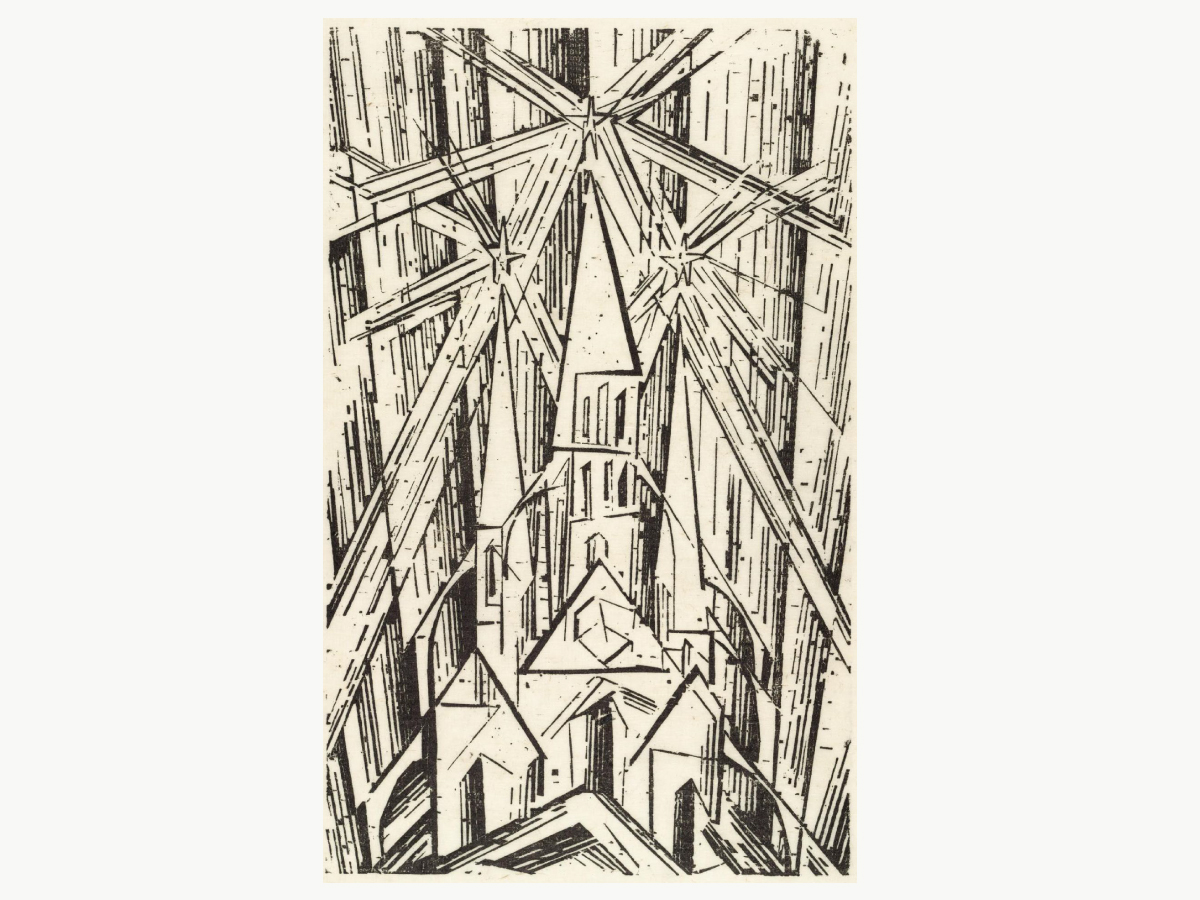
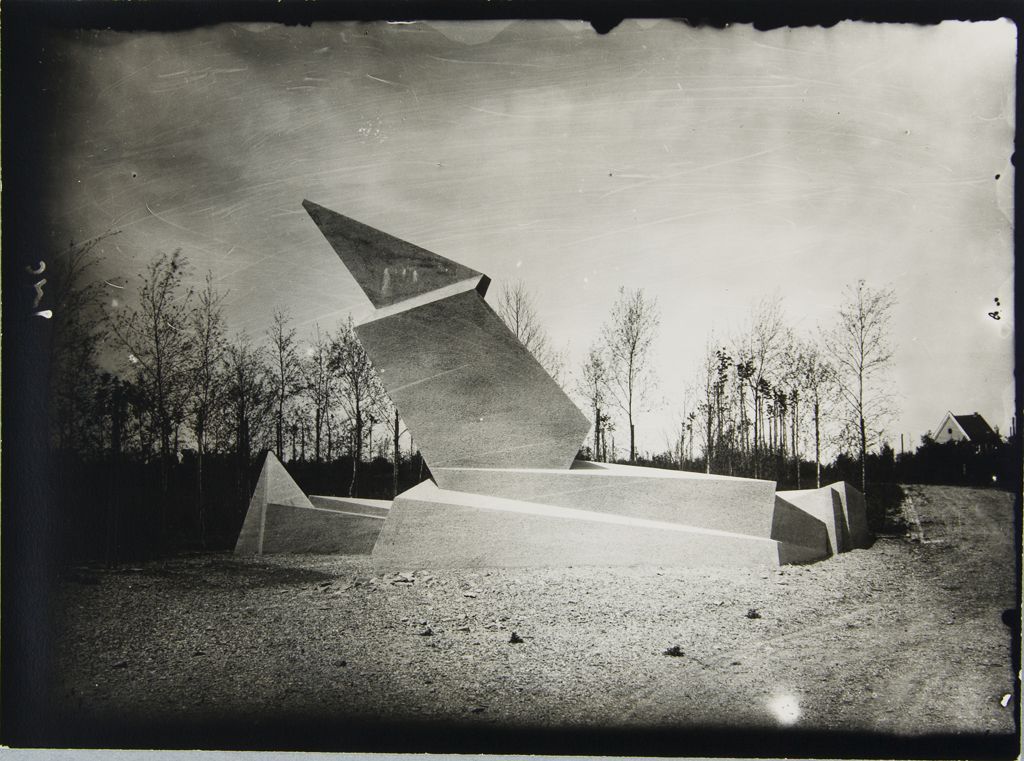
The proletarian world revolution of this era was, just as Lenin hoped for the Comintern, “a single spark that can start a prairie fire.” The Bauhaus was born amid these great historical ups and downs. Encouraged by Henry van de Velde (Belgian artist and furniture designer, a key figure of Art Nouveau), Walter Gropius took over the Weimar School of Applied Arts in 1919 and renamed it the Bauhaus. The Bauhaus of this period, on the one hand, inherited the legacy of the British Arts and Crafts movement and harboured illusions about restoring a simple medieval way of life—the cathedral woodcut Gropius used on the cover of the Bauhaus Manifesto is clear proof; on the other hand, it firmly followed a proletarian line. The school emphasised architectural education, but what it pursued was the “art of building” (Baukunst), not the feudal-aristocratic or bourgeois “architecture” (Architektur). After large-scale workers’ strikes broke out in Berlin, Gropius erected a monument on behalf of the Bauhaus to the workers who had died—strong evidence of the Bauhaus’s political stance in this period.
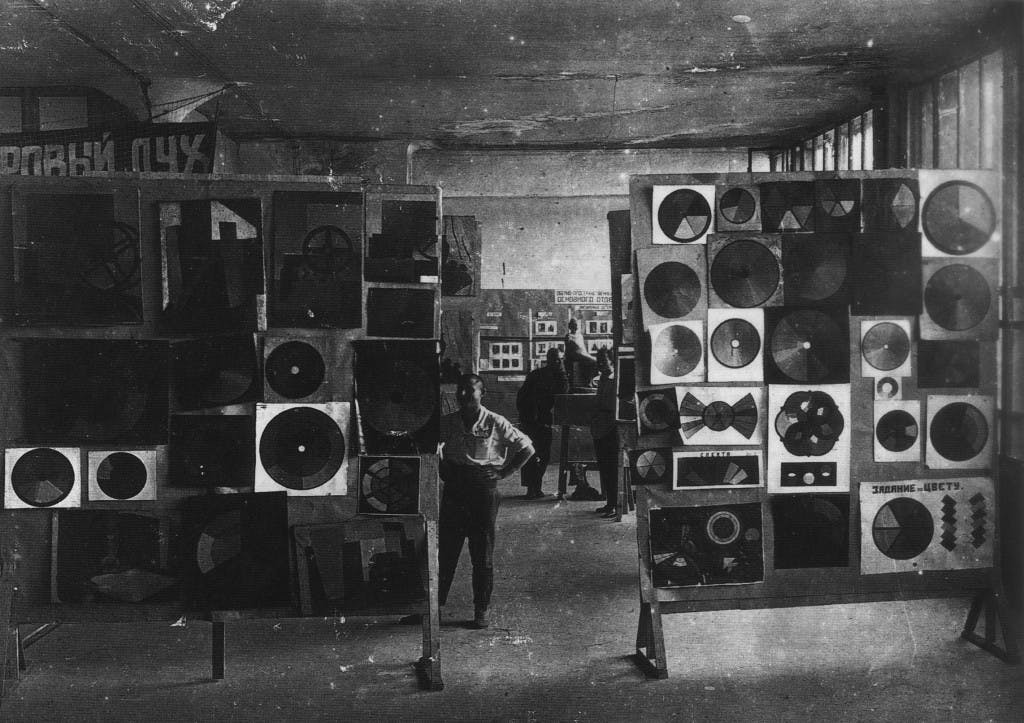
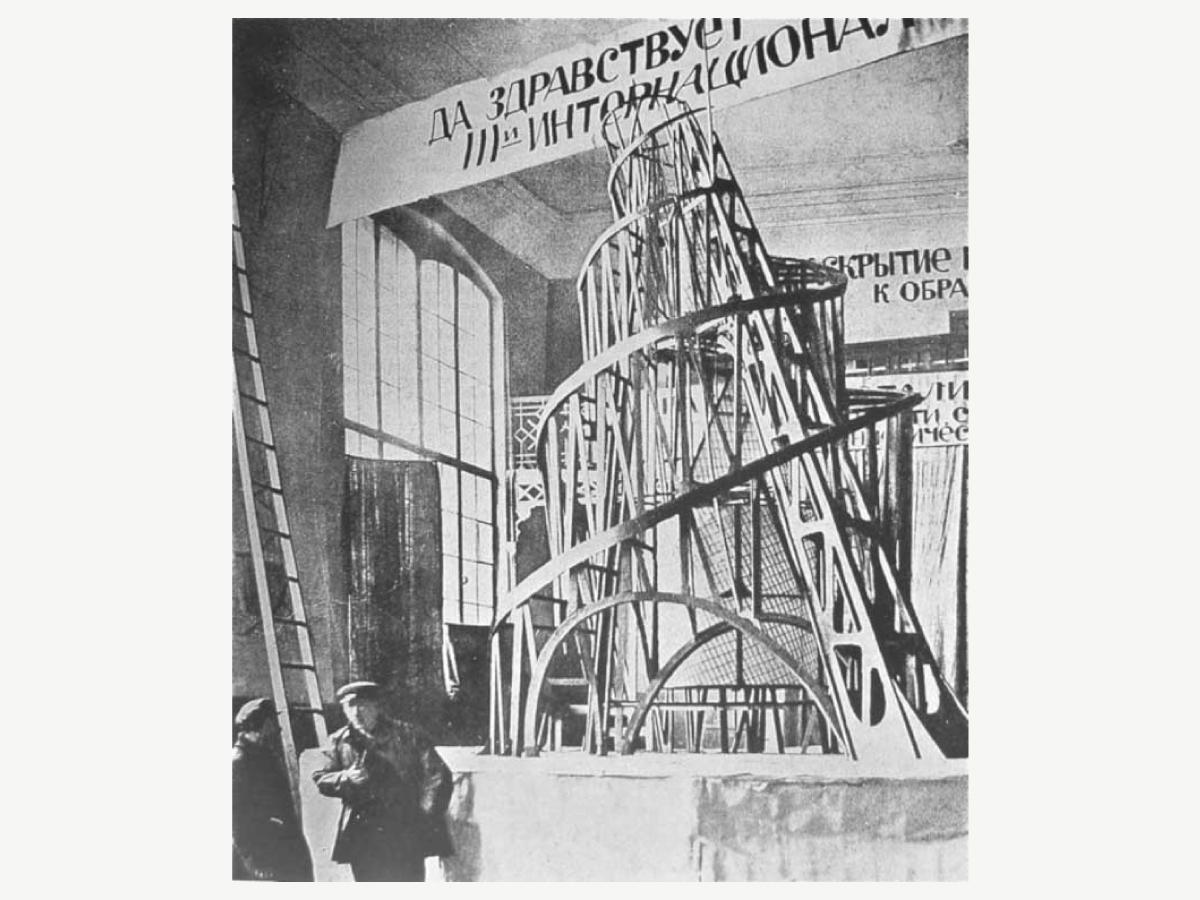
On the other side, Russia founded the Institute of Artistic Culture in 1920, known by its Russian abbreviation Inkhuk (Institut Khudozhestvennoi Kulturi), and soon afterwards the Higher Art and Technical Studios in Moscow, known as Vkhutemas (Vysshiye Khudozhestvenno-Tekhnicheskiye Masterskiye). Contrary to what many readers might imagine, while Lenin was in power he hardly interfered with the country’s art at all; as long as artists did not openly oppose the communist regime, the government not only left them alone but might even fund them. So although Russia was materially deprived and ravaged by war, in such an open political climate the visual arts developed very rapidly. As a government body and an institution of higher education, Inkhuk and Vkhutemas nurtured the first generation of constructivist artists, including Wassily Kandinsky, the Rodchenkos (Aleksander Rodchenko and Varvara Stepanova), El Lissitzky, Vladimir Tatlin and Kazimir Malevich.
Both the Bauhaus and Vkhutemas explored art, aesthetics and industrial production with government support, and their left-leaning political lines coincided. In the 1930s, the Bauhaus even had friendly exchanges with its Soviet predecessor3.
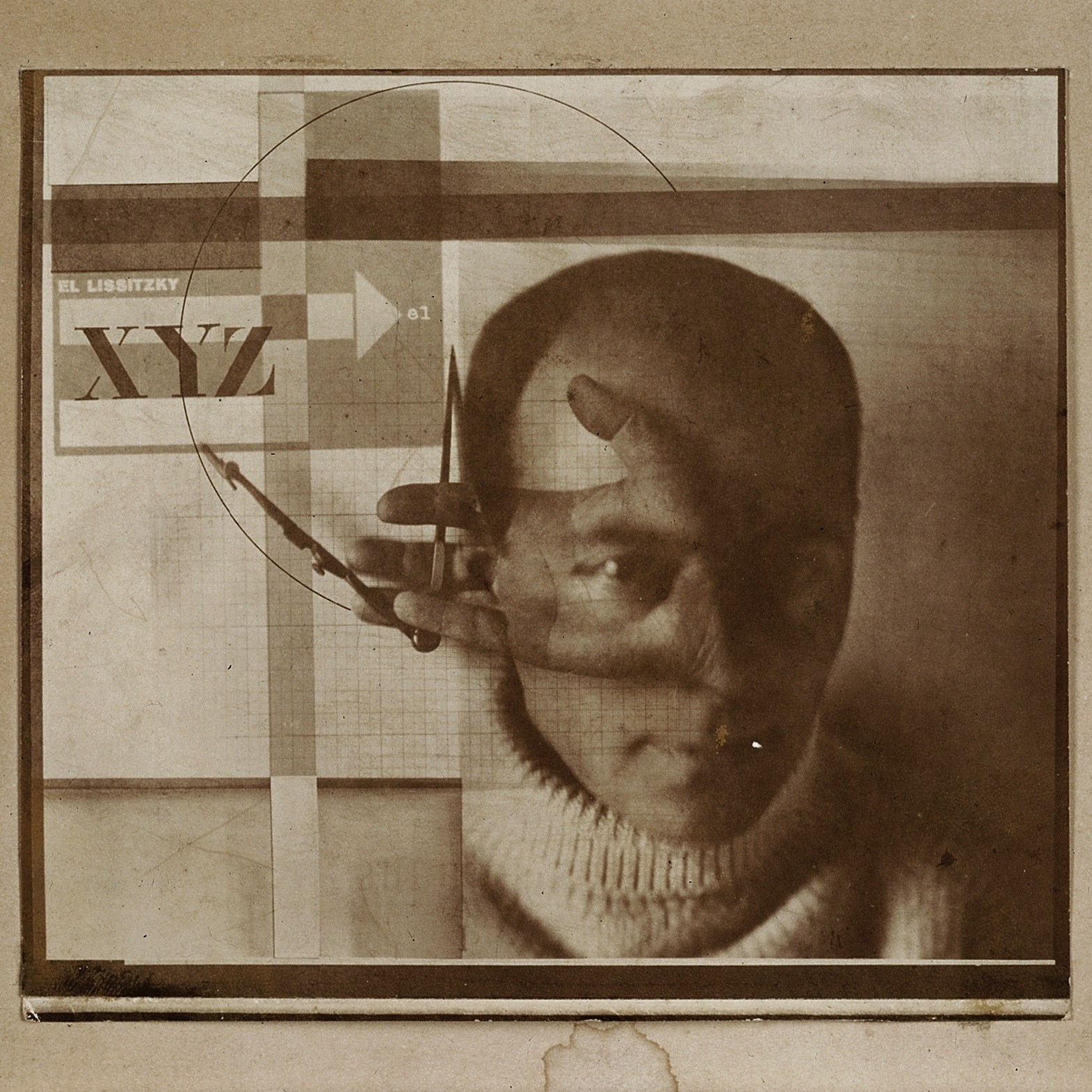
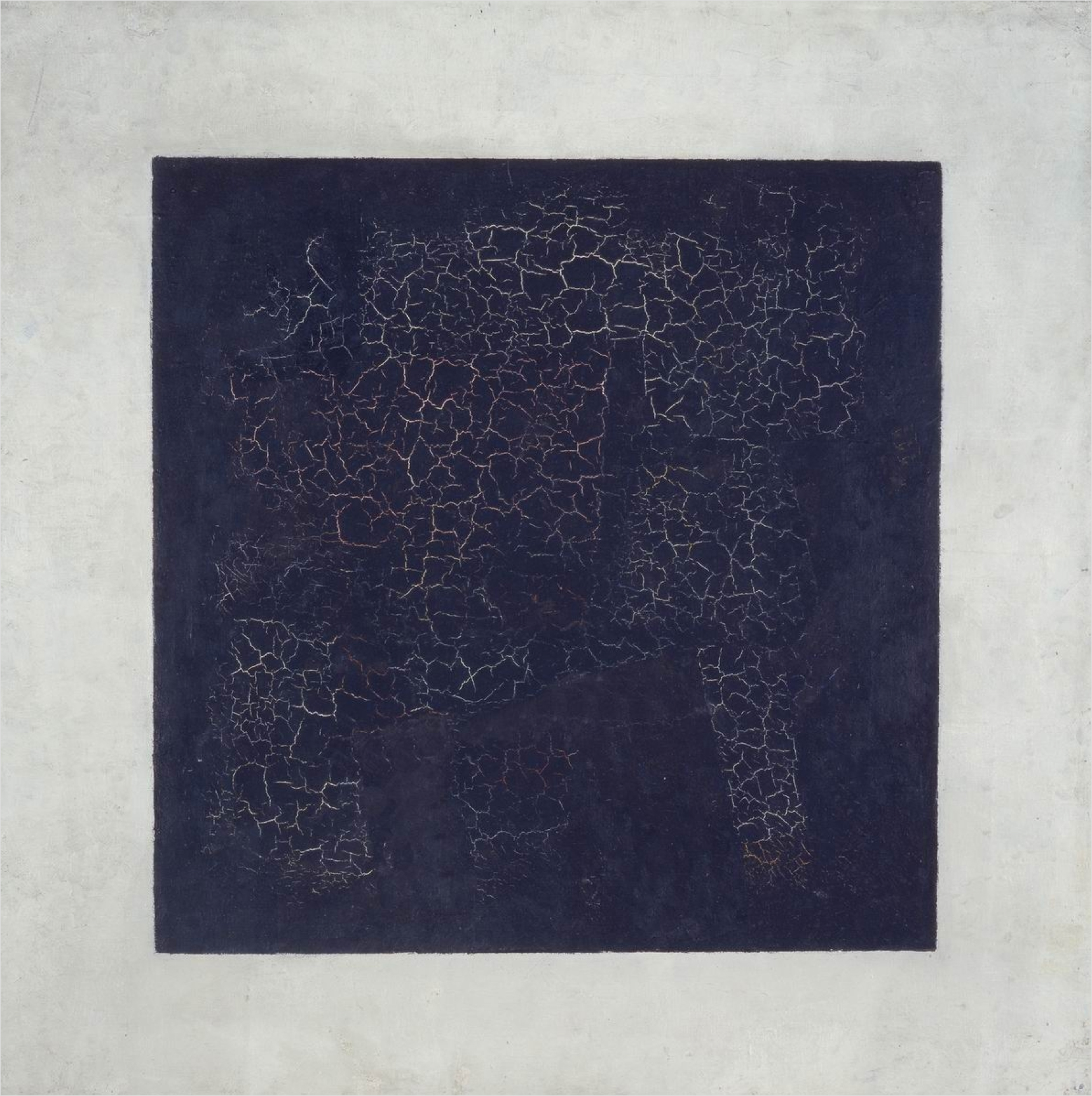
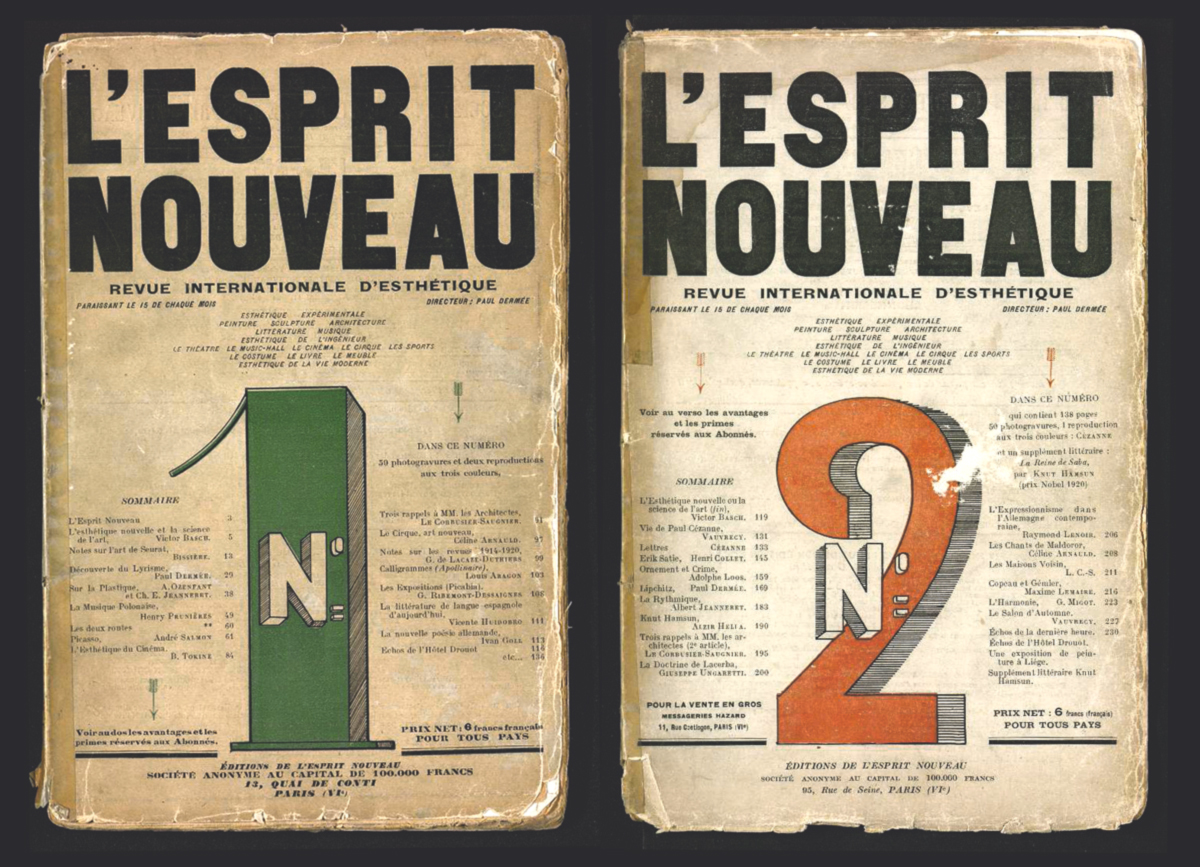
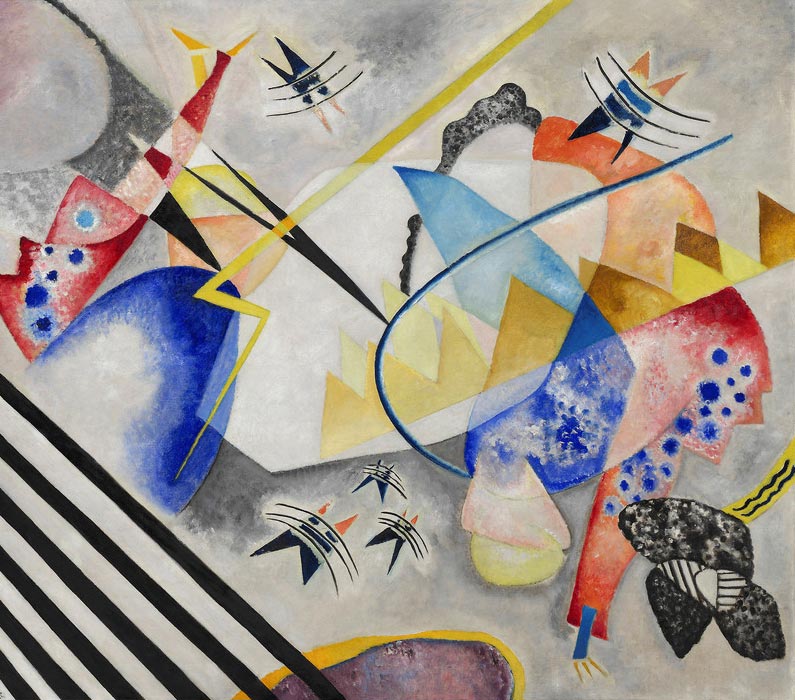
Even setting aside the participants’ political concerns, the art and literature of this period displayed a storm-and-stress modernity. Ulysses and The Waste Land arrived one after the other, and Stravinsky was flexing his muscles. In 1920, Charles-Édouard Jeanneret changed his name to Le Corbusier and, together with Ludwig Mies van der Rohe, proclaimed his architectural ideas to the world in the magazine L’Esprit Nouveau. Of course, the Russians were not idle either. Around 1921, the constructivists at Inkhuk began to split into two camps. One, represented by Kandinsky and Naum Gabo, held to constructivist art’s pursuit of space, movement and rhythm; the other became Productivism, which held that painting had reached its end and that art would from then on be embodied in the objects of everyday life, and so turned to industrial and graphic design—this camp included the Rodchenkos and Tatlin. Finding no outlet for his art in Russia, Kandinsky decided to move to Germany and took up a teaching post at the Bauhaus in 1921. In 1922, with government funding drying up and its artistic direction unclear, Inkhuk came to its end and closed.


In the same year he founded the school, Gropius brought in the painter Johannes Itten to teach the Bauhaus painting course. Perhaps linked in some way to the Arts and Crafts residue of the early Bauhaus, Itten’s teaching philosophy was grounded in subjective idealism, mysticism and individual sensory experience. For Itten, form, movement and colour in painting could profoundly affect a person’s psychology and physiology; his fundamental idea was that by feeling the ineffable beauty of painting, the individual could find inner peace in a mechanised modern world. Itten admired mysticism and Eastern philosophy so much that he even imposed vegetarianism in the Bauhaus canteen.
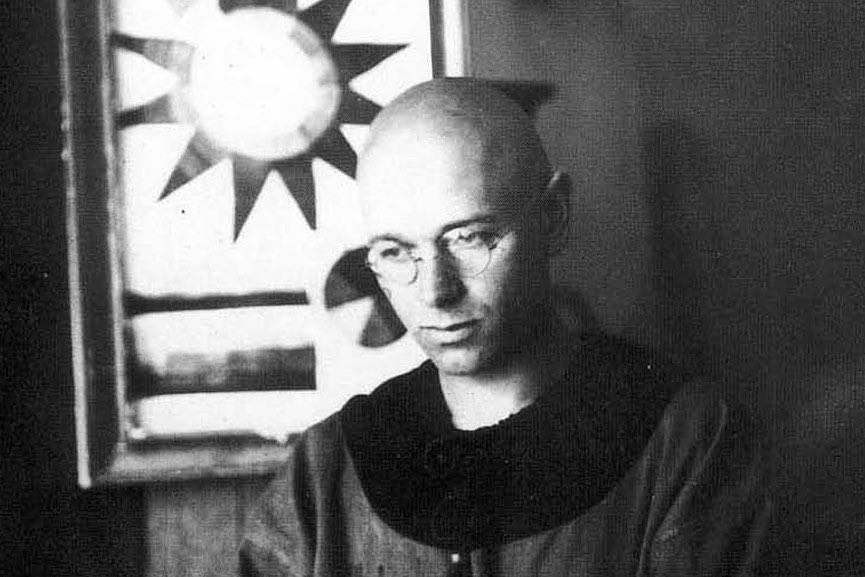
Johannes Itten (Image: Bauhaus Movement Network)
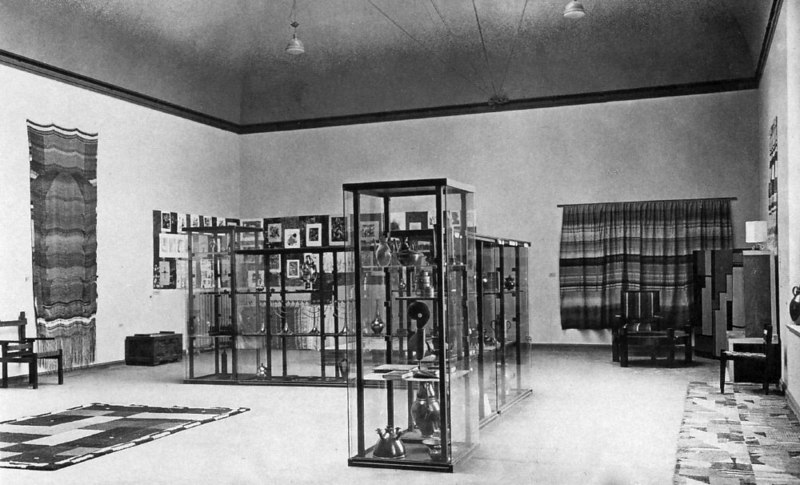
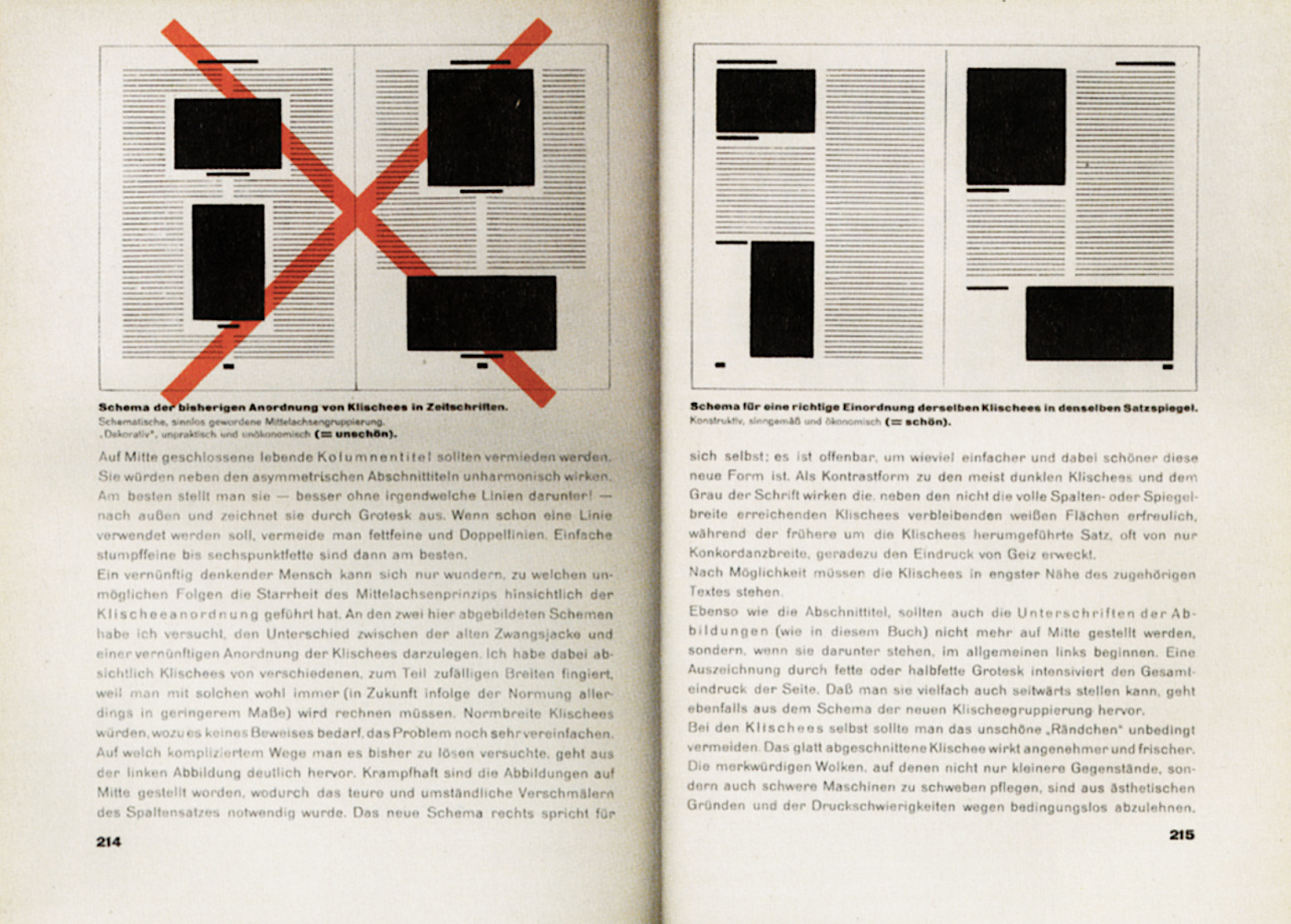
Of course, this bohemian tendency also threatened the Bauhaus’s survival throughout its early years. After all, the local German bourgeoisie still retained great power after the social upheaval, and they had always been wary of the Bauhaus bohemians. This was the moment for the Dutch De Stijl artist Theo van Doesburg to enter the stage. He was irreconcilably opposed to Itten’s individualism, emphasis on the senses and mysticism, arguing that art should serve to “organise human existence” and arrange people’s lives, and he championed reason, technology and the power of the machine. Pressure from local residents and government became an endless supply of ammunition for van Doesburg’s polemics. In the fierce struggle Itten was finally defeated, and he resigned from the Bauhaus in 1923. His departure symbolised the Bauhaus finally abandoning the utopian fantasies of Arts and Crafts and connecting with the modern spirit of large-scale industrial production. The vacant post went to another name: László Moholy-Nagy, a Hungarian who had fled to Germany to escape the turmoil of the First World War. But even with Itten replaced, the local government’s suspicion of the Bauhaus would not subside so quickly. As a public educational institution, the Bauhaus took government money, and naturally had to show some teaching results to prove the money had not been wasted. Moreover, in the eyes of its peers, the Bauhaus had only ever pursued a style of flat roofs, white walls and boxes; even L’Esprit Nouveau criticised it bluntly. Under double pressure from peers and the outside world, the Bauhaus finally held an exhibition of its teaching results. The exhibition had two highlights. The first was the slogan Gropius formally proposed: “Art and Technology – a New Unity.” It meant the Bauhaus moving further away from expensive, lavishly made handicrafts and towards designing and selling industrial products that more people could afford. The second was that it greatly inspired a young visitor, Jan Tschichold; inspired by it, in 1928 Tschichold would publish his impassioned The New Typography (Die Neue Typographie).
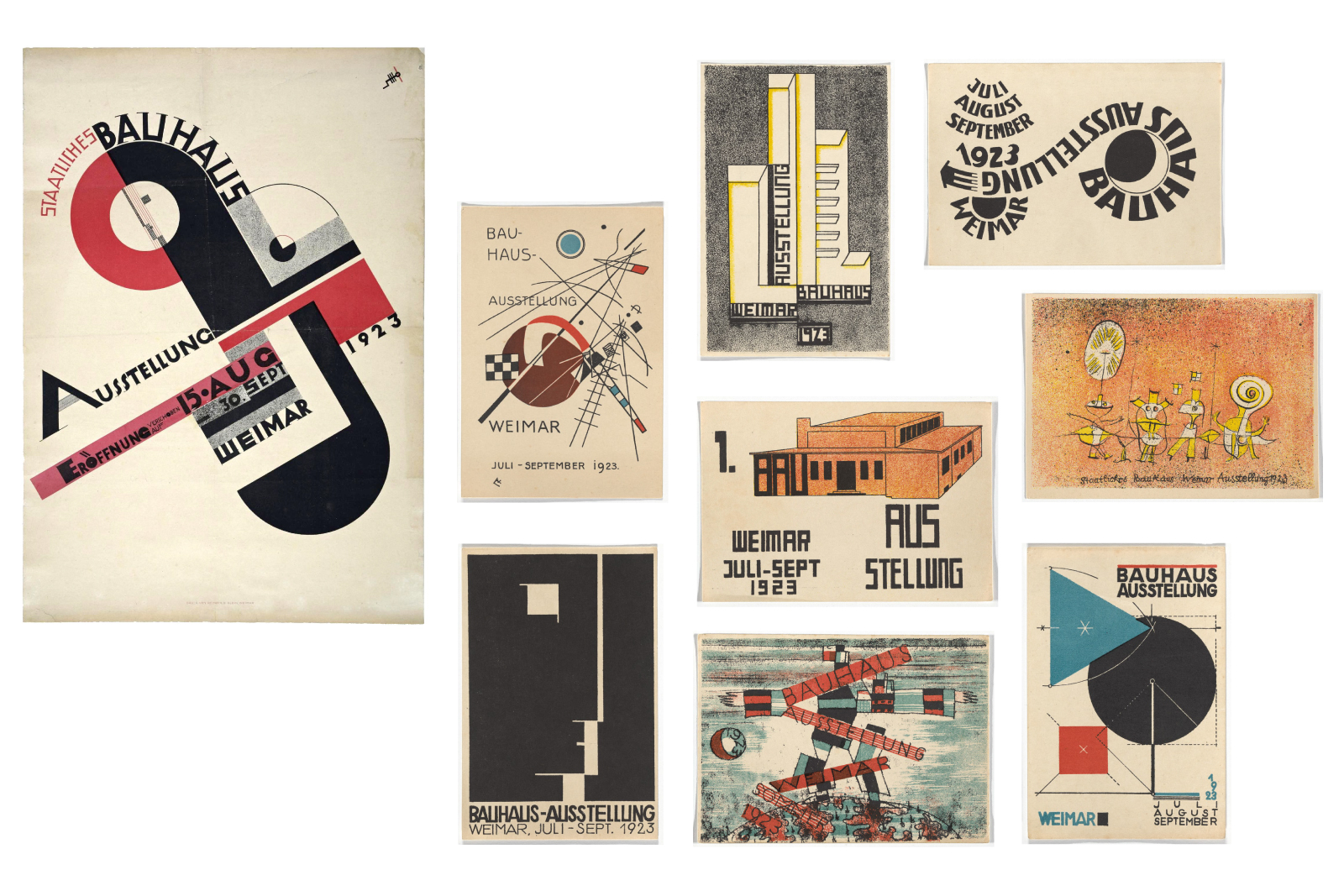
On 21 January 1924, Lenin died. This was undoubtedly a heavy blow to the Comintern’s ideal of a world soviet revolution; at the same time, the temporarily stable economies of European countries after the First World War dampened revolutionary fervour and gave the bourgeoisie and right-wing politicians a chance to strike back. This was especially so in Germany: Hitler’s Beer Hall Putsch took place at the end of 1923, and by the Reichstag elections of May 1924 the Nazi Party already held a considerable number of seats. It is therefore understandable that the Weimar Bauhaus, after operating for only a little over a year, temporarily closed under pressure from right-wing local politics and financial strain. In the autumn of 1925, the entire Bauhaus faculty and student body moved to Dessau. The Bauhaus as generally understood by later generations in fact refers only to the Dessau Bauhaus of this period.
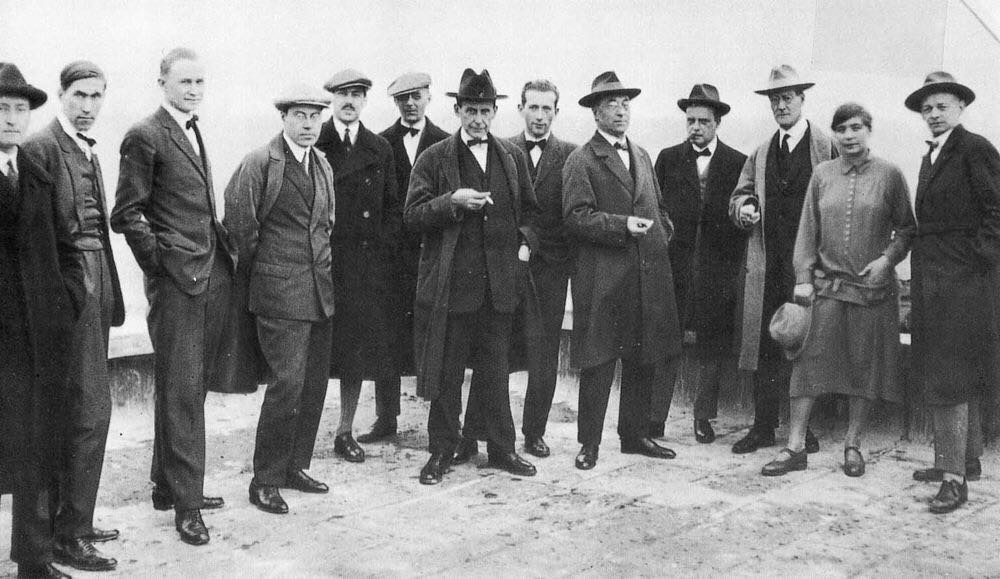
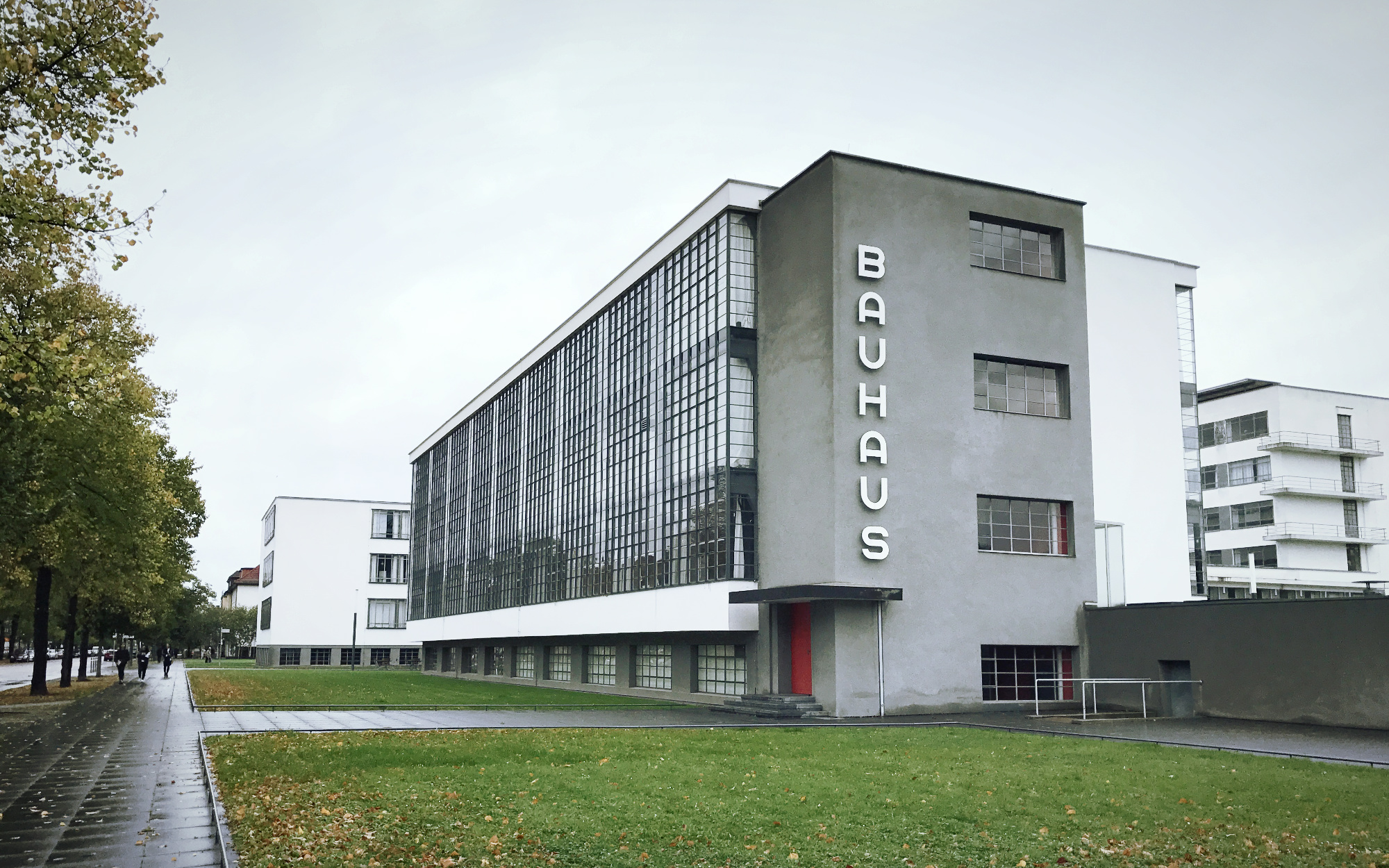
In 1927, as modernist architectural ideas gradually matured, the Bauhaus established an architecture department and hired the Swiss Hannes Meyer as its head. In April 1928 Gropius stepped down and handed the directorship to Meyer4. But Gropius could never have imagined that the olive branch he held out to Meyer would later become the root of the Bauhaus’s decline.
The Bauhaus under Gropius set out to study the “techniques” of design and the “objects” design produces; Meyer looked further. He understood that architecture must both serve people and coexist with them; design concerns not only methods of making, but also what place the finished product holds in individual lives, what impact it has on society, and how it integrates with human existence. In June 1928, the Congrès internationaux d’architecture moderne (CIAM), led by Le Corbusier, was founded in Switzerland. Meyer spoke at the meeting and sharply criticised the attending architects’ fixation on mass industrial production, on “assembling houses from prefabricated parts” and on the flat-roofed white box. Instead, he stressed the locality of architecture—building should use local materials rather than rely entirely on characterless, mass-produced components; building methods should be adapted to local conditions and made to measure, rather than dictated by some rational spirit in the architect’s mind. In hindsight Meyer was clearly on the losing side at CIAM, but at the Bauhaus it was a different story. He all but overturned Gropius’s policies and educational spirit, and drove out Kandinsky, Albers and Bayer.
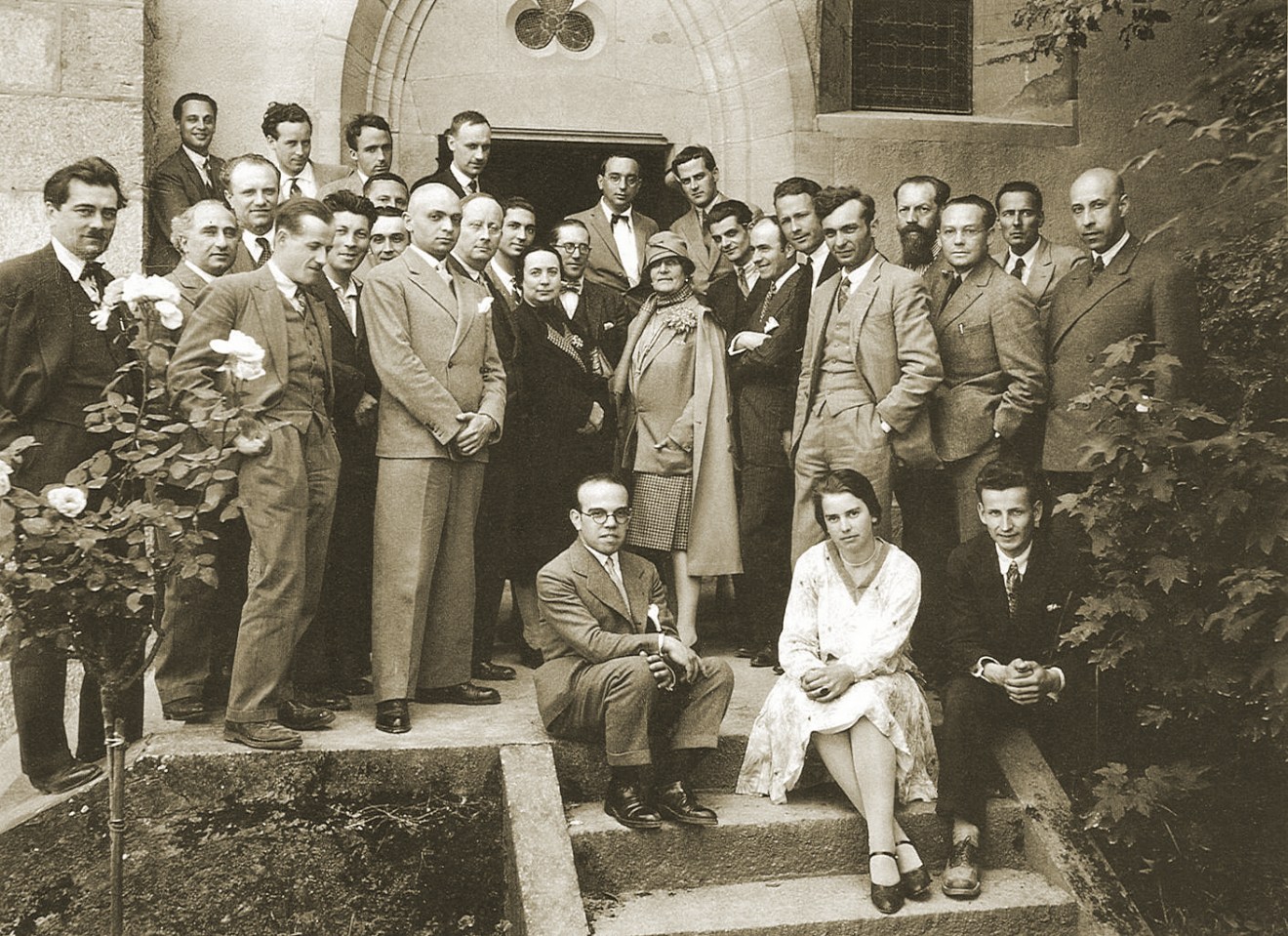
CIAM group photo, 1928; second from left in the front row is Meyer (Image: The Charnel-House)
Although left-leaning genes had been engraved deep in the Bauhaus’s bones since its founding, Gropius had striven to keep it politically neutral so that it would not fall victim to power struggles; Meyer can be said to have stood at the opposite pole. His vision, reaching beyond the material present, led him—and the Bauhaus—into the whirlpool of political struggle. Under him, Marxist theory became part of the curriculum, and student thinking became more politicised and radical, at times to the point that even Meyer could not control it. Given Germany’s increasingly dangerous political climate, the Bauhaus’s future was undoubtedly precarious. So in 1930, Kandinsky and Albers, who had been forced out, together with Gropius, who had just resigned of his own accord, persuaded the mayor of Dessau to remove Meyer from the directorship. The disappointed Meyer, holding on to his ideals of the Soviet revolutionary cause, left to teach in the Soviet Union.
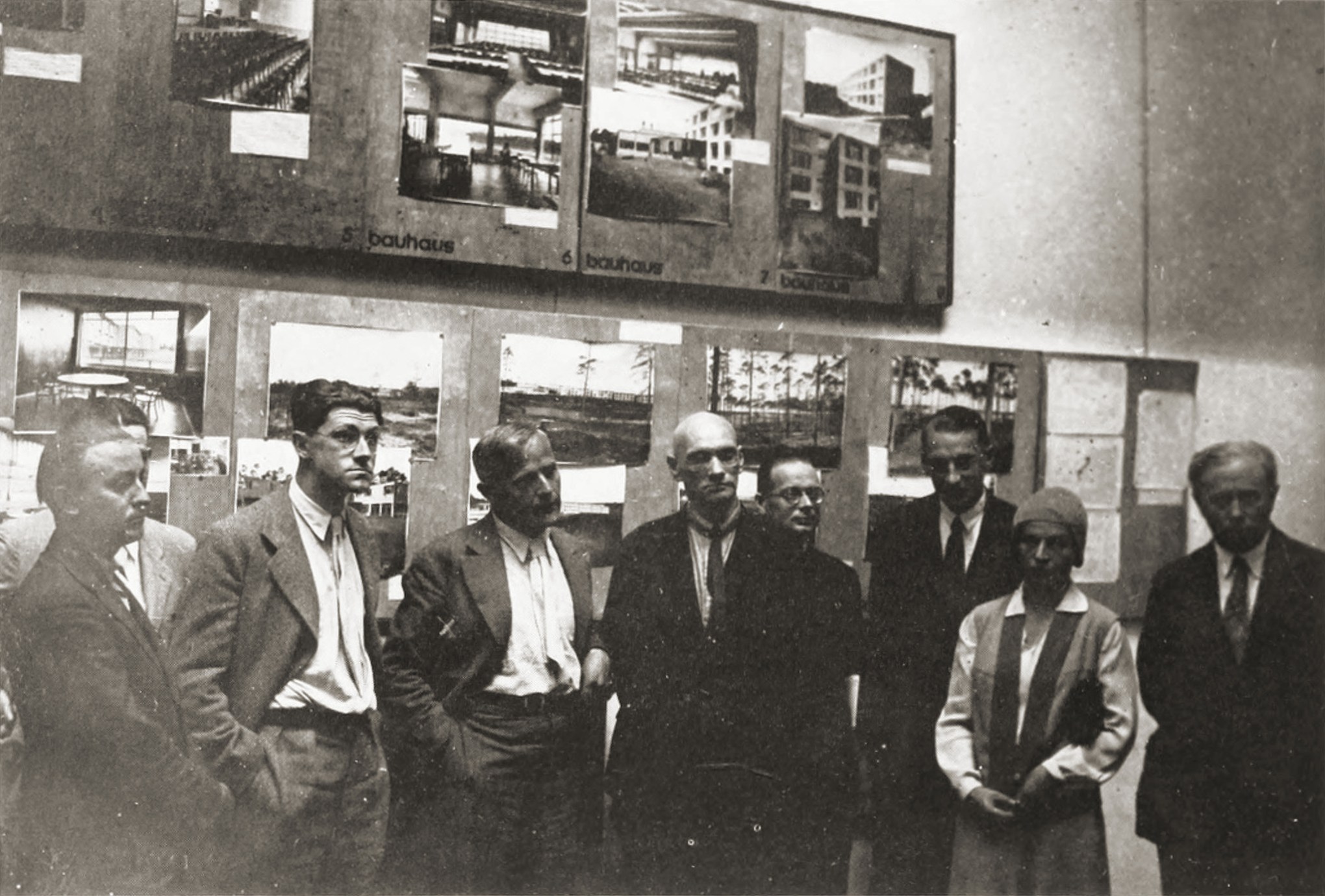
Meyer at the Bauhaus exhibition in Moscow, 1931 (Image: The Charnel-House)
Meyer was succeeded by Gropius’s old friend Mies van der Rohe. Mies was well aware of the Bauhaus’s political situation and took office with a plan of “total depoliticisation.” As soon as he took over he interviewed every student; anyone found to have radical political leanings was expelled, and he forcefully stopped and banned political gatherings on campus. But his reforms and personal efforts still could not save the Bauhaus. After the Nazi Party came to power in 1931, the first thing it did was get rid of this left-wing school. After the Bauhaus closed in Dessau, the school moved to the outskirts of Berlin and operated briefly, until the Gestapo shut the Berlin school too in 1933. Vkhutemas, mentioned earlier, fared little better. As one can imagine, the abstract and avant-garde art Vkhutemas pursued was incompatible with Stalin’s heroic realism, and the label of “impractical capitalist roaders” was quickly slapped on it. In 1927 Vkhutemas was renamed Vkhutein and given a more conservative director; in 1930 it was finally dissolved under political pressure from many quarters.
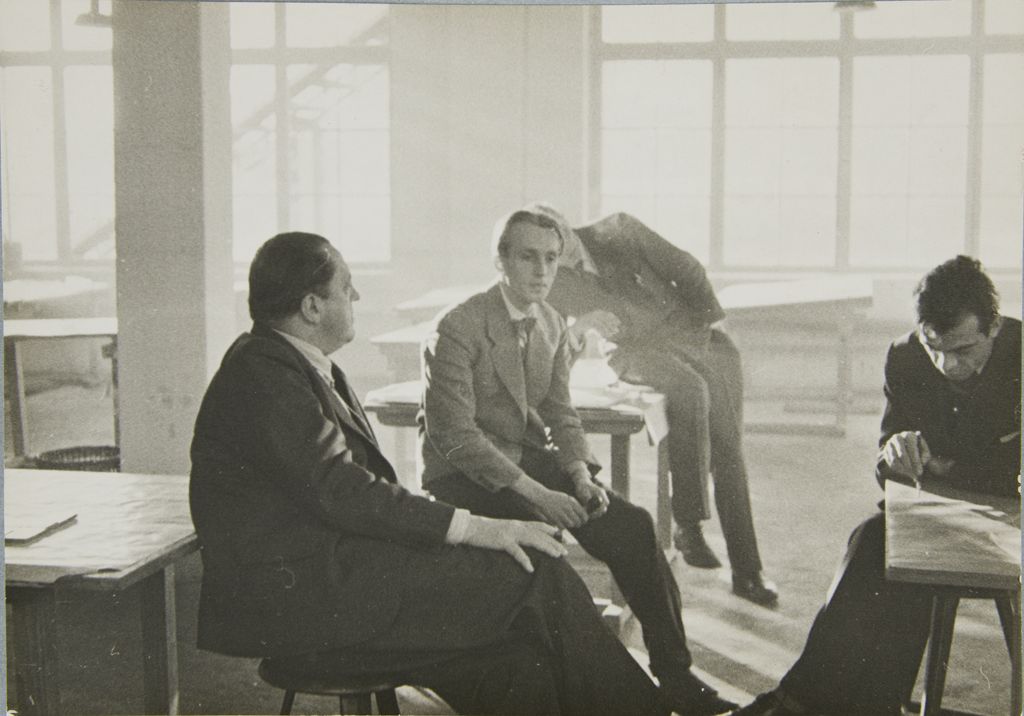
Mies van der Rohe (far left) with students at the Berlin Bauhaus (1933) (Image: Harvard Art Museums)
In the year the Bauhaus was formally dissolved, the Gestapo also threw Jan Tschichold into prison. After his release, Tschichold, feeling that Germany was no place to stay, hurriedly fled with his family to Switzerland, where he eventually died of cancer in Locarno. Kandinsky, drawn by the relatively mild political climate of Paris, went to France in 1934 and spent the rest of his life there. The same year, Gropius and Breuer escaped to the United States, settled in Massachusetts, and began teaching in Harvard’s architecture department in 1937. Also in 1937, at the invitation of the American industrialist Walter Paepcke, Moholy-Nagy went to Chicago to found the New Bauhaus (the Institute of Design where Serge Chermayeff would later teach); in the same year Mies left his partner Lilly Reich behind and went to Chicago at Philip Johnson’s invitation. The New Bauhaus later became part of the Illinois Institute of Technology, whose architecture department Mies headed. A year later, Herbert Bayer went to New York, and in 1946 he too met Paepcke. In the same period that these “Bauhaus refugees” fled to America, the young Serge Chermayeff and his family also came to the United States.
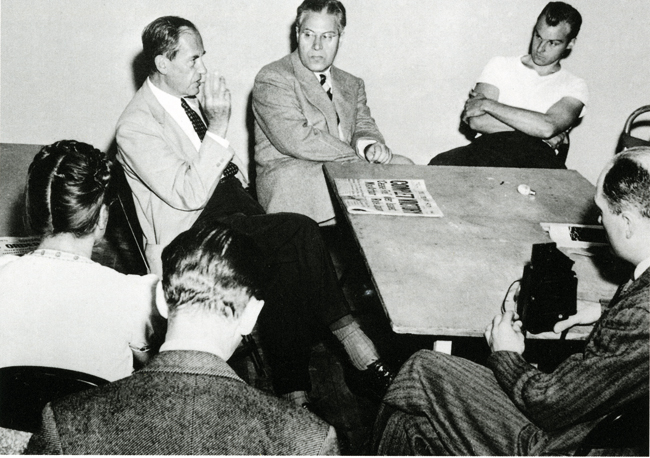
Gropius (left) and Moholy-Nagy (centre) at the Institute of Design, Chicago (c. 1950s) (Image: robertbrownjohn.com)
Cold War Modernism: Development
The middle three decades of the twentieth century were full of undercurrents. The Second World War ended in 1945 with the explosions of two atomic bombs, and the United States and the Soviet Union, represented by NATO and the Warsaw Pact, quickly entered a state of cold war. In the Soviet Union, Stalin succeeded Lenin and pursued a cultural policy opposite to Lenin’s, using ideology to direct art; Soviet modern artists were sidelined and even persecuted. The “Soviet heroic realism” now familiar to Chinese readers—still carried on in North Korea and filled with glorious, upright images of workers and peasants—began at that time. In the United States, anti-communist fear led by Senator Joseph McCarthy soared as the Cold War took shape, and loyalty review boards of every kind were set up; meanwhile, America’s export of capitalist ideology accelerated with the Marshall Plan—in other words, the cultural Cold War.
Cold War modernism developed within this strategy. Below we follow two threads: one tells how the image of the Bauhaus was whitewashed and hollowed out after the war; the other traces the connections among the Bauhaus émigrés, Ivan Chermayeff, the IDCA and the USIA.
The Depoliticisation of the Bauhaus in America
America’s cultural Cold War strategy could not ignore Germany. For both the United States and West Germany, the first goal was denazification, but culturally almost all German art had been tainted by the Nazis and could not easily be propped up again. Ironically, the Bauhaus found favour with the Americans precisely because it had closed early and so escaped further Nazi taint. In 1937 the Nazi Party staged the “Degenerate Art” exhibition to smear modernist art and design, but after the war this very exhibition made it easy to cast the Bauhaus as an innocent victim, helping to seal Germany’s Nazi past away in a corner of history as quickly as possible.
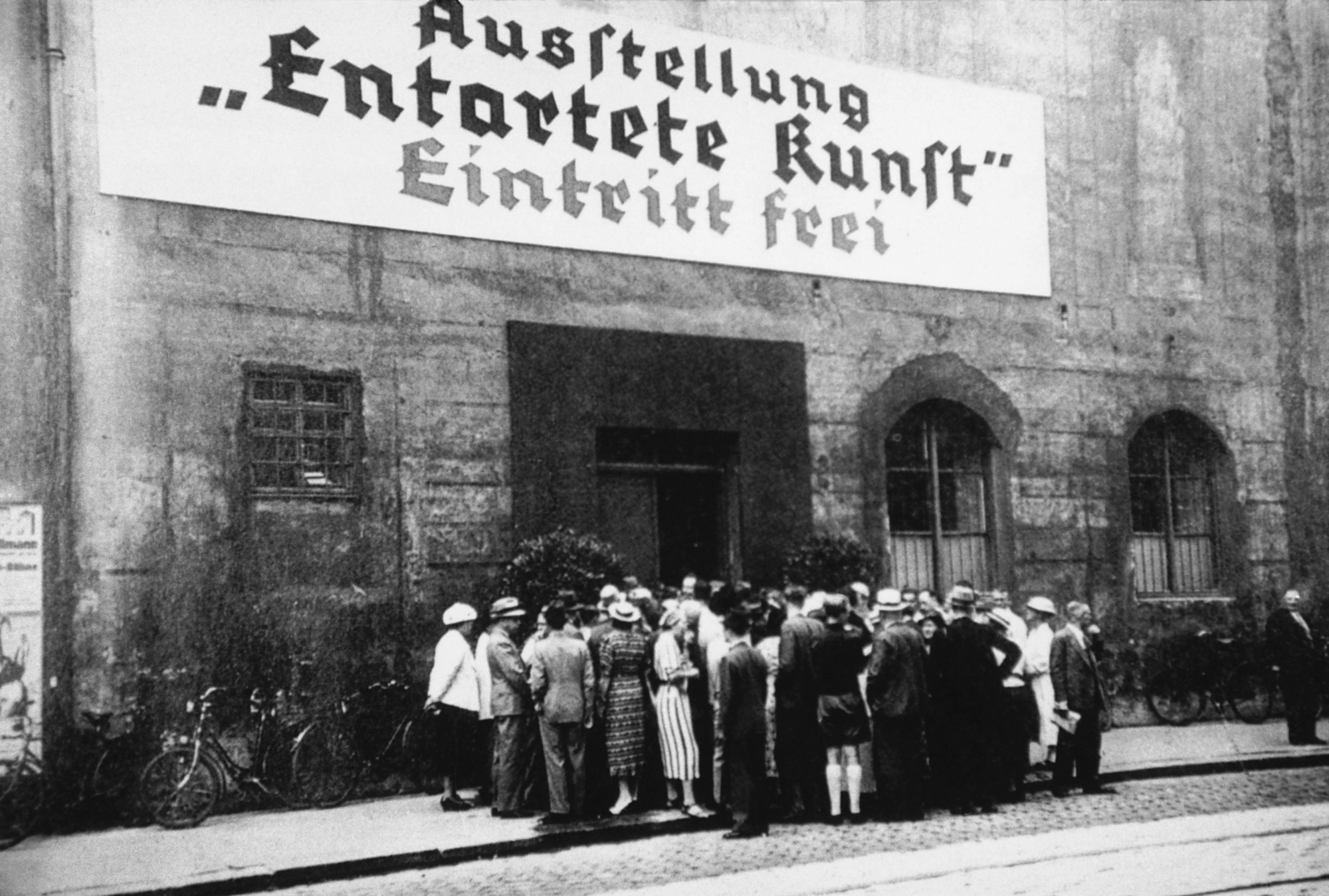
Visitors queuing to see the “Degenerate Art” exhibition in Munich (Image: The Image Works)
But to make the Bauhaus the cultural representative of postwar capitalist democracy, there was still one fundamental problem: from founding to dissolution, the Bauhaus had followed a clearly left-leaning line. Leaving aside Gropius’s early sympathy for the workers’ movement, Meyer’s promotion of Marxist theory within the school was alone enough to enrage the McCarthyites, not to mention the Bauhaus’s friendship with the Soviet Vkhutemas. So a series of efforts to whitewash the Bauhaus and cover up the historical truth was launched at once. To further depoliticise the Bauhaus, Hannes Meyer was deliberately ignored, at times even demonised as the mastermind behind its political ruin. The catalogue of the 1950 exhibition “The Painters of the Bauhaus” in Munich described Meyer as “a disciple of rigid materialism” and accused him of “suppressing (the Bauhaus’s) artistic freedom.” The touring retrospective “50 Years of Bauhaus,” which opened in 1968, sealed this depoliticised image once and for all. As for the Weimar period, with its more radical leftist line, the West German curators diverted attention by emphasising the achievements of Itten, Kandinsky and Paul Klee as abstract painters. This both fitted America’s cultural Cold War strategy of favouring abstract art and further buried the political intentions behind their teaching. In this way, Weimar and Dessau alike, the Bauhaus as a whole was placed on a pedestal.
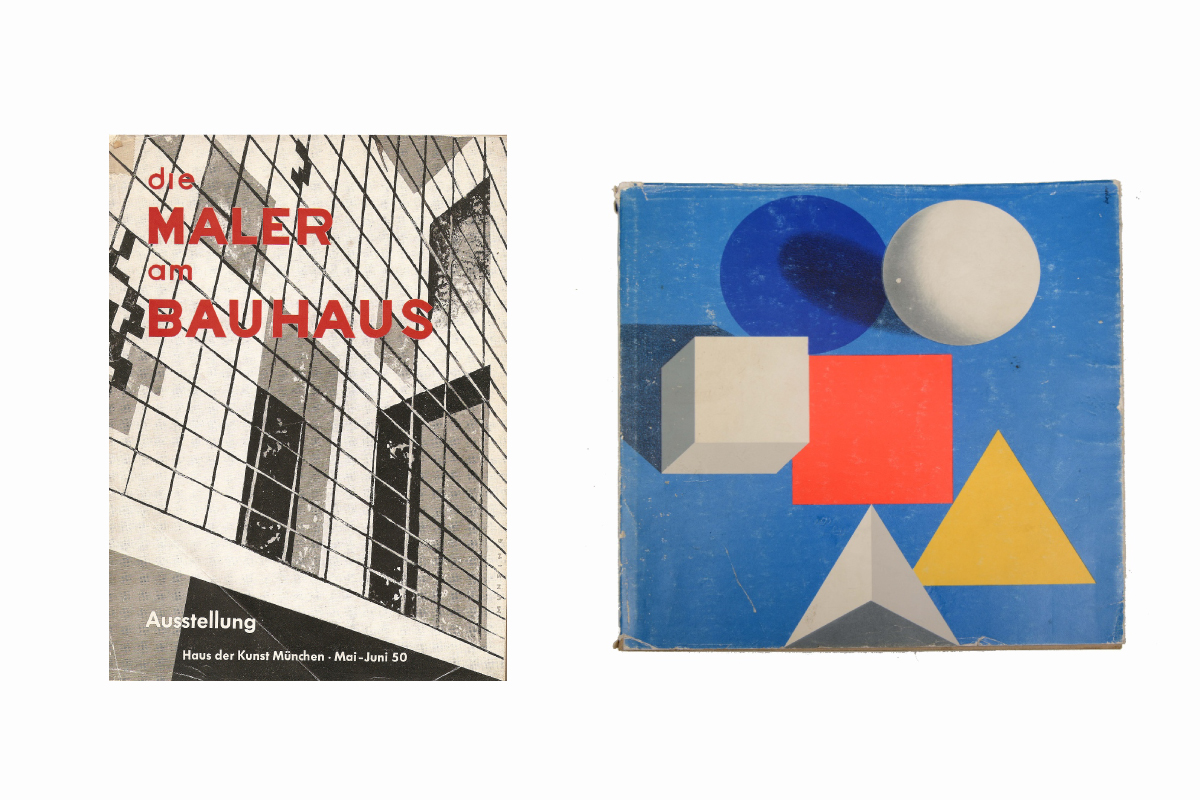
Catalogue covers of “The Painters of the Bauhaus” and “50 Years of Bauhaus”
Nothing embodied this whitewashing better than the Ulm School of Design (HfG Ulm, Hochschule für Gestaltung Ulm), founded in West Germany in 1953 by Otl Aicher (designer of the famous visual system for the 1972 Munich Olympics) and Max Bill, with Bill as rector. Bill had studied at the Bauhaus, and the Ulm school was hailed as “the spiritual heir of the Bauhaus”; Bill had in fact studied directly under Meyer, but naturally kept quiet about that past. The school itself was jointly funded by West Germany and the United States, with the US High Commissioner for Germany, John McCloy, in charge. Besides carrying on the Bauhaus on terms that served American interests, Ulm as a design school could also train industrial talent and aid West Germany’s postwar economic reconstruction. In addition to the American High Commissioner, West Germany’s Scholl Foundation also contributed funding; the foundation had been set up in memory of the White Rose resistance group under the Nazis. Its participation was full of political and diplomatic meaning, binding “anti-fascism” to the modernity the Bauhaus represented. The opening ceremony invited cultural celebrities including Einstein, much like inviting officials to cut the ribbon today. Having put up a million marks, the backers naturally had to ensure that faculty and students leaned to the right. So the United States not only sent “educational advisers” directly to Ulm to monitor the school’s politics, but even the curriculum had to be submitted to the High Commissioner for approval. Ulm’s teaching was therefore completely depoliticised, focused on how to design, make and produce better objects. The emphasis on cybernetics (cybernetics) in industrial design and on semiotics (semiotics) in graphic design also grew out of Ulm’s pure pursuit of technique.
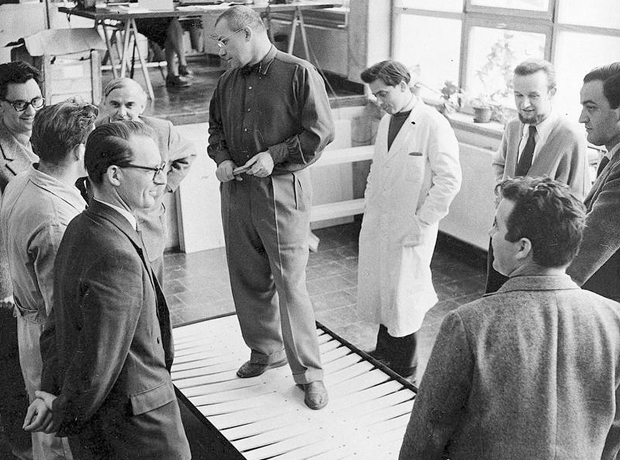
Faculty and students of HfG Ulm, with Max Bill standing in the centre (Image: OEN)
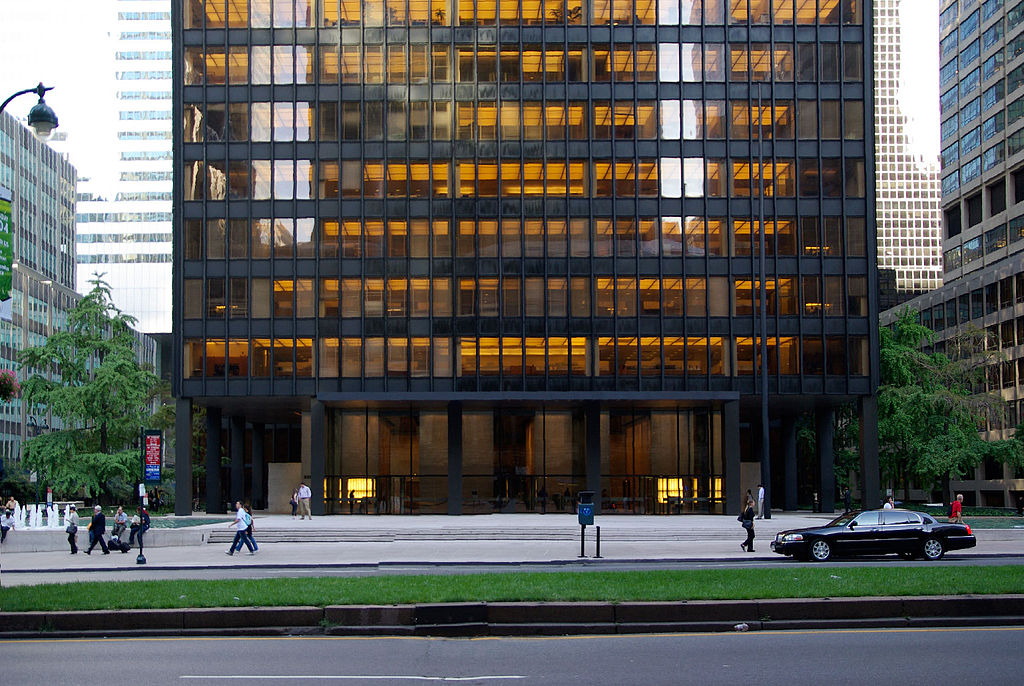
Matching America’s heavy investment in West Germany was the enthusiasm at home for the “Bauhaus refugees.” After Mies came to America at Philip Johnson’s invitation, he built works that went down in history, such as the Farnsworth House and the Seagram Building, and Gropius went on to teach at Harvard. There was also the short-lived Black Mountain College, which left a deep mark on American cultural history; Gropius and Albers5 both taught there. In the early twentieth century America was still lingering in Art Deco and Art Nouveau; the émigrés’ arrival undoubtedly helped Americans find a direction and boosted their cultural self-confidence, and some even claimed that the Bauhaus figures’ move to America symbolised America replacing Europe as the seat of the cultural elite. This period saw a flood of publications promoting and studying the Bauhaus, notably Johnson’s own biography of Mies and Nikolaus Pevsner’s Pioneers of the Modern Movement (Pioneers of Modern Design, first published 1936). In the catalogue Johnson wrote for the Museum of Modern Art (MoMA) in 1932, he even coined the term “The International Style.” These publications, representing how Cold War America viewed the Bauhaus, naturally did not dwell on its leftist past.

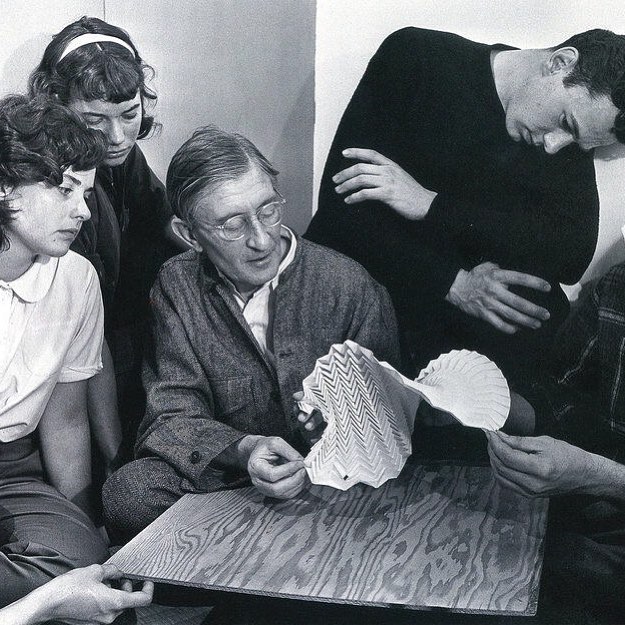
Even Gropius himself helped fuel this in Cold War America. Perhaps out of resentment at Meyer for leading his educational project to a dead end, perhaps under pressure from America’s anti-communist atmosphere, or perhaps because the wound of the Bauhaus’s politically driven dissolution had not yet healed, from the moment he arrived in America Gropius took credit for all of the Bauhaus’s teaching achievements—whether under compulsion or out of self-interest is unknown. In his Bauhaus days his theoretical pursuits were the exact opposite of Meyer’s, yet in the Bauhaus touring exhibitions in America he confidently presented Meyer’s views and theories as having always been his own, and even the Bauhaus buildings constructed under Meyer’s direction were glossed over. Though this looks today like fishing in troubled waters, the reverence American cultural figures then had for him let it pass unchallenged. Until the mid-to-late 1960s, the image of the Bauhaus circulating in America was almost entirely equated with Gropius’s personal image, to the point that even Mies’s role at the Bauhaus was overlooked. Against this background it is easy to understand why Gropius endorsed Ulm, which styled itself “the orthodox heir of the Bauhaus,” or why he would tell students that “design is design; don’t politicise it.”
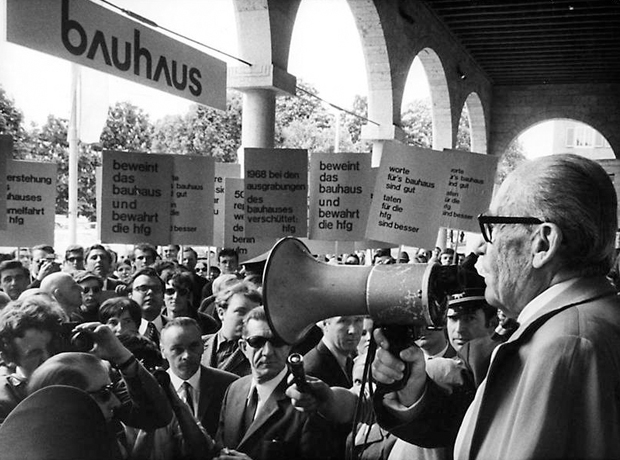
Gropius addressing students in 1968 as HfG Ulm was about to close (Image: OEN)
In this way, the distortion of the Bauhaus’s image was inevitable. Its whitewashing and depoliticisation were firmly bound up with Germany’s denazification. On the one hand, America placed the West German government and cultural figures under its puppet control in matters of ideology and political interest; on the other, the Bauhaus émigrés in America, for various reasons, did not speak up to set the record straight—not to mention Gropius’s active muddying of the waters. The Bauhaus’s proletarian political concerns and its fleeting ideal of Soviet revolution vanished from the history written by America, and its image was transformed into a historical beacon of depoliticised design in the Cold War, paving the way for Cold War modernism.
The IDCA and the USIA
Walter Paepcke, mentioned earlier as having helped Moholy-Nagy emigrate, was an American capitalist born in 1896 who in 1926 founded the Container Corporation of America, which made cardboard boxes. At his wife’s urging, he began hiring big-name designers such as the French designers A. M. Cassandre and Jean Carlu to create advertisements, logos and box illustrations for his company. As the business prospered, he came to recognise the enormous power of modern art and graphic design in marketing. Helping Moholy-Nagy emigrate also stemmed from this admiration for design. In 1946 he hired Bayer to do graphic design for the company as well.
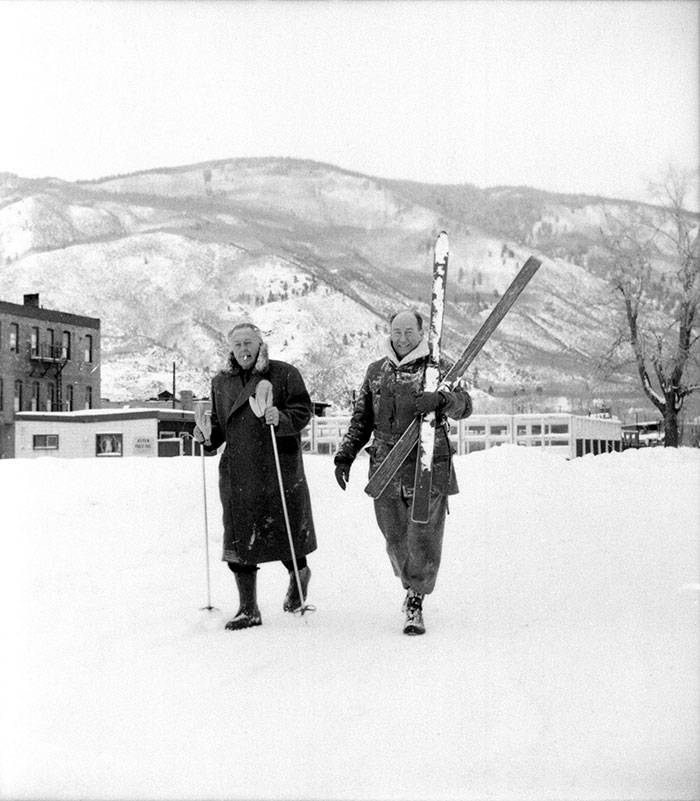
Walter Paepcke (left) (Image: Aspen Institute)
Not long after the war ended, Paepcke bought a large tract of land cheaply in Aspen, Colorado. The town had once boomed on silver mining but by the end of the Second World War had dwindled to fewer than a thousand inhabitants; Paepcke, however, prized its location near the Rocky Mountains and wanted to develop it into a ski resort. His admiration for design and his business acumen combined in a remarkable way: he decided to hold a design conference in Aspen, which would both deepen his understanding of commercial design and draw large numbers of visitors. The conference was called the International Design Conference in Aspen, IDCA for short, and the first was held in 1951. That first conference was packed with big names, establishing IDCA’s custom of inviting star designers; guests included Bayer, the architect Louis Kahn (Louis I. Kahn), the industrial designer Charles Eames (Charles Eames), the industrial designer George Nelson (George Nelson) and Josef Albers.
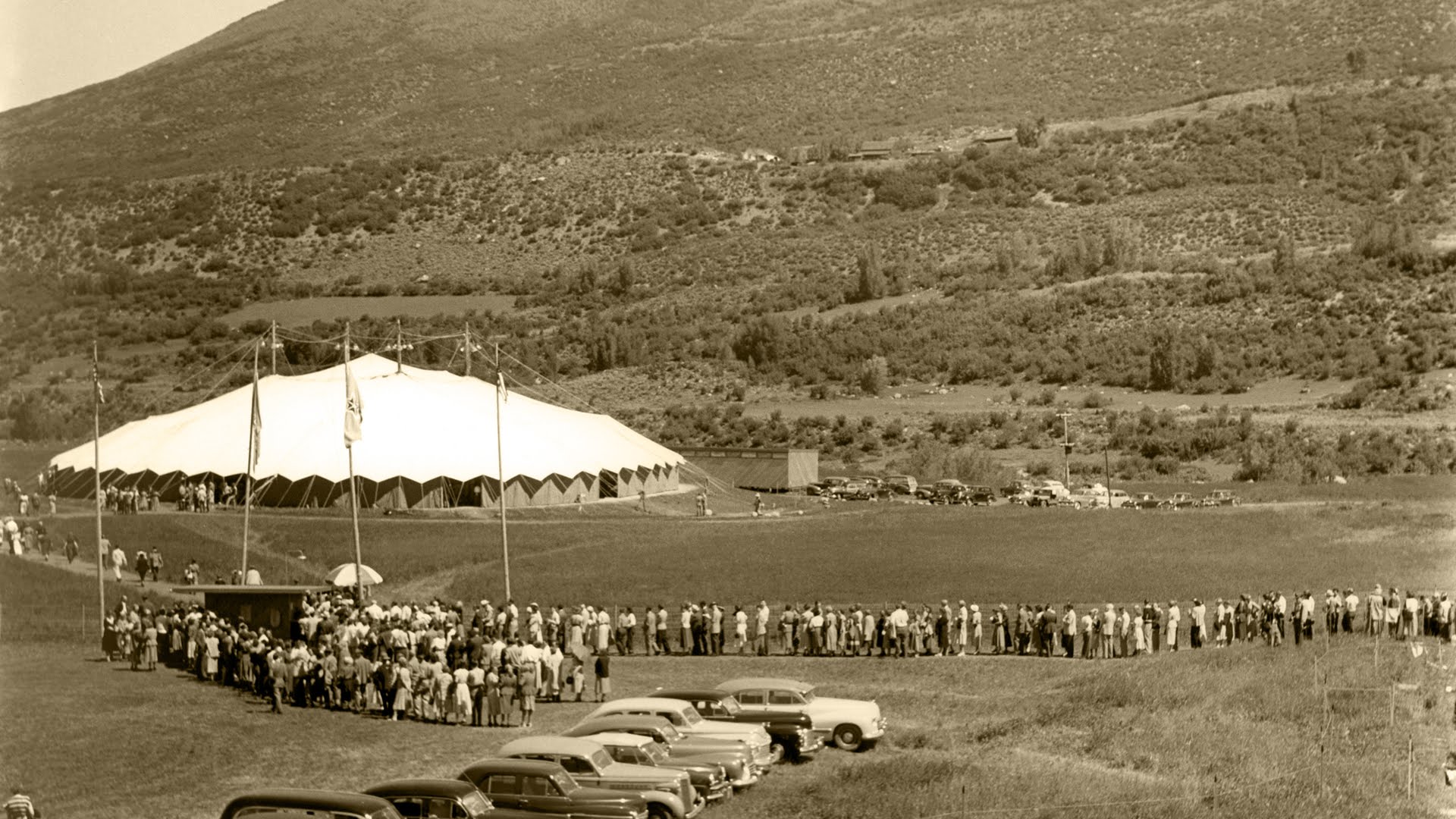
The IDCA main venue (Image: Aspen Institute)
There are two keys to understanding IDCA’s activities in this period. The first is the maturing of the postwar corporate system. The position of “manager” emerged and hierarchical management became possible, replacing small-scale management based on personal relationships and individual leadership, and becoming a key factor in the later growth of multinational giants. With America’s postwar economic boom, people’s material needs were met, and companies could no longer win on the quality and quantity of goods alone; they turned instead to the aesthetics of their products. Designers keenly sensed this demand and increasingly packaged themselves as business partners helping companies grow profits—no longer lone artists, nor social activists working purely for the public good as Inkhuk and the Bauhaus had envisioned: they saw themselves as part of the corporate function, effectively a kind of manager. The second key is America’s postwar economic and cultural environment. Even though the American mainland suffered little large-scale war damage, war leaves an enormous mark on the spiritual life of any nation, and so a “how do we solve the problem” mindset spread widely in America along with logical positivism. Designers then still dreamed of how design could change the world on a grand scale, and this faith that human reason, mathematics and technology could explain everything inevitably spread among them. The notion that “design is problem-solving,” which looks rather narrow today, is intricately tied to the logical positivism of the Cold War era.
IDCA embodied exactly these two keys. The theme of the first conference was “Design as a Function of Management”; ten years later, in 1961, a participant was still proclaiming that “The world’s problem is now ours.” Note that this humanistic concern for the world not only arose in a commercial context, but also came after the systematic postwar depoliticisation of the Bauhaus. If the Bauhaus—and before it the Arts and Crafts movement and Soviet constructivism—took ideology as its basis and used design to envision a future form of human society, then what IDCA concentrated on was rather shallow: it addressed only certain symptoms of society (war and hunger, or more recently global warming), treating the symptoms but not the cause, and so lost any large-scale practical feasibility.
—In this way, the modernist design style developed in prewar Europe and epitomised by the Bauhaus came to cater to corporations. If prewar graphic design had been confined to advertising and the circulation of printed matter, postwar graphic design had a far greater social and historical impact: this was the beginning of corporate identity.
The modern spirit of “clarity, rationality and efficient production” championed by the Bauhaus and its Soviet counterparts before the war, once completely hollowed out under the cultural Cold War strategy, became in corporate identity “seductive advertising that conveys information efficiently”—a play on words worth savouring. Readers surely know the famous designers of this kind, such as Paul Rand and Ladislav Sutnar. Industrial design did not even need a conceptual shift: America’s postwar mass production and material abundance had, to some extent, already fully realised the cheap-and-useful spirit the Bauhaus stood for. So in Cold War America, beyond meeting functional requirements, what mattered most in industrial design was looking attractive and novel, to appeal to consumers whose basic material needs were already fully met. Seen this way, it is not hard to understand IDCA’s other purpose: providing a channel between designers eager to please and executives who valued design.
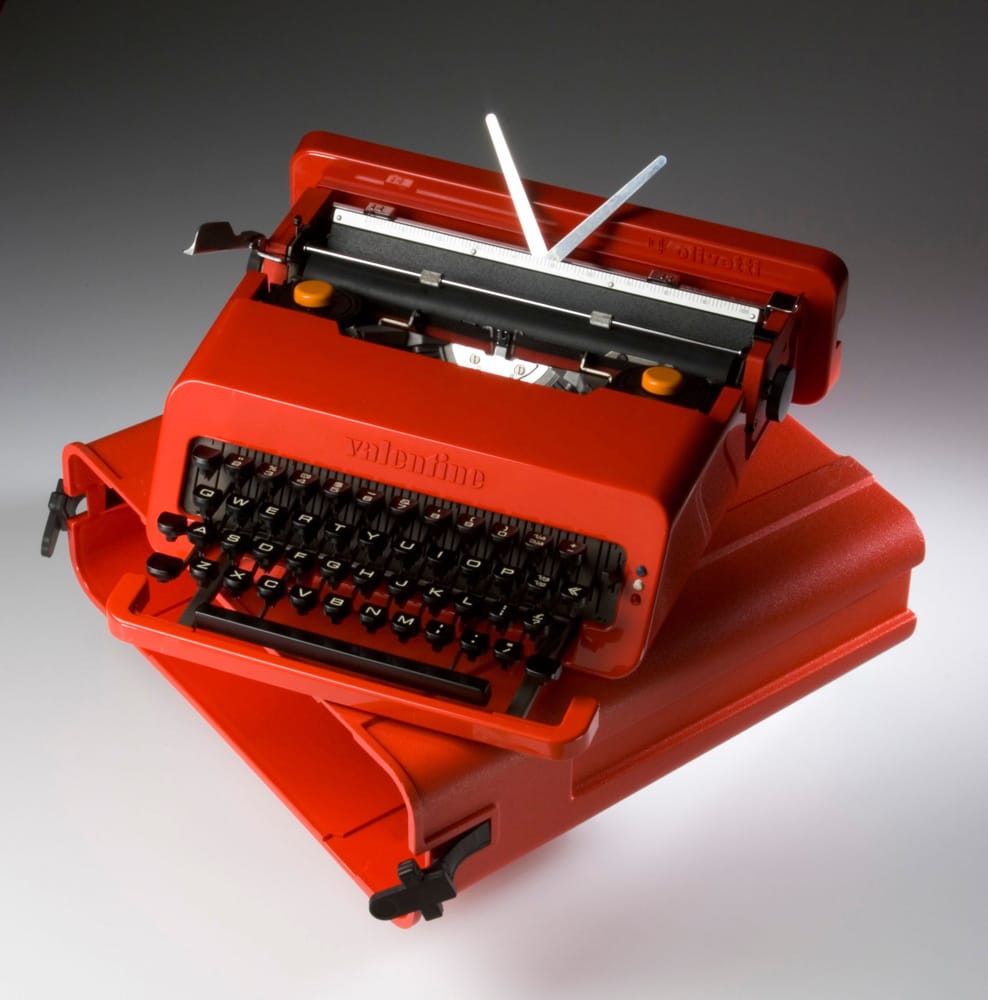
In architecture, “pastoral capitalism” arose. In this period large corporations moved their headquarters out of dense city centres and stand-alone skyscrapers, building vast campuses on cheaper suburban land. These had a rather aristocratic name, the “corporate estate,” and their architecture was mostly in the Miesian engineering aesthetic of “exposed steel frame + glass-walled box.” These executives and architects held a shallow misreading of nineteenth-century Arts and Crafts ideals, believing that working in beautiful natural surroundings would raise employee productivity. More importantly, pastoral capitalism, transplanting modernist aesthetics, carried deep class and racial motives: those who worked in these light, transparent buildings were the company’s middle and upper ranks, almost all white, white-collar employees. Besides bringing jobs, keeping Black people who might gather to protest and blue-collar workers in grimy jobs out of sight—isolated from headquarters and left in crowded city centres—was the decisive reason these campus plans won approval from local governments. That large corporations were willing to invest so much in improving working environments was also linked to the waves of union struggles and strikes at the time. PepsiCo, Bell Labs, HP and even IBM, all familiar to readers, built low-rise glass complexes in the American suburbs. HP even hired the famous Finnish architect Eero Saarinen to design its buildings.

IDCA emerged in the Cold War context, out of the positivist current of thought and the evolution of the capitalist system. With a similar background was the United States Information Agency, known as USIA.
In 1948, three years before IDCA was founded, Truman’s Congress passed the Information and Educational Exchange Act6, authorising the US government to promote the American way of life, values and ideology abroad through all kinds of cultural means. The Eisenhower administration also recognised the importance of psychological warfare in confronting the Soviet Union; presidential adviser C. D. Jackson put it bluntly: “Psychological activity cannot be separated from diplomatic, economic and military action. It is part of these actions.” So in 1953, to avoid obstruction and attack from the McCarthyites, Eisenhower approved the creation of the USIA as an independent political entity with its own appropriations. The radio station Voice of America, which many Chinese readers may have listened to, was established by the USIA, originally so that people sealed behind the Iron Curtain could also receive American information.

Visual identities designed by Lance Wyman for various USIA exhibitions. Wyman worked with George Nelson in the 1960s.
IDCA gathered American star designers and Bauhaus émigrés, and the capitalist advertising and marketing system it represented was so effective that it could hardly escape the USIA’s notice. After all, the USIA’s main activities were secretly funding or directly publishing periodicals abroad to promote capitalist ideology. Later the USIA realised that its investment in publications was less effective than staging exhibitions, and shifted its focus to exhibition design. It can be inferred that by around 1960 at the latest the USIA had begun infiltrating IDCA. Will Burtin, who chaired the IDCA conference several times, designed the USIA’s “Plastics USA” exhibition, which toured mainly the socialist bloc of Eastern Europe—Kyiv, Moscow and Tbilisi, for example. Later, the USIA’s exhibitions director Jack Masey even spoke at IDCA himself. Of course, the most conclusive evidence of this covert cooperation is the theme of IDCA 1963: “Design and America’s Image Abroad.” It is worth noting that Ivan Chermayeff spoke at IDCA the following year, and chaired the conference in 1969.
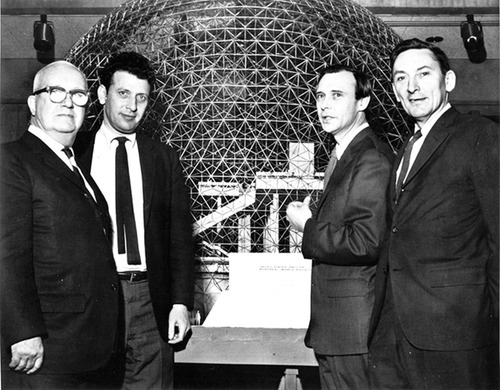
Jack Masey (second from left) and other curators at the US Pavilion, Expo 67 in Canada (Image: The Masey Archives)
By the 1970s, both sides of the Cold War, Warsaw Pact and NATO alike, felt ever stronger undercurrents beneath the surface of peace and prosperity. In 1968 there were massive demonstrations in the United States against the Vietnam War7; Japan had just been through the huge Anpo riots over the renewal of the US–Japan Security Treaty in 1960, and by 1968 its progressive radical forces had still not died out—the Zenkyoto student movement erupted alongside the Paris student movement and lasted over a year, resisting the domestic bureaucratic power system and the political collusion between Japan and the United States; Cuba lost Che Guevara in 1967; China’s ten-year catastrophe (1966–1976) had only just begun; and Czechoslovakia’s Prague Spring (January–August 1968) ended tragically with an invasion by Warsaw Pact forces.
It could thus be foreseen that Expo ’70 in Osaka would be, for the United States, the perfect meeting point of modernist commercial design and cultural Cold War strategy. The US Pavilion was built in a Buckminster-style manner, a white skin stretched over a light lattice frame, in sharp contrast to the Soviet pavilion’s red, constructivist-flavoured sculpture. The USIA, which was responsible for the US Pavilion, considered a number of star designers before choosing three to design the exhibitions inside: one was Rudolph de Harak, who designed many abstract book covers (Rudolph DeHarak, 1924–2002), and the other two were none other than Thomas Geismar and Ivan Chermayeff.
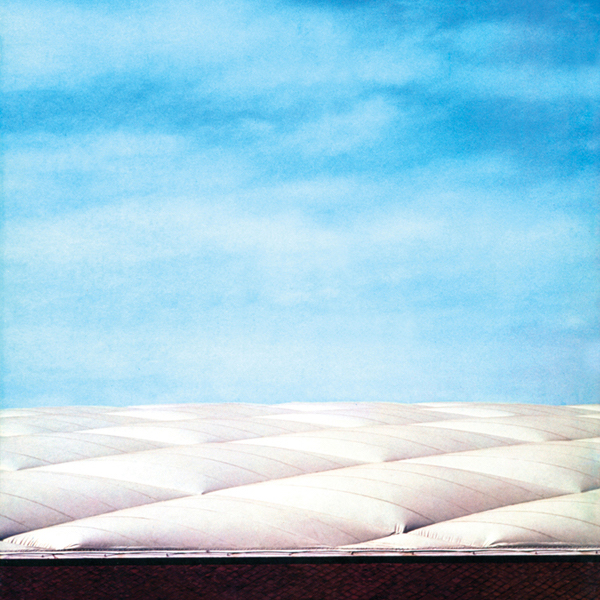
US Pavilion at Expo ’70, Osaka (Image: The Masey Archives)
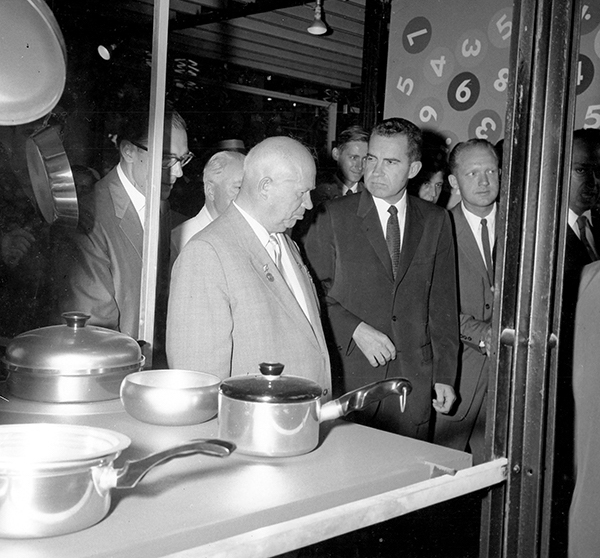
For the art exhibition, Jack Masey brought in Maurice Tuchman of the Los Angeles County Museum of Art as curator. The theme Tuchman finally settled on was “Art and Technology”—with deep irony, exactly the slogan Gropius had proposed at the Bauhaus exhibition of 1923. The colour blocks, sans serif typefaces and abstract geometric forms of the Bauhaus had, through the hollowing-out process described above, become part of American capitalist ideology. Braun radios, Eames chairs and the cool, rational grids of posters became the concentrated embodiment of the superiority of the capitalist system—ammunition in Nixon and Khrushchev’s “Kitchen Debate.”
Cold War Modernism: Decline
The last three decades of the twentieth century were thirty years of rebellion and reflection. The decline of modernist form coincided, unsurprisingly, with the antiwar and student movements. In the Netherlands in 1972, Wim Crouwel, the symbol of modernist rationality, and Jan van Toorn, the symbol of rebellion and critique, held a televised debate that became famous in graphic design history. Crouwel had led Total Design to become the benchmark of corporate identity during the Cold War years, but by now the limelight had passed to the playful, rather hippie-ish Studio Dumbar. What van Toorn accused Crouwel of was precisely a conservative, lifeless aesthetic and a self-satisfied design thinking that never subjected itself to critical scrutiny—aiming squarely at the point where Cold War modernist design met ideology.
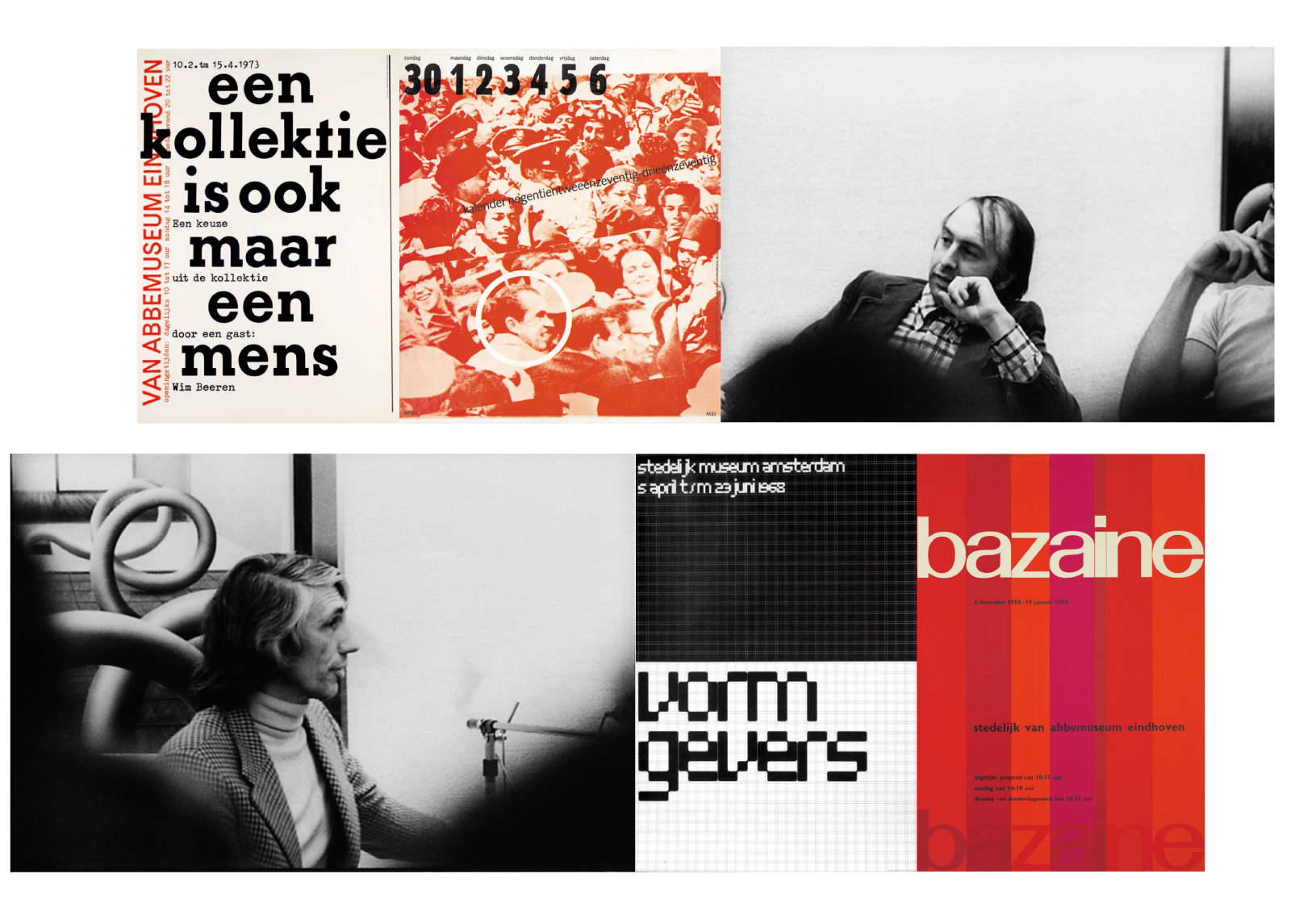
Jan van Toorn (top) and Wim Crouwel (Image: Monacelli Press)
In the United States, Chermayeff and Geismar that same year designed what proved a short-lived new visual system for Pan Am. Many design historians and enthusiasts have called this identity “the swan song of classic modernism.” Najeeb Halaby became Pan Am’s new president in 1970, determined to reform the old, slow and conservative company. With Eliot Noyes’s help, he found Chermayeff & Geismar. The two designers carried on the aesthetics of Cold War modernism, bringing Pan Am a rigorous grid system, striking landscape photography (shot by Magnum photographers), minimal asymmetric typographic layouts and, of course, the indispensable Helvetica. Even setting aside ideology and Cold War strategy, this visual system still has a breathtaking beauty today. But a corporation’s visual image could not, as modernist designers imagined, be tied to its business performance. In the same year the design work was completed, Halaby was forced to resign for failing to stop Pan Am’s continuing decline. The new president had little interest in visual identity, and the whole system was soon abandoned. The 1973 oil crisis dealt Pan Am a heavy blow; from then on it slid further and further downhill, fell into serious financial trouble in 1991 and finally ceased operations.
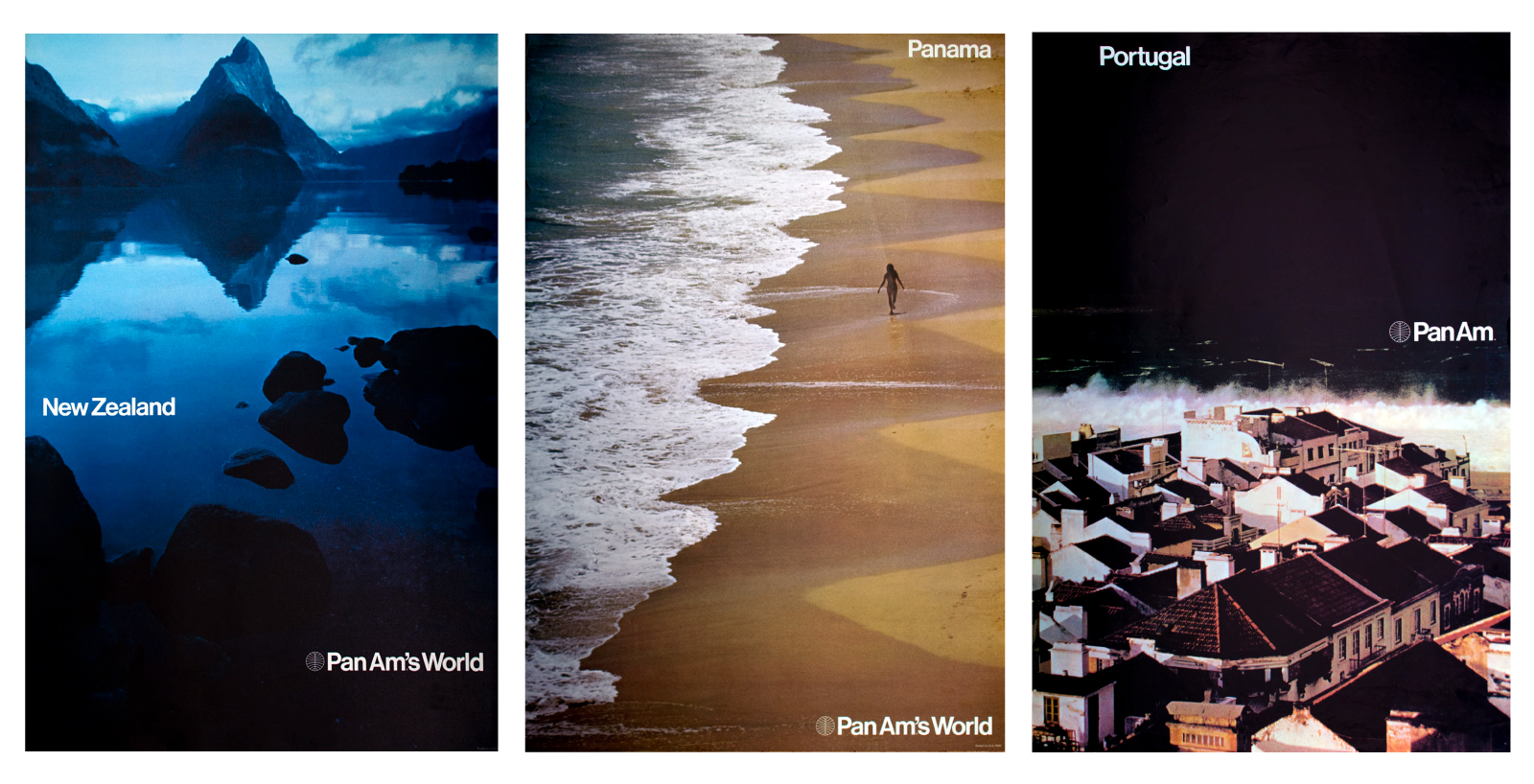
Pan Am posters, soon abandoned (Image: Milton Glaser Design Study Center and Archives)
Echoing the Pan Am project was IDCA’s loss of momentum as it entered the 1970s. Precisely because of its custom of inviting big-name star designers, IDCA in the 1970s and 1980s became a symbol of elitism and of being out of touch with reality. Designers, too, increasingly began to doubt the roles they played in the cultural Cold War and in the ever-growing multinational corporate system. Those who, like Wim Crouwel in his later years, worked only for public-interest and cultural institutions were still a small minority. Designers who had made their names in America through close cooperation with corporations, such as Paul Rand and Saul Bass, found their achievements and positions running straight into a full decade of 1960s counterculture, the anti–Vietnam War student movement, hippie culture, environmentalists, and Maoists who had heard of the Cultural Revolution and idealised China.
This conflict finally came to a head at IDCA in 1970. On one side were establishment designers such as Bayer, Bass and Rand, who continued the modernist aesthetic of minimalism, grids and form follows function, and who under the influence of positivism still insisted that “design can solve problems for corporations”; on the other were large numbers of young students, new-generation architects and even progressive university professors. Most of them set out from Berkeley, California, and took long-distance buses to Aspen, Colorado—very much as if they were going to crash the party8. These young people included leading figures of the antiwar, student and countercultural movements of the day, such as Ant Farm (The Ant Farm), an avant-garde art collective founded in San Francisco that advocated a nomadic way of life outside industrial society and a return to nature; and Cliff Humphrey, an ecology professor at the University of California, Berkeley, co-author of the manifesto (Declaration of Interdependence), and founder of the group Ecology Action. They also brought along a guest who could not attend in person: Jean Baudrillard, critical theorist and author of Simulacra and Simulation, then in France and deeply supportive of the Paris student movement. Together with several other French leftist philosophers, he wrote an essay for the students to read out at the conference. In keeping with the then-popular “nomadic” lifestyle of returning to nature and minimising consumption and waste, the young people pitched tents right around the venue, and inside it built a temporary sculpture out of wrecked cars and industrial waste, named “Spare Tire Inflatable.” None of this was spontaneous; it drew on lessons from student clashes in many places over the years. The Paris student movement had spread across Europe, with violent clashes between students and police, so the students had prepared thoroughly before heading to Aspen. Because their numbers could not be ignored, the organisers promised to let them speak at the conference, hoping to ease the tense atmosphere.
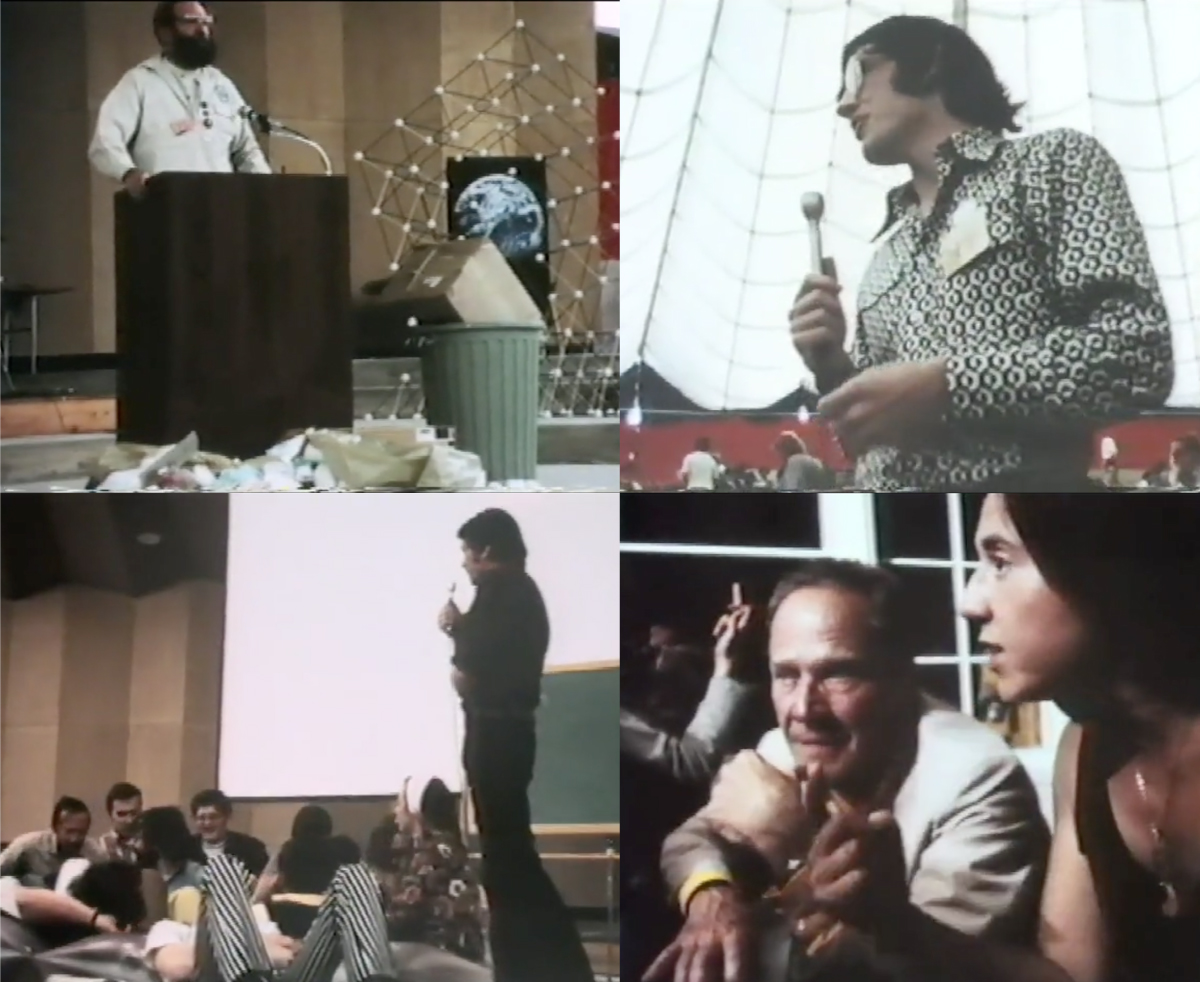
IDCA, 1970. Bottom right: conference chair Eliot Noyes attempting to talk with the students. (Image: IDCA 1970, Cyclops Films)
Humphrey, who became one of the speakers, collected rubbish from the venue itself as props for his talk, and used a photograph of the Earth seen from space to show the urgency of environmental protection (the photo was copied from the cover of the hugely popular Whole Earth Catalog ). His line “If something is made to be wasted, to be thrown on the garbage heap, then don’t make it!” won a round of applause; he went on: “If you can say ‘fuck you’ to the (Vietnam) draft, you should learn to say ‘fuck you’ to salesmen and real estate developers too!” The establishment designers were both shaken and completely unable to understand the students’ thinking. Saul Bass once asked a student, “Why do we have to evaluate capitalism? We just want to have a nice design conference!” The student replied: “Unless you are really living that (affluent, wasteful) lifestyle, all of this is bullshit.” One can imagine that Bass had no idea what the student meant. This failure to communicate further intensified the conflict, which peaked in the closing session. The students read out the French philosophers’ paper, then presented a manifesto and demanded that attendees vote on it clause by clause. It contained not only ecological clauses on curbing overconsumption and protecting the planet, but also student-movement demands such as withdrawing troops from Vietnam and ending the draft, and even many issues still contested today, such as same-sex marriage and the rights of and reparations for Native Americans. Before the closing session was over, half the audience had left. The manifesto was finally passed by those who remained.
IDCA 1970 left the organisers and establishment designers exhausted, frightened and “mentally bruised.” Eliot Noyes, the conference chair, admitted that IDCA needed to move with the times and change how and why it was held, but he was physically and mentally drained; he resigned as chair and handed the task to his successor. IDCA 1971 was chaired by Richard Farson, a professor at the California Institute of the Arts (CalArts). Learning from the previous year, he invited fewer old-school big names and more young people, and allowed looser, more politically radical topics into the programme9. Not only did the format of the talks become freer, but their content also broadened, from design-related subjects to the medical and sociocultural effects of marijuana, as well as gender and gay issues. The 1970 conference can be called IDCA’s watershed. Beyond the streets and campuses, IDCA gave the old and new generations of artists and designers a place to clash and exchange, and it exposed the flaws in Cold War modernism’s aesthetics, principles and ideological foundations. The establishment designers who had won fame and fortune by styling products and corporate identities could no longer wave the scientific banner of positivism to paper over the cracks. The antiwar and student currents and the counterculture tore apart their rather fanciful humanism at the conference, forcing them to face the power and economic structures embedded in their work. From then on IDCA took a completely new path, until it was discontinued in 2004 because of financial difficulties. The young people who directly changed IDCA’s course were later dubbed California’s hippie modernism. It is worth noting that 1971 was also the year the rather controversial Greenpeace was founded.
As mentioned above, after leaving the Bauhaus Hannes Meyer went to the Soviet Union to pursue his Soviet revolutionary ideal of uniting design education with social change, but he soon met setbacks: the newly dominant Stalin pursued a policy of “art serving politics directly.” Although Meyer left a considerable legacy in Soviet urban planning and architecture, he fled back to Switzerland in 1936. Stalin’s approach amounted to snuffing out the last embers of the Bauhaus ideal. If the American-backed Ulm school “removed the spirit and kept the form,” Stalin’s cultural policy left history another harsh and untouchable extreme. With the decline of the Ulm school and other modernist forms in the 1980s, designers were left adrift before the onrushing tide of postmodernism.
After the upheavals of the mid-twentieth century, the world’s political climate in this period also grew calmer. China emerged from the shadow of catastrophe, with Deng’s Southern Tour not far ahead; Japan, after decades of economic miracle, suffered a financial crisis in the 1990s and never recovered; with the collapse of the Soviet Union, America finally secured its position as world hegemon, and what followed needs no retelling. In design, Cranbrook Academy of Art, once a stronghold of Cold War modernism, welcomed two new leaders in 1971: Katherine and Michael McCoy. In stark contrast to the Eameses and the Saarinens (Eliel and Eero Saarinen, both Finnish architects) who had taught there before, Katherine brought semiotics, linguistics and sociology into the curriculum, encouraging students to deconstruct, recombine and critically reinvent visual vocabularies, and steering the academy down a path completely opposite to Cold War modernism. Her graduates, together with Wolfgang Weingart, April Greiman and the Emigre type foundry, created the “New Wave” (New Wave) design movement so characteristic of that era. The rigorous, precise, rational and calm visual style of the Cold War period finally stopped beating here, together with the legacy of the Bauhaus.
In 1999, the USIA was dissolved.
Conclusion
The development of Cold War modernism powerfully demonstrates the inherent politics of design. The origin, development and decline of a style are inseparable from the political and economic environment of its time, and are shaped by particular major historical events. Whether the Ulm school or grid systems and sans serif typefaces, their aesthetics almost wholly inherited the legacy of the Dessau Bauhaus, yet in spiritual core and political ambition they were its complete opposite—at times even hollow. As America became the world’s cultural hegemon, this transformation was firmly imprinted on design history and on designers’ general understanding. Meanwhile the Soviet heroic realism promoted by Stalin thoroughly stigmatised the political ideals of the Weimar Bauhaus and Hannes Meyer, snuffing out the embers from which the Bauhaus spirit might have been rekindled.
Government bodies like the USIA were both carriers of ideology and executors of national cultural strategy, and they also acted as intermediaries between the state and the public. The USIA worked with IDCA, the epitome of commercial design, and ran the US Pavilion at the Osaka Expo in its entirety, building an image of America as rational, advanced and full of energy. Its preference for the aesthetics of classic modernism exerted an incalculable influence, behind the scenes, on postwar graphic design. But we cannot simply and crudely conclude that the designers who took part in IDCA or worked on USIA commissions were all court artists without independent thought, singing the praises of an ideology. On the one hand, the subtle influence of ideology cannot be ignored; on the other, we still need to investigate further how circumstances, aesthetic traditions and social ideals shaped these designers. Still less can we assign abstract, geometric visual expression wholesale to the Western capitalist side. Although the Soviet authorities promoted a realism-oriented cultural policy, in corners of Eastern Europe beyond the reach of power, abstract graphic design—like photography and collage—sprang up like mushrooms after rain, bursting with vitality.
With rapid postwar economic growth and the continual evolution of the capitalist system, the role designers played in society also changed dramatically. Designers in America packaged themselves as indispensable to corporate profit and, in the process, became part of the capitalist power structure. As a result, the spaces in which they could act on political ideals and humanistic concern became more tangled, leaving them open to criticism from a new generation. It was not only the domestic antiwar protests sparked by Vietnam: the world of the 1960s saw students become a major force in political movements. Exemplified by IDCA 1970, the clashes, struggles and confusion between the old and new generations of designers still offer much for later generations to learn from.
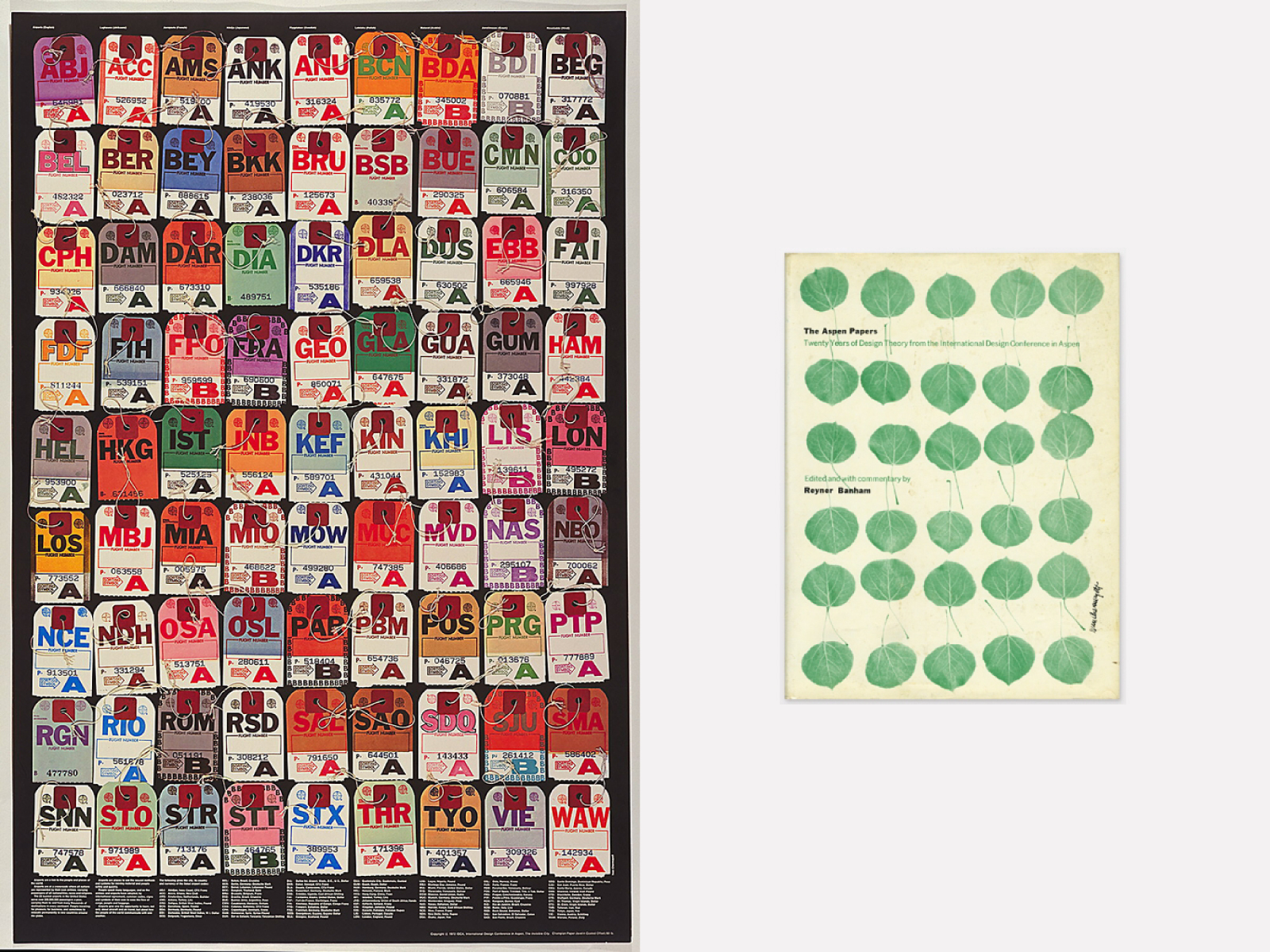
Poster designed by Chermayeff & Geismar for the 1972 Aspen conference, and The Aspen Papers (Image: Chermayeff & Geismar & Haviv)
And Ivan Chermayeff was by no means just “a graphic designer who created many classic logos.” He rose to fame at the height of the Cold War, was deeply involved in running IDCA, and even became a spokesman for national culture and ideology, designing for both the Osaka Expo and the American Bicentennial. In looking at Chermayeff, we cannot see only his visual and aesthetic legacy; we must also consider carefully what position he held as a design elite in the society of his time. To see the large in the small, to see history refracted through an individual—Chermayeff’s life’s work offers us just such an opportunity.
Table 1: Chronology of related events
| Year | Russia | Germany | United States | China | World | |
|---|---|---|---|---|---|---|
| 1917 | October Revolution | De Stijl founded; journal of the same name launched | ||||
| 1918 | November Revolution | |||||
| 1919 | Comintern founded | Walter Gropius becomes director of the Bauhaus | May Fourth Movement | Paris Peace Conference; L’Esprit Nouveau launched | ||
| 1920 | Inkhuk and Vkhutemas founded in succession | Charles-Édouard Jeanneret renames himself Le Corbusier | ||||
| 1921 | Wassily Kandinsky arrives at the Bauhaus | Chinese Communist Party founded | ||||
| 1922 | Soviet Union founded; Inkhuk closes | |||||
| 1923 | Johannes Itten forced to resign from the Bauhaus; Beer Hall Putsch; Bauhaus exhibition of student work; Gropius coins the slogan “Art and Technology” | Le Corbusier publishes Towards a New Architecture | ||||
| 1924 | Death of Lenin | Weimar Bauhaus closes; Workers International Relief founded in Berlin and reports directly to the Comintern | First United Front between the Nationalists and Communists | |||
| 1925 | Dessau Bauhaus opens | L’Esprit Nouveau ceases publication | ||||
| 1927 | Dessau Bauhaus founds an architecture department headed by Hannes Meyer | |||||
| 1928 | Hannes Meyer succeeds Gropius as the second director; Die neue Typographie published | CIAM founded | ||||
| 1930 | Vkhutemas dissolved | Meyer forced to resign from the Bauhaus and Mies van der Rohe becomes director; Meyer leaves to teach in the Soviet Union | ||||
| 1931 | Nazi Party takes power | Mukden Incident | ||||
| 1933 | Bauhaus forcibly closed; Jan Tschichold’s home raided by the Gestapo and he flees to Switzerland after his release | |||||
| 1934 | Kandinsky flees to France; Gropius and Breuer flee to the United States | |||||
| 1936 | Hannes Meyer flees to Geneva | |||||
| 1937 | Moholy-Nagy flees to the United States and founds the New Bauhaus with Walter Paepcke’s help; Mies flees to the United States with Philip Johnson’s help and teaches at the Illinois Institute of Technology; Nazi Degenerate Art exhibition | Marco Polo Bridge Incident; Nanjing Massacre | ||||
| 1938 | Herbert Bayer flees to the United States | Serge Chermayeff and family leave Britain for the United States to make a living | ||||
| 1939 | Outbreak of the Second World War | Hannes Meyer goes to work in Mexico | ||||
| 1940 | Dunkirk evacuation | |||||
| 1944 | Battle of Stalingrad | Kandinsky dies in Paris | ||||
| 1945 | United States drops atomic bombs on Hiroshima and Nagasaki; end of the Second World War | Chinese Civil War begins | ||||
| 1946 | Moholy-Nagy dies and is succeeded by Serge Chermayeff | |||||
| 1948 | USIA established | |||||
| 1949 | People’s Republic of China founded | Hannes Meyer returns from Mexico to Switzerland; Jan Tschichold ends his work at Penguin in Britain and also returns to Switzerland | ||||
| 1950 | The Painters of the Bauhaus exhibition held in Munich | |||||
| 1951 | First IDCA held in Aspen | |||||
| 1952 | Gropius retires from Harvard | |||||
| 1953 | Stalin dies and is succeeded by Khrushchev | HfG Ulm founded | ||||
| 1954 | Push Pin Studios founded in New York | Hannes Meyer dies in Switzerland | ||||
| 1957 | Chermayeff & Geismar founded | Hundred Flowers Campaign | ||||
| 1959 | Khrushchev and Nixon’s “Kitchen Debate” | CIAM disbanded | ||||
| 1960 | Renewal of the US–Japan Security Treaty sparks the Anpo protests in Japan; Viet Cong founded | |||||
| 1961 | Berlin Wall built | Chase Manhattan identity by Chermayeff & Geismar launched | ||||
| 1964 | Khrushchev ousted and replaced by Brezhnev | Mobil identity by Chermayeff & Geismar launched | Tokyo Olympics | |||
| 1966 | Cultural Revolution begins | |||||
| 1968 | HfG Ulm closes; 50 Years of Bauhaus touring exhibition | Anti–Vietnam War protests | May 1968 in Paris; Prague Spring; Zenkyoto | |||
| 1969 | Gropius dies in Cambridge (July); Mies dies in Chicago (August); Ivan Chermayeff chairs the IDCA | Sino-Soviet border conflict | ||||
| 1970 | IDCA disrupted by progressive students | Expo ’70 in Osaka | ||||
| 1971 | Katherine and Michael McCoy take over the design department at Cranbrook Academy of Art; Victor Papanek publishes Design for the Real World; The New York Times publishes the Pentagon Papers exposing US Vietnam policy | Greenpeace founded | ||||
| 1972 | Munich Olympics with a visual identity led by Otl Aicher of HfG Ulm | Pan Am identity by Chermayeff & Geismar launched and abandoned within a year | Televised debate between Crouwel and van Toorn | |||
| 1974 | Jan Tschichold dies in Switzerland | |||||
| 1975 | EPA identity by Chermayeff & Geismar launched; United States withdraws from Vietnam | |||||
| 1976 | Chermayeff & Geismar design the identity for the American Bicentennial | Cultural Revolution ends | North and South Vietnam reunified and Vietnam joins the socialist camp | |||
| 1981 | Breuer dies | |||||
| 1984 | Emigre type foundry founded; PBS logo by Chermayeff & Geismar launched | |||||
| 1985 | Bayer dies | Plaza Accord signed and Japan enters its bubble era | ||||
| 1986 | NBC logo by Chermayeff & Geismar launched | |||||
| 1989 | Berlin Wall falls | |||||
| 1991 | Dissolution of the Soviet Union | Pan Am goes bankrupt; the McCoys publishCranbrook Design: the New Discourse | ||||
| 1992 | Deng Xiaoping’s Southern Tour | Japan’s bubble bursts and the “Lost Decade” begins | ||||
| 1999 | USIA abolished |
Table 2: IDCA themes, chairs and speakers, 1951–1973
| Year | Title | Chair | Speakers | |||||||||||||||||||||||||||||
|---|---|---|---|---|---|---|---|---|---|---|---|---|---|---|---|---|---|---|---|---|---|---|---|---|---|---|---|---|---|---|---|---|
| 1951 | Design as a Function of Management | Walter Paepcke | William Connolly | Charles S. Downs | Stanley Marcus | Andrew McNally | William M. Stuart | Burton Tremaine | René d’Harnonocourt | Edgar Kaufmann | Louis I. Kahn | Leo Lionni | Hoyt L. Sherman | Herbert Bayer | Charles Eames | George Nelson | A. S. Costello | John M. Gates | Charles Zadok | Egbert Jacobson | Francis E. Brennan | Charles T. Coiner | Harley J. Earl | Theodore S. Jones | Josef Albers | Bartlett Hayes | Jr. | Faie Joyce | Otto I. Spaeth | |||
| 1952 | Same as above | R. Buckminster Fuller | Alfred A. Knopf | Richard Gump | Walter Dorwin Teague | |||||||||||||||||||||||||||
| 1953 | Same as above | Leo Lionni | Max Bill | Gyorgy Kepes | Enrico Peressutti | Charles Eames | Nikolaus Pevsner | Dave Chapman | Xanti Schawinsky | |||||||||||||||||||||||
| 1954 | Planning: The Basis of Design | Will Burtin | Carl Mass | Gyorgy Kepes | Richard Neutra | Robert O. Carlson | Merrit L. Kastens | A. Gerrard MacLeod | Roberto Burle Marx | Russell Lynes | Burns W. Roper | Albert E. Parr | Ted Parnales | John E. Burchard | Saul Bass | Edgardo Contini | Renato Taguiri | Reuel Denney | Robert Saudek | Laurence Schmeckebier | ||||||||||||
| 1955 | Crossroads: What Are the Directions of the Arts | Will Burtin | Harry Bertoia | Earl C. Kelly | Sol Cornberg | S. I. Kayakawa | Arther Drexler | Victor Gruen | Lancelot I. Whyte | Michael Farr | William de Majo | Kiyushi Seike | Arnold F. Arnold | George D. Culler | Manuel Pizarro | John Houseman | Walter A. Netsch | Koiche Ho | Bernard S. Benson | Robert Osborn | ||||||||||||
| 1956 | Ideas on the Future of Man and Design | Will Burtin | Anatol Rapoport | Max Frisch | Mortimer Adler | Paul Rudolph | F. H. K. Henrion | Garrett Eckbo | Misha Black | Gregor Paulsson | Armin Hofmann | Jupp Ernst | Alberto Rosselli | J. Gordon Lippincott | Arthur Hald | Saburo Asaba | John A. Pappas | Peter J. B. Stevens | Sori Yanagi | Josef Muller-Brockmann | Jacques Cienot | Dennis Flanagan | ||||||||||
| 1957 | Design and Human Values | Saul Bass | Ernesto N. Rogers | Jacob Bronowski | Conrad M. Arensberg | Robert Anshen | Bruce MacKenzie | Edmund N. Bacon | John A. Kouwenhoven | Amiya Chakravarty | James Real | Myron C. Helfgott | Lewis Clarke | Jane Fiske Mitarachi | Jennie I. Rowntree | Richard L. Meier | Richard S. Latham | |||||||||||||||
| 1958 | Design and Human Problems | Garrett Eckbo | C. Wright Mills | Christopher Tunnard | Henry Hill | Claire Falkenstein | E. A. Gutkind | Edgardo Contini | Gordon Stephenson | Deward A. Williams | Albert T. Arai | Hin Bedendieck | Walter E. Packard | Robert Gwathmey | morton Goldsholl | Romaldo Giurgola | ||||||||||||||||
| 1959 | Communication: The Image Speaks | Morton Goldsholl | Norman McLaren | Lancelot Hogben | Lancelot L. Whyte | Len Lye | Gilbert Cohen-Seat | William Golden | Abram Games | Jerry Schnitzer | James Real | Thomas N. Folds | ||||||||||||||||||||
| 1960 | The Corporation & The Designer | George D. Culler | Craig Ellwood | C. Northcote Parkinson | Bill Tara | Paul Reilly | Bryan Heath | Traugott Malzan | Leslie Julius | Paul A. Fine | Vernon Walsh | Spencer Stuart | Eliot Noyes | Olle Eksell | Blair Gettig | William Capitman | Joseph McGarry | |||||||||||||||
| 1961 | Man / Problem Solver | Herbert Pinzke | Bernard Rudolfsky | Tomas Maldonado | Richard Morris | Jay Doblin | Peter C. Kronfeld | Gwendolyn Brooks | Milner Gray | Yuri Soloviev | Roman Vishniac | Will Burtin | Harold Taylor | Hy Hoffman | Elisabeth Paepcke | William Friedman | Richard Pick | Edith Heath | Robert Hunter Middleton | Bruce Beck | C. B. Sitterson | Rhodes Patterson | Jack Roberts | Herbert S. Zim | George McVicker | Arnold Rockman | Bruce MacKenzie | Edward C. Bursk | Bernard S. Benson | Merlin Krupp | Joe Sander | |
| 1962 | Environment | Ralph Eckerstrom | Robert Wallace Craig | Balkrishna Doshi | John Entenza | Bertrand Goldberg | Brinckerhoff Jackson | Louis I. Kahn | Oscar Lewis | Karl Menniger | Jonas Salk | Peter Blake | Arthur A. Cohen | Heinz von Forster | Reginald V. Jones | Herbert Muller | Theodore T. Puck | Robert C. Weaver | Justin Herman | Richard Lippold | Harrison Brown | Mildred Constantine | Robert Johnson | Robert F. McLean | Walter A. Netsch | Eric Sevareid | Robert Zion | E. M. Benson | ||||
| 1963 | Design and America’s Image Abroad | Peter Blake | Alan Pryce-Jones | Wolfram von Hahnwehr | Robert Wool | Arnold M. Picker | Pat Want Singh | Peter G. Harnden | Donald Wilson | George Stevens | George Freedland | Reyner Banham | Martin Rosenzweig | Jack Masey | Andrew Heiskell | George England | Lucius D. Battle | Ray Mackland | Robert Sivard | Charles H. Clarke | Eliot Noyes | |||||||||||
| 1964 | Directions & Dillemas | Eliot Noyes | Robin Boyd | Cleveland Amory | Louis Dorfsman | Andre Francois | Philip Johnson | Dexter Masters | Wolf von Eckardt | Ivan Chermayeff | William Bernbach | Nelson C. Foote | Leon Gordon Miller | Paul Rudolph | Dwight MacDonald | Jay Doblin | Ralph Caplan | Reyner Banham | Allen Hurlburt | Georg Olden | Joseph R. Passoneau | Seymour Silverman | Richard S. Latham | |||||||||
| 1965 | The New World | George Nelson | Stuard Udall | William F. Lynch | S. J. | Philip M. Hauser | David Finn | Robert Theobald | Konrad Wachsmann | Martin Wohl | Philip Rosenthal | James Rouse | Peter Blake | |||||||||||||||||||
| 1966 | Sources and Resources | Allen Huriburt | Mildred Constantine | Tomas Maldonado | Ben Shahn | Henry Dreyfuss | Arthur Drexler | Benjamin Thompson | Leo Lionni | Reyner Banham | Edgar Kaufmann | Richard Farson | Gyorgy Kepes | Julian Beinart | Henry Wolf | |||||||||||||||||
| 1967 | Order and Disorder | Craig Ellwood | Jack Roberts | Jerzy Soltan | Piet Hein | Max Bill | Moshe Safdie | Charles Correa | Jacob Bronowski | Paul Weiss | Alfred Caldwell | William H. Thomas | Theo Crosby | Christopher Alexander | Crosby M. Kelly | Paul Heyer | Art Seidenbaum | Jeffrey Lindsay | Robert Lewis Propst | William Arrowsmith | Leo Lionni | Donald Resch | John Whitney | Stan Vanderbeek | ||||||||
| 1968 | Dialogues: Europe / America | Reyner Banham | Alf Boe | Misha Black | Morley Markson | John Allpass | David Gebhard | Dennis Crompton | Jivan Tabihian | Federico Correa | Irving Grossman | Richard S. Latham | Francois Dallegret | Peter Eisenman | Nuno Portas | |||||||||||||||||
| 1969 | The Rest of Our Lives | Ivan Chermayeff | Henry Wolf | Frank Stanton | William Sloan coffin | Balkrishna Doshi | Rene Dubos | George Nelson | Adrian Kantrowitz | Gerry Goodman | Peter Ustinov | Anthony Wiener | Dwight MacDonald | Robert Lowell | William Klein | Robert Osborn | Peter Knapp | R. O. Blechman | ||||||||||||||
| 1970 | Environment by Design | William Houseman | Carl Koch | Stuart Udall | Peter Hall | Reyner Banham | Richard Farson | James E. Lash | Sim Van der Ryn | Richard Saul Wurman | M. Paul Friedberg | Walter Orr Roberts | Cliff Humphrey | Cora T. Walker | ||||||||||||||||||
| 1971 | Paradox | Richard Farson | R. Buckminster Fuller | Victor Papanek | Allen Kaprow | Nicholas Johnson | Lawrence Solomon | C. H. Waddington | Hans Proppe | Gene Youngblood | Warren Bennis | Robert Walter | Milton Wexler | John Margolies | Billy Adler | Karimu Kadma | Michael Aldrich | Michael Murphy | Saul Bass | Sherri Webber | Jeremy Shapiro | Jivan Tabibian | Andrew Young | Sheila de Bretteville | Bernard Gunther | James Fadiman | Caroline Bird | Keith Goddard | Nam June Paik | |||
| 1972 | The Invisible City | Richard Saul Wurman | Louis I. Kahn | Ronald Gross | Leonard Finklestein | Donald Cressey | Albert Eide Parr | Jaquelin Robertson | Alan Levy | Bill Lacy | Paolo Soleri | Nicholas Johnson | Alan C. Green | Marcus Foster | Warren Bennis | Everett Reimer | Harry Parnass | Bernard Kohn | Lawrence Wells | Michael Southworth | John Holt | Farnum Gray | John Dollard | Ronald Barnes | Troy West | Simon Nicholson | Ruth Kohn | John Sullivan | Judy Seidenbaum | |||
| 1973 | Performance | Milton Glaser | Jivan Tabibian | Patricia Schroeder | David Wheeler | Robert Rauschenberg | Theodoros | Carlos Campbell | Clare Spark Loeb | Marie Casindas | Roman Vishniac | Duane Michaels | Mary Bardone | George De Leon | Richard E. Farson | Marshall Ho’o | John Simon | Richard Goldstein | Brendan Gill | Reyner Banham | Robert Simon | Julian Beinart | Robert Benton | David Newman | The American Brass Quintet | James Earl James | Murray Gell-mann | Miralda |
Notes
- Serge taught many students who later became world-famous, among them Lord Norman Foster (Norman Foster, OM), still living, whom Chinese readers affectionately call “Lord Foster.” ↩︎
- His daughter Catherine Chermayeff held a senior role at Magnum Photos, and his son Sam Chermayeff worked under Kazuyo Sejima and Ryue Nishizawa (SANAA). ↩︎
- In fact, relations between the Soviet Union and the German Communist Party were very close in this period. In 1922 Lenin’s associates founded Workers International Relief (IAH) in Berlin. Nominally a famine relief organisation, it was in fact a cultural body that promoted the Soviet Union and communist ideology through art and printed matter, reporting not to the local government but directly to the Comintern. Because of its semi-underground nature and direct contact with the Comintern, the IAH became an important channel through which cultural figures of the two countries exchanged ideas and promoted communism. ↩︎
- As for why Gropius resigned of his own accord, researchers still have no clear explanation. ↩︎
- After leaving Black Mountain College in 1950, Albers founded the graphic design department at Yale University and headed it until his retirement in 1958. ↩︎
- The Information and Educational Exchange Act (U.S. Information and Educational Exchange Act) is commonly known as the Smith-Mundt Act. ↩︎
- These antiwar protests, made up mainly of students and young and middle-aged people, together with the anti-consumerists and environmentalists active mainly in California, formed a force powerful enough to sway public opinion and policy. Both the famous slogan “make love, not war” and the recycling systems so commonplace today entered the mainstream at this time. ↩︎
- In hindsight, the protesters’ ideals even coincided closely with Hannes Meyer’s: the development of modern society had bound design tightly to the political-economic environment and power structures, and although these establishment designers spoke constantly of humanistic concern, the economic base on which they operated was itself oppressive, so they were not truly people-centred or responsible to people; to work for the public good, the disease had to be treated at its root, starting with ideology and the social system itself. This sharp critique of capitalism was combined with environmentalism. Environmentalists argued that the overconsumption fostered by capitalism both used up natural resources without restraint and produced vast amounts of improperly handled waste (today’s commonplace recycling and sorting systems were first championed by these young people). Since designers held a place in corporate management, they should bear their share of ecological responsibility. This argument raised an institutional and ideological problem to the level of human survival, and revealed that the protection and destruction of the environment are inseparable from power—a deeply political matter. ↩︎
- The speakers he invited included both the long-established architect R. Buckminster Fuller and Victor Papanek, then newly famous and forward-thinking, author of Design for the Real World (Design for the Real World). ↩︎
References
- Reyner Banham (Ed.), The Aspen Papers: Twenty Years of Design Theory from the International Design Conference of Aspen, 1974
- Philipp Oswalt (Ed.), Bauhaus Conflicts, 1919–2009: Controversies and Counterparts, 2009
- John Willett, Art & Politics in the Weimar Period: The New Sobriety 1917–1933, 1980
- Wim Crouwel & Jan van Toorn, The Debate: The Legendary Contest of Two Giants of Graphic Design, 2015
- Wim de Wit (Ed.), Design for the Corporate World, 1950–1975, 2017
- David Crowley & Jane Pavitt, Cold War Modern: Design 1945–1970, 2008
- Wibo Bakker, Droom van helderheid (A Dream of Clarity): Corporate Identity, Design Firms and Dutch Modernism 1960–1975, 2015
- Andrew Blauvelt & Ross Elfline (Ed.), Hippie Modernism: The Struggle for Utopia, 2015
- Dagmar Rinker et al. (Ed.), Ulm School of Design 1953–1968, 2003
- Louize Mozingo, Pastoral Capitalism: A History of Suburban Corporate Landscapes, 2011
- Alice Twemlow, I can’t talk to you if you say that: An ideological collision at the International Design Conference at Aspen, 1970, 2009