Searching for Traces of VKhUTEMAS in China—with a Note on Its Chinese Name

The China Design Museum in Hangzhou recently held an exhibition titled “From VKhUTEMAS to Future Visions: A History of Soviet and Russian Design”, showing Soviet and Russian design from the 1920s to the 1980s across theatre, architecture, crafts, products, graphics, clothing and transport. It was divided into three parts. The first, “Designing a new worldview”, covered new people and new education, workers’ culture, the art of everyday life and the city of the future; the second, “Building the world of tomorrow”, covered the “grand style”, postwar apartment design and industrial construction, the beginnings of modern product design and Art Deco; the third, “Humanist design and design for humanity”, covered flight to the stars, cosmism and space design, the golden age of design and the Institute of Technical Aesthetics, and futurology in design. The three sections roughly correspond to the 1920s–30s, 1930s–50s and 1960s–80s. The museum also held a symposium and online lectures with Chinese and international scholars.
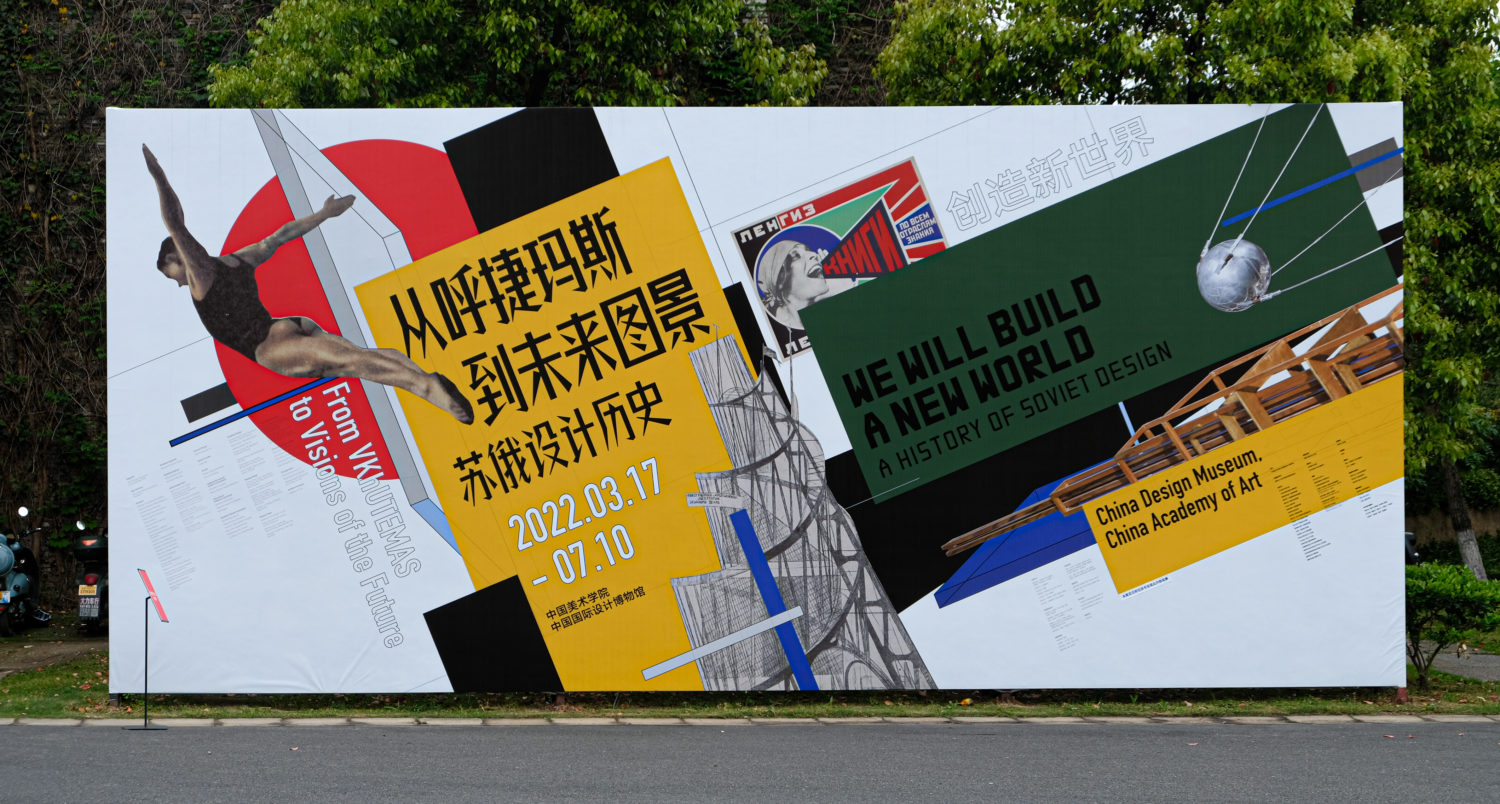
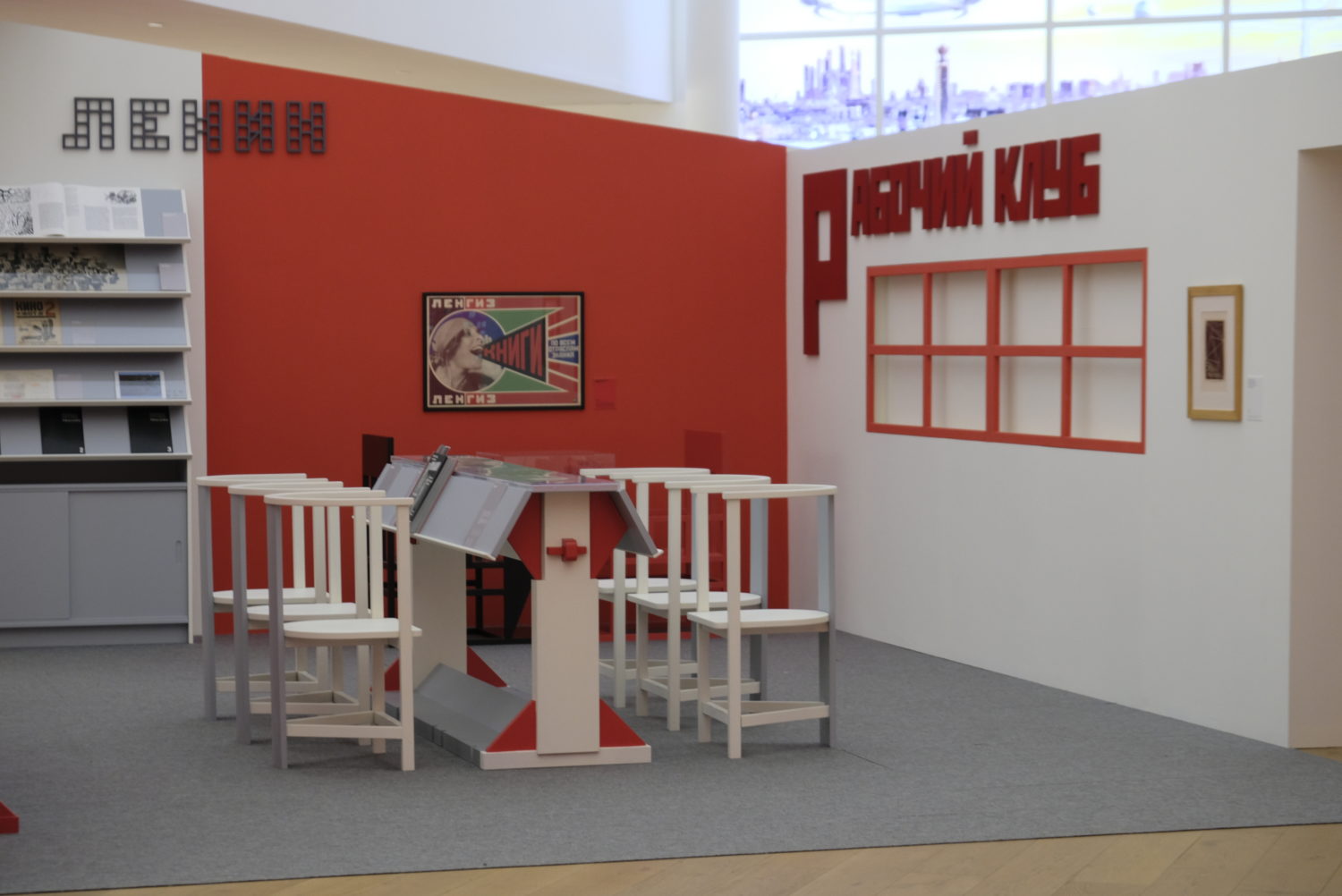
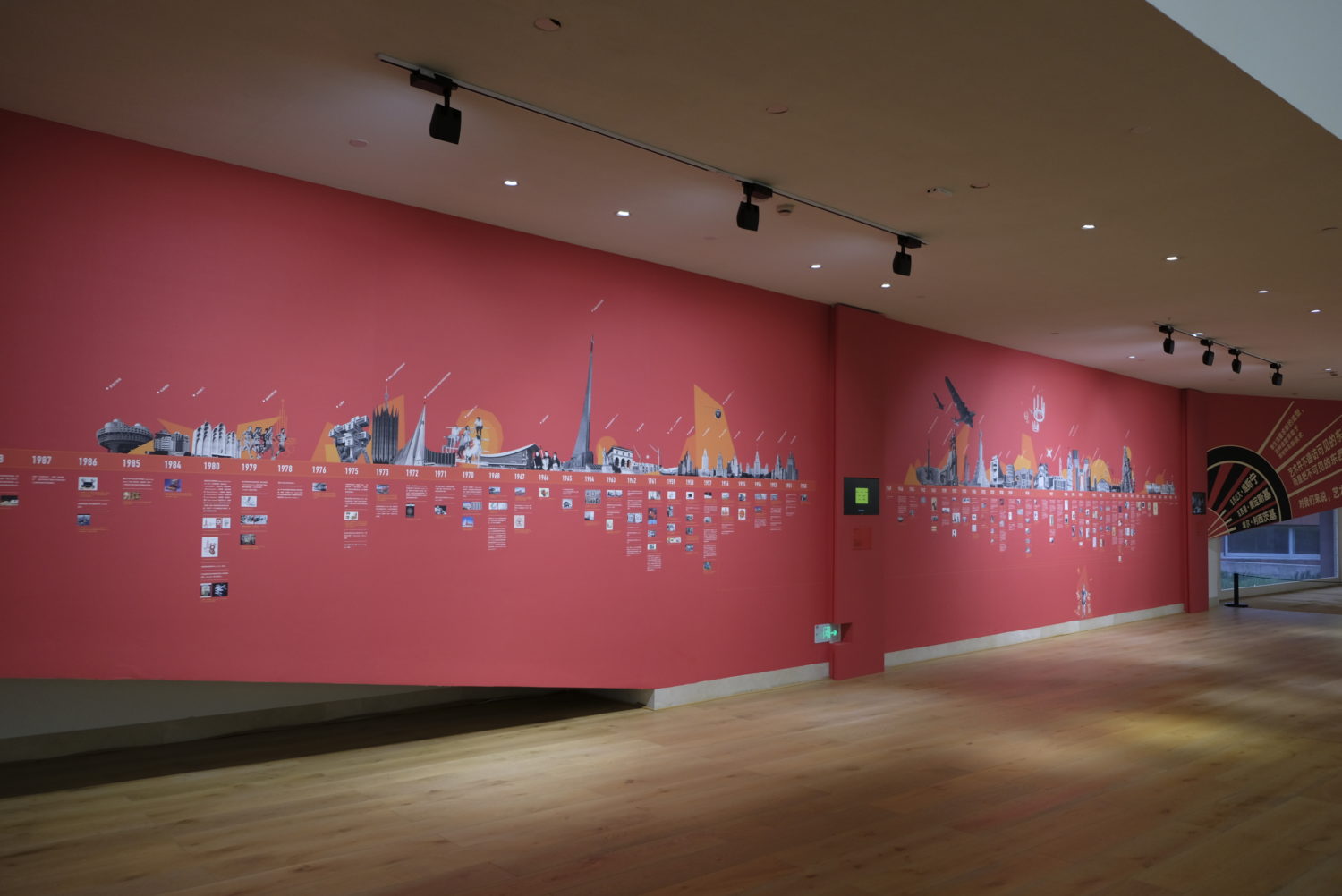
What interested me most was the first part, centred on VKhUTEMAS (ВХУТЕМАС / VKhUTEMAS, the Higher Art and Technical Studios). It presented the institution’s history and some works by its teachers and students, and compared its teaching model with the Bauhaus. My own focus is book design and typography, and of all the exhibits the works of El Lissitzky and Rodchenko attracted me most. At a corner of the first gallery, for example, hung Lissitzky’s signature work, Beat the Whites with the Red Wedge, an intensely symbolic piece that created strong tension with the colour scheme of the whole room. There was also a reconstruction of Rodchenko’s Workers’ Club, including the tables and chairs he designed and periodicals such as LEF.
Marvelling at the creativity of VKhUTEMAS teachers and students, I found myself asking: why are we so unfamiliar with this school, called “the Soviet Bauhaus” and “as famous as the Bauhaus”? So I set out to search for traces of it in China. I should say that I am no expert in design history; I simply took a particular interest in the question and began looking for clues.
Translation and exchange of Soviet and Russian arts
In literature, scholars have already studied Sino-Russian relations in depth—for example Twentieth-Century Sino-Russian Literary Relations (Chen Jianhua, Xuelin Press, 1998), which traces the history of literary exchange between China and Russia and provides a very important reference for studying Sino-Russian design relations.
During the May Fourth period a craze for Russian literature arose, when “a group of brilliant young people fluent in Russian joined the ranks”; Qu Qiubai was one of the most accomplished. He was in the Soviet Union from the end of 1920 to spring 1923, shortly after VKhUTEMAS was founded, so he could have visited it. His travel writings show he toured factories, schools and many other places, but there is no record of the school—perhaps they just missed each other. Notably, though, he met Mayakovsky, who gave him a copy of his 1918 poetry collection Man. This collection is less famous than others designed for him by Lissitzky and Rodchenko, but its cover is an early avant-garde example of purely typographic design.
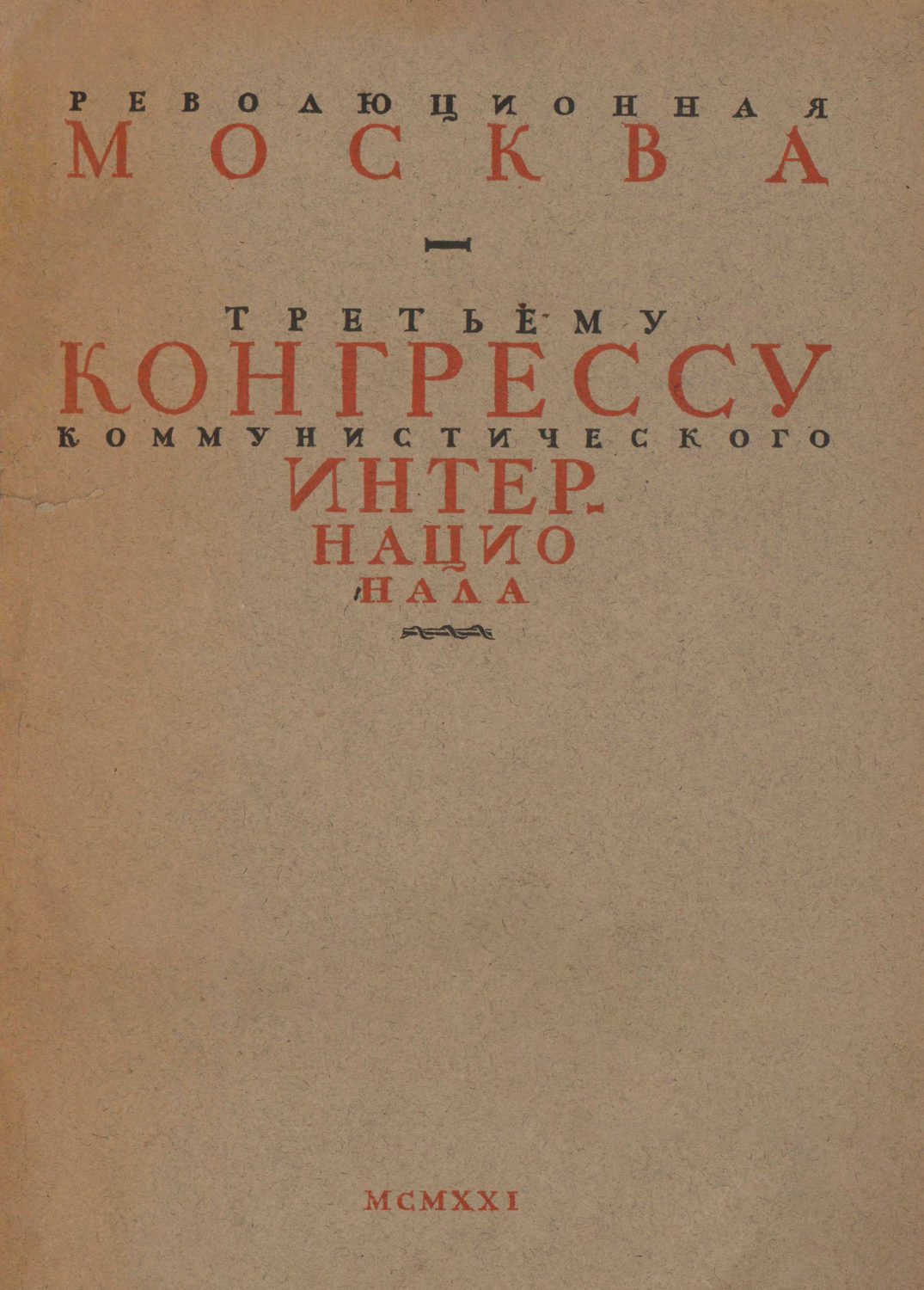
From 22 June to 12 July 1921, the Third Congress of the Communist International was held in the Kremlin in Moscow. Revolutionary Moscow—To the Third Congress of the Communist International, created by VKhUTEMAS teachers and students, was given to delegates. Qu Qiubai was invited to the opening ceremony; we don’t know whether he saw the book.
After returning to China, Qu Qiubai also edited and designed magazines. His 1923 cover for New Youth, for example, did not use type, decorative lettering or prints in the Constructivist style then fashionable in the Soviet Union, but painting and calligraphy.

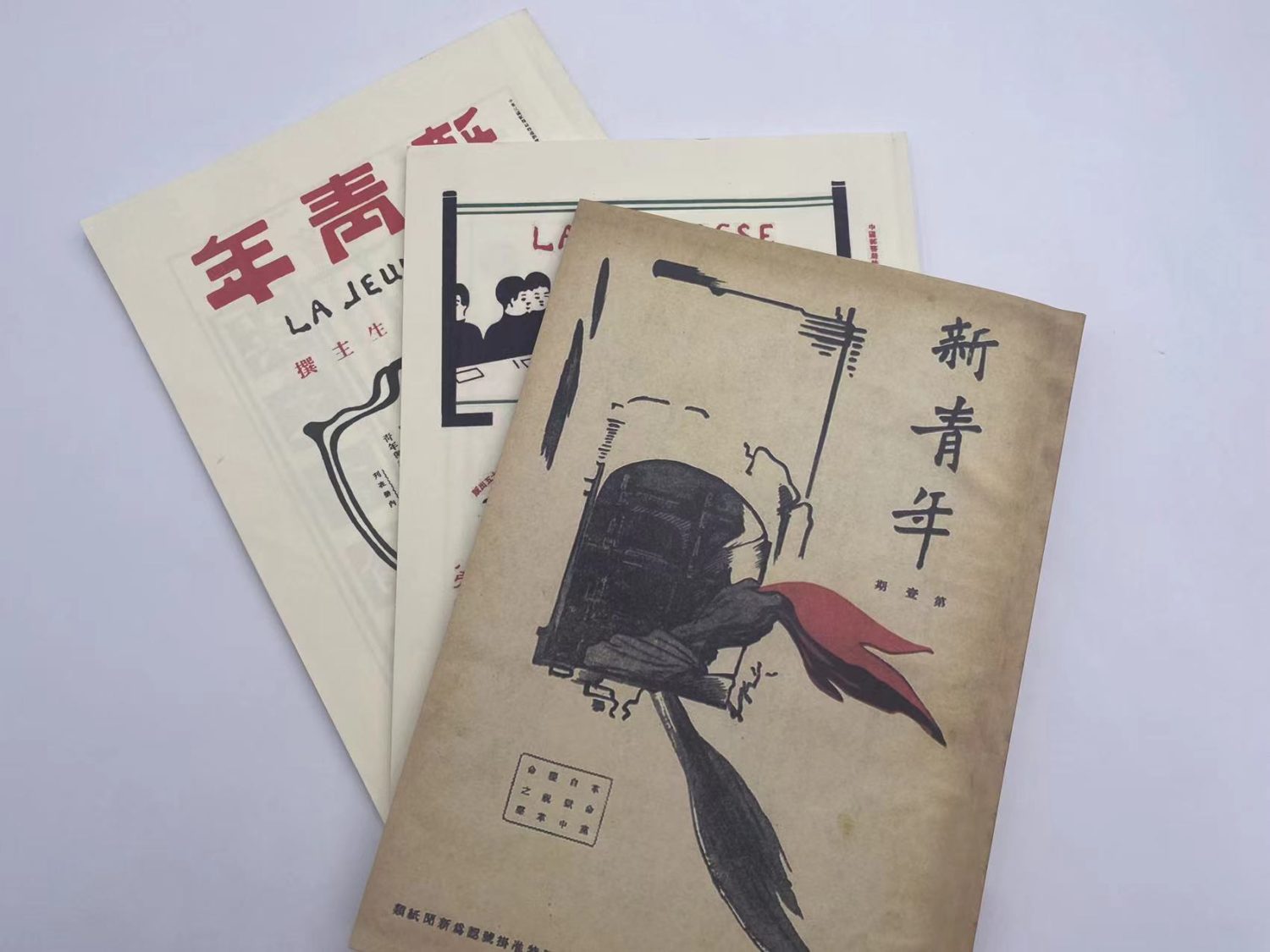
Lu Xun was another leading figure in introducing Soviet and Russian literature and art. Stories from Abroad, translated with Zhou Zuoren and published in 1909, included several works of Russian literature, and he went on to translate many more. Beyond translation, Lu Xun introduced Soviet prints to China through exhibitions and publications, editing Selected New Russian Pictures, Yinyu ji and Soviet Prints.
Selected New Russian Pictures, the fifth title in the first series of Lu Xun’s Yiyuan Zhaohua, completed in February 1930, was the first concentrated introduction of Soviet printmaking to China. On 14 October 1933 Lu Xun held a German and Russian Woodcut Exhibition at Qian’ai Li in Shanghai, and on 2 December an exhibition of Russian and French book illustration at the Japanese YMCA. In March 1934 he edited and published Yinyu ji, containing 59 Soviet prints by artists including Mitrokhin (Д. И. Митрохин), Kravchenko (А. И. Кра́вченко), Favorsky (В. А. Фаворский), Pavlinov (П. Я. Павлинов), Goncharov ( А. Д. Гончаро́в), Pikov (M. Пиков), Mochalov (С. М. Мочалов), Khizhinsky (Л. С. Хижинський), Alexeev (Н. В. Алексеев) and Pozharsky (С. М. Пожарский).
In early 1936 an exhibition of Soviet prints organised by VOKS was held in Nanjing and shown in Shanghai in February. With the help of several people, Zhao Jiabi of the Liangyou Book Company borrowed the exhibits, and Lu Xun edited Soviet Prints, published in June 1936 with 172 prints, including works by Favorsky, Goncharov and Kravchenko. Among these printmakers, Favorsky (1886–1964) was the second rector of VKhUTEMAS; his October 1917, included in Yinyu ji, is one of his signature works, made to commemorate the October Revolution. Pavlinov (1881–1966) taught at VKhUTEMAS, and Goncharov (1903–1979) was a student there.


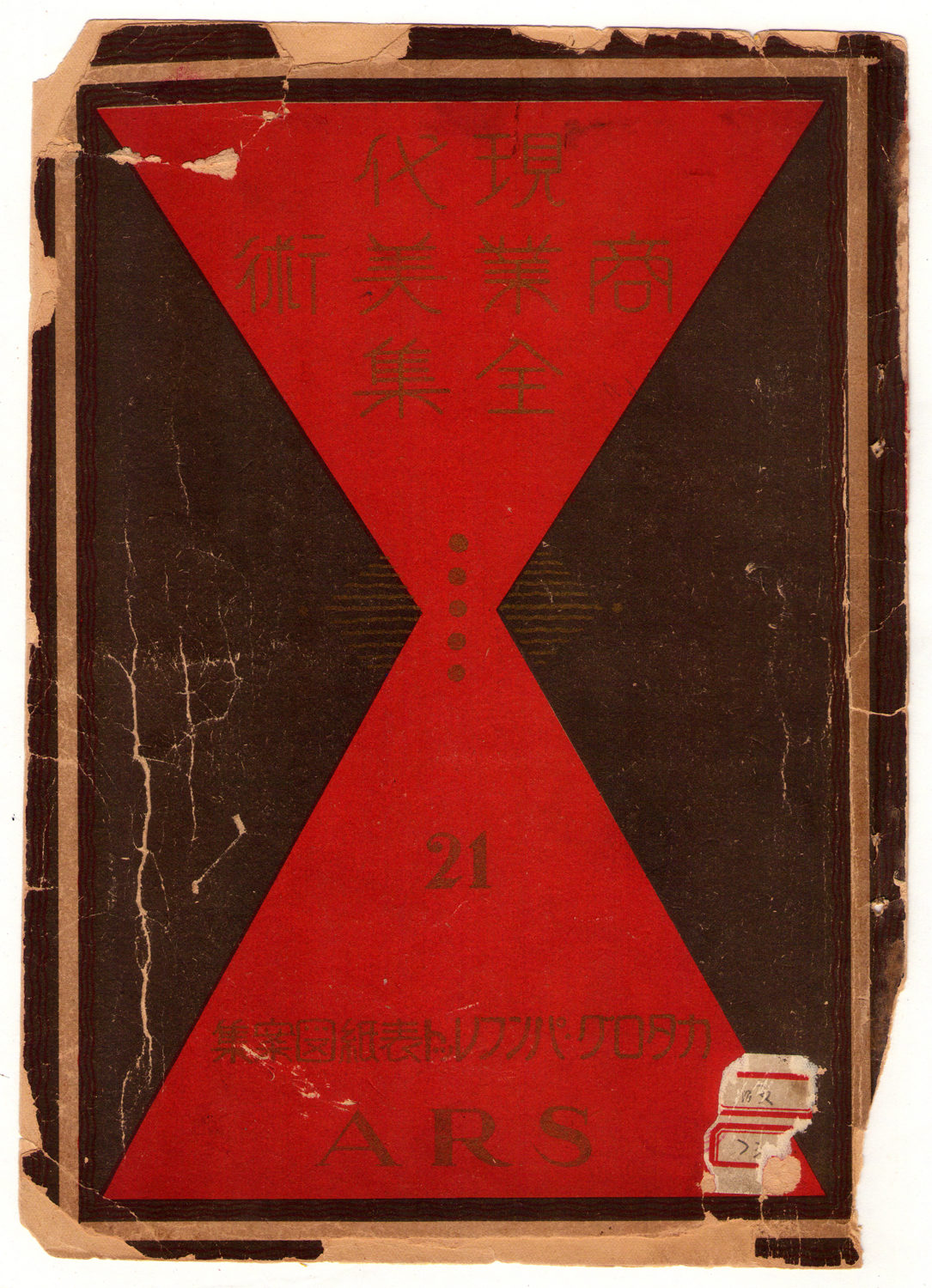
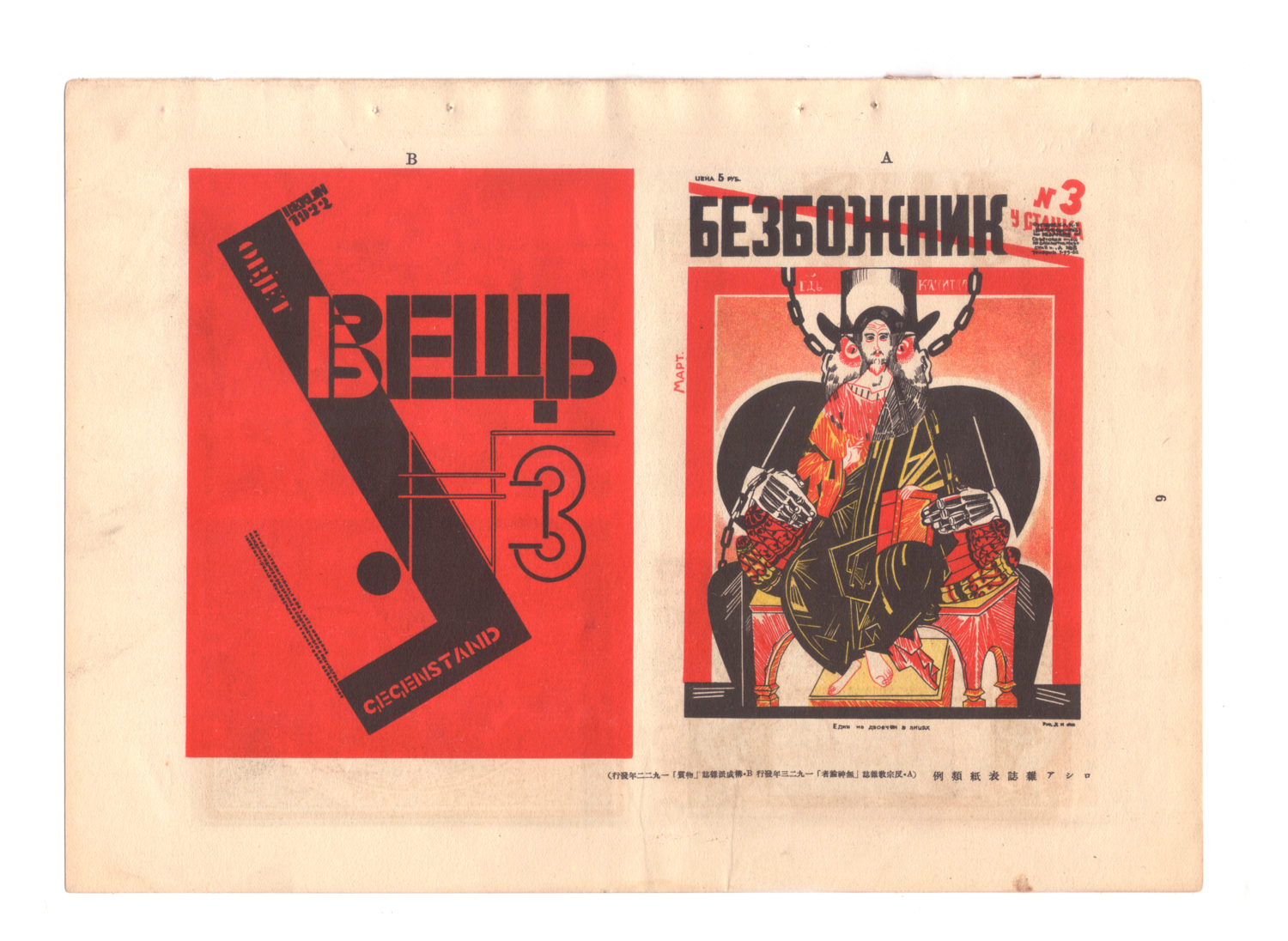
In his “Postscript to Yinyu ji”, Lu Xun wrote: “Because I very much wanted to know the artists’ lives, I asked Brother Jinghua to pass on my request, and the five living in Leningrad all wrote.” Clearly he cared about the artists’ biographies, but with limited sources he could only briefly introduce a few printmakers, since “the woodcut artists in Moscow have not yet sent their autobiographies.” He also found Favorsky’s biography in the Small Soviet Encyclopedia, but it was too brief and did not mention VKhUTEMAS. In his “Preface to Selected New Russian Pictures” he also mentioned: “The poetry collections of modern poets decorated by Rodchenko and Lissitzky are also said to be typical artistic prints, but I have not seen them.” In fact, picture books published in Japan at the time included some Soviet and Russian design: volume 21 of the Complete Collection of Modern Commercial Art, for example, included Lissitzky’s cover for the magazine Veshch and his cover for Mayakovsky’s For the Voice. Such books were sold in Shanghai, and Lu Xun may well have seen them, but since the designers were not credited, he would not have known who designed them.


In designing covers, Lu Xun deliberately used type or designed lettering, combined with elements such as prints. This advanced design sense came from his broad cultivation in art, calligraphy and more. But as a “literati designer”, Lu Xun mainly designed covers for his own books, whereas the professional designer Qian Juntao created a great many works and actively studied all kinds of styles. During the “Russian literature craze”, China published many translations and studies, and Qian Juntao lived through it; his designs include many Soviet and Russian subjects, not only literature but politics, music and art. A few examples:


Left: Literary Weekly, special issue on Soviet and Russian fiction, Shanghai Far East Book Company, designed by Qian Juntao, 1929. Right: Selected Poems by Nikolai Aseev, designed by Rodchenko, 1923
1. Literary Weekly, special issue on Soviet and Russian fiction. The cover clearly imitates Rodchenko’s cover for Nikolai Aseev’s Selected Poems. Both use red lettering as a background with black lettering overprinted in the centre. The difference is that Rodchenko used the sans serif typical of Constructivism, while Qian Juntao used a Song-style decorative lettering of his own.


Left: Impressions of Moscow by Hu Yuzhi, designed by Qian Juntao, New Life Book Company, 1932. Right: Tatlin, Monument to the Third International, 1920
2. Impressions of Moscow. In January 1928 Hu Yuzhi went into exile in France and studied at the Faculty of International Law of the University of Paris. In spring 1931 he returned to China via the Soviet Union and wrote Impressions of Moscow. By the time he toured Moscow, VKhUTEMAS had already closed—another near miss—but the book’s cover clearly shows some connection. The preface says the cover was “based on new Soviet architecture and adapted by Mr Qian Juntao”; this new Soviet architecture is Tatlin’s Monument to the Third International. The frontispiece uses a print, Klinsky’s Mechanised Individual; it is unclear whether it was taken from Lu Xun’s Selected New Russian Pictures or from other Russian sources.
Qian Juntao also designed many other covers on Soviet and Russian subjects, such as A Brief History of Russian Literature, Oriental Fables, Soviet Literary Theory, Sociology of Art, the Small Library of Literary Theory, the Scientific Art Theory series, and series of works by Turgenev, Gorky and Chekhov. Because of the subjects, the designs more or less drew on Soviet and Russian styles; but notably many of these books were translated via Japanese editions, so the designs were influenced more by Japanese design.


Although these have no direct connection with VKhUTEMAS, they do show traces of Constructivism. Qian Juntao not only experimented with new styles in practice but also studied art history fairly systematically and wrote books on art theory. In A History of Modern Western Art, he writes:
In post-revolutionary Soviet Russia, the making of applied art took two directions: one a rebirth of folk art, the other the design of Constructivism. Since the Middle Ages, Russian art had entered the system of Byzantine art, with a great deal of decorative character; but after the Revolution, applied artists abandoned the urban “bourgeois” taste of before the Revolution and, through the inspiration of their own making, discovered rural folk art. This new interaction of folk art became the new feature of post-revolutionary Soviet applied art and spread everywhere. To develop local crafts, the government set up craft schools or schools of decorative art in particular regions to meet the needs and tastes of each nationality. And the subjects of expression changed from the religious to the popular.
The text does not elaborate on “setting up craft schools or schools of decorative art”. Before this passage, he introduces how “in 1919 the German architect Gropius founded the State School of Industrial Art”—that is, the Bauhaus.
In the 1930s and 1940s, besides much Russian literature, China published many books on Soviet politics, economics, culture, art and education. Chapter 5 of A General Survey of Soviet Literature and Art, “Soviet Painting and Architecture”, introduces “pre-revolutionary groups”, “Futurism”, “Constructivism”, “AKhRR” and “art schools”. The section on art schools says:
The main schools, such as the Leningrad Art School and the Moscow School of Painting, Architecture and Sculpture, have been thoroughly reformed. Students now have a say in the choice of professors, plans for new teaching methods, the setting of subjects and the management of school affairs. Students begin with a preparatory course, in which they receive a general introduction to and knowledge of the foundations of all the pictorial arts—drawing, modelling, architectural drawing, sculpture, printing, colour, pattern and so on. Only then do they proceed to specialised study, for example painting, or branches of painting such as stage design, or sculpture, architecture and the various graphic arts.
The “Moscow School of Painting, Architecture and Sculpture” was one of the predecessors of VKhUTEMAS, founded in 1865 and renamed the Second Free Studios in 1918. The “reform” mentioned here is its merger in 1920 with the First Free Studios into the Moscow Higher Art and Technical Studios. The preparatory course described here is the VKhUTEMAS teaching model.
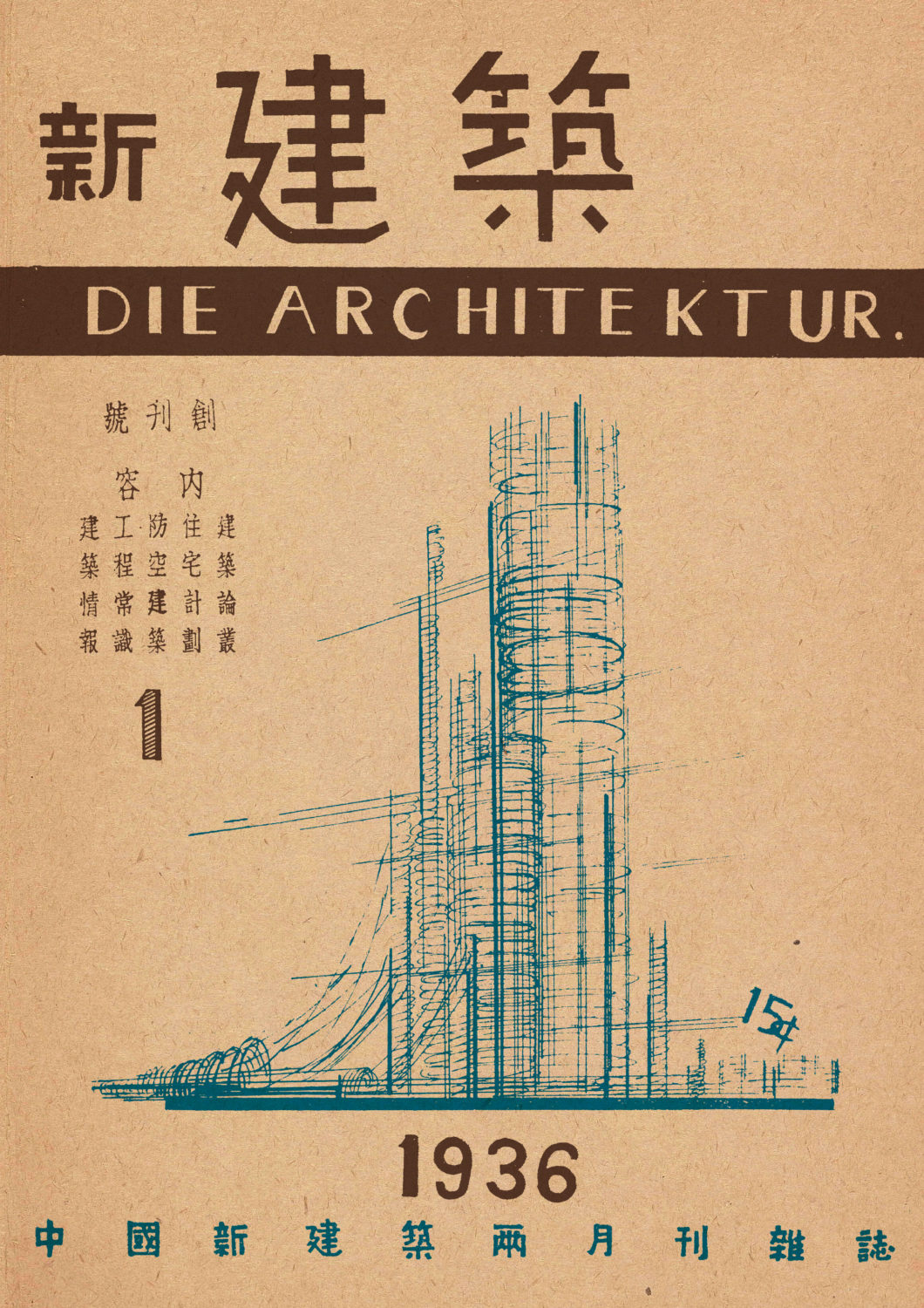
In addition, New Architecture, published in 1936, introduced “Soviet architecture” and used a Constructivist work on the cover of its first issue. But neither mentioned the school. By then, of course, VKhUTEMAS had closed and was viewed critically within the Soviet Union. In the 1950s the Soviet Union sent many experts to China, and their attitude towards VKhUTEMAS can be glimpsed in Soviet Architecture, the lecture notes of the architectural scholar Asevkov at Tsinghua University in 1953:
In 1918, by decree of the Soviet government, the art schools were reorganised and free art studios established. The removal of class and material barriers, the discovery and education of talent, created a surge of new forces from among workers and peasants entering the art schools. In these studios a sharp creative struggle between various schools unfolded. It came down to a struggle between two basic directions: one producing Soviet art of ideological realism, the other the various formalist schools reflecting the disintegration and decay of bourgeois art. This degenerate disguise was cloaked in imitations of revolutionary rhetoric and flaunted extreme nihilism in art and towards the artistic heritage, and part of it penetrated the art schools, distorting art and leading the creative aspirations of Soviet youth astray. Nihilist, formalist ideas first formed in painting and later spread to architecture.
In these notes one can clearly see the Soviet experts’ criticism of the various movements of the 1920s, especially Constructivism. Although the reform of the schools is mentioned, he clearly would not emphasise the existence of VKhUTEMAS.


On the translated name
In the 1960s exchange between China and the Soviet Union broke off. Only in the early 1980s, as relations thawed, did introductions to Soviet and Russian design begin to appear in books and periodicals, mostly brief. In introducing VKhUTEMAS, some used a translated full name, others a transliterated short name, with no consistency.
One of the earlier articles of the 1980s introducing Soviet and Russian design was Chen Zhihua’s “Early Soviet Architectural Thought—with a Discussion of Modern Chinese Architecture”, published as an appendix to his translation of Ginzburg’s Style and Epoch. It mentions the “Higher Art and Technical School” with the Russian abbreviation, and introduces and comments on the school. The book notes that the article was written in February 1980, but I have not found where it was first published. However, in “Notes from the North Window (4)” by Chen Zhihua (Dou Wu) in the third issue of The Architect in 1980, the school is also mentioned, translated as “Higher School of Arts and Crafts”, with no Russian or English given.
In 1982 China Architecture & Building Press published Tong Jun’s Soviet Architecture, which does not introduce VKhUTEMAS; one can only find, in a note on Lissitzky, the line “the following year (1921) he returned to teach at the Moscow Academy of Fine Arts”. Given Lissitzky’s biography, this Moscow Academy of Fine Arts must be VKhUTEMAS.


“We Should Value Research on Russian Avant-Garde Art”, published in 1986, was one of the earlier systematic discussions of Russian avant-garde art in China. Written by Chen Ruilin (Chu Shui) and revised by Zhu Boxiong (Yang Shi), it was published under both names in World Art, the journal of the Central Academy of Fine Arts. It introduced the “National School of Art and Technology”—VKhUTEMAS—compared it with the Bauhaus, called it the matrix of new Soviet ideas of craft and technology, and stressed its importance. No Russian or English was given:
In 1920 the Soviet Union established the “National School of Art and Technology”. In art, the Russian avant-garde of those years could be felt everywhere. Its nature was close to the German Bauhaus, and its main research aim was likewise the transformation of architectural function and the manufacture of material products. In a sense, it was the matrix of later new Soviet ideas of craft and technology.

“We Should Value Research on Russian Avant-Garde Art”, by Yang Shi and Chu Shui, World Art, 1986, no. 4
Technical Aesthetics and the Foundations of Artistic Design, by Shpara, was based on the course “Principles of Artistic Design” taught from 1965 at the Kharkiv Institute of Municipal Construction Engineering, and first published in 1978. Two Chinese publishers released translations almost simultaneously in 1986, with slightly different titles. The book briefly outlines Soviet design history. The China Machine Press edition uses a full name, “State Moscow Higher Art-Technical Institution”, with the Russian abbreviation Вхутемас and no transliteration; the Scientific and Technical Documentation Press edition uses “State Higher School of Fine Arts and Crafts Practice”, with no Russian or English.
China Machine Press edition: “An important historical event in developing and raising the culture of industrial art was V. I. Lenin’s signing in 1920 of the decree establishing the State Moscow Higher Art-Technical Institution (Вхутемас). The decree stated that Вхутемас is a higher specialised art school whose purpose is to train highly qualified art specialists for industry, as well as instructors and leaders for vocational and technical education.”
Scientific and Technical Documentation Press edition: “A historically important event in developing and raising the culture of industrial art was Lenin’s personal signing in 1920 of the decree establishing the State Higher School of Fine Arts and Crafts Practice. The decree said that this was a specialised higher art school whose purpose was to train art masters—senior technicians—for industry, as well as teachers and leaders for vocational and technical education.”


In his translation Soviet Architecture (1990) and his Soviet Avant-Garde Architecture (1994), Lü Fuxun translated ВХУТЕМАС as “Higher Art and Technical Studios” and gave the Russian abbreviation.
In the “Author’s Biography” in the 1991 reprint of Style and Epoch, Chen Zhihua mentioned the “Higher Art and Technical Institute” when introducing Ginzburg, giving the Russian abbreviation Вхутемас without transliterating it. Interestingly, in the translator’s afterword he transliterated “composition” and “construction”—as gongboxiqi and gongshitelukeqi.


The appearance of the transliteration Hujiemasi
In “Model Teaching at the Moscow Architectural Institute”, translated by Han Linfei in 1998, ВХУТЕМАС was rendered as Hujiemasi (呼捷玛斯). This is the earliest source I have found using this transliteration. It notes that the school was a “birthplace of the modern architecture movement” as famous as the Bauhaus, but gives no further detail:
The Moscow Architectural Institute can trace its origins to the “Soviet Higher Art and Technical Creative Studios—VKhUTEMAS (BXYTEMAC)” founded in 1920. The studios were a birthplace of the modern architecture movement as famous as the German Bauhaus, and held an important place in the modern architecture movement of the 1920s. Their theory of “spatial-volumetric composition” is significant in modern architectural education.
According to Han Linfei’s 2020 article “Commemorating 100 Years of VKhUTEMAS (1920–2020): Its Place and Contribution in the Soviet Avant-Garde Art Movement”, “the translated name Hujiemasi was first proposed by the author in the 2005 article ‘VKhUTEMAS: The Higher Art and Technical Creative Studios of the Former Soviet Union—A Stifled Pioneer of Modern Architectural Thought’, and has since been used almost uniformly in academia.” As shown above, Han Linfei in fact proposed this transliteration in 1998.

“Model Teaching at the Moscow Architectural Institute” by B. A. Plishkin, trans. Han Linfei, World Architecture Review, 1998, no. 3
A History of Russian and Soviet Art, published in 2000—according to the author, written in the late 1980s and published in Taiwan in 1990—is a fairly comprehensive history of Russian art. It mentions the school several times, with slightly different names in its introductions of different artists, including “Moscow Higher Art and Technical Institute” and “Higher Institute of Arts and Crafts”.
Russian Avant-Garde Art, published in 2001, mentions and introduces the school several times, with the names “State Higher Art-Technical School”, “Higher Technical and Art Studios” and “Higher Art and Technical Studios”, and no Russian or English. It includes a “Chronology of Russian Avant-Garde Art (1703–1991)”, which lists under 1920 “founding of the Moscow Higher Art and Technical Studios” and under 1926 “the Moscow Higher School of Fine Arts and Crafts reorganised as the Moscow Higher Institute of Fine Arts and Crafts”—inconsistent again. The book quotes Naum Gabo (1890–1977) describing these “Higher Technical and Art Studios”:
This institution was an almost entirely autonomous new kind of artistic body, engaged in both teaching and research. The studios not only provided specialised art teaching (they had seven faculties: painting, sculpture, architecture, ceramics, metalwork and woodwork, textiles and printing), but also held large discussion meetings and offered courses of independent research by the students themselves, open to all… These discussions had a far greater effect on the later development of Constructivist art than any classroom teaching.”
In 2002 an exhibition, Cultivating Architects’ Creativity: From the Soviet Higher Art and Technical Creative Studios to the Moscow Architectural Institute, was held in Beijing, with a catalogue that compared VKhUTEMAS with the Bauhaus and gave the full Russian name and abbreviation. Strangely, the book formally published in 2007 removed this content, and used not Hujiemasi but “Higher Art and Technical Creative Studios”.
A History of World Graphic Design, published in 2002, mentions “Vkhutemas” (the Latin transliteration of the abbreviation), rendered as Fukehutemasi:
In 1918, avant-garde artists and designers in Moscow also founded a group, “the free state art studios”, abbreviated as Vkhutemas, which sought to unite all the arts and design—painting, sculpture, architecture, crafts, industrial design, graphic design and more—with great comprehensiveness and breadth…
In “Chronology of Soviet Avant-Garde Architecture and Art: Architecture, Fine Arts, Politics, Society and Developments Elsewhere”, compiled and translated by Huang Juzheng in 2004, the author notes that it is based on Takeshi Goto’s “Chronology of Soviet Avant-Garde Architecture and Art 1900–1939” (Kenchiku Bunka, December 1994). Under “Architecture and Fine Arts” for 1920 it lists “founding of the State Higher Art and Technical Institute (Vkhutemas)”, with English; and in the entry on its predecessor SVOMAS (State Free Art Studios), it mentions Hujiemasi without English or Russian:
SVOMAS (State Free Art Studios): The Moscow School of Painting, Sculpture and Architecture and the Stroganov School of Applied Art were closed after the Revolution and reorganised as the State Free Art Studios, soon renamed VKhUTEMAS, and finally the Moscow Architectural Institute.


In “VKhUTEMAS: The Higher Art and Technical Creative Studios of the Former Soviet Union—A Stifled Pioneer of Modern Architectural Thought”, written by Han Linfei in 2005, ВХУТЕМАС was translated as Hujiemasi, and the history of VKhUTEMAS was traced and introduced. It is the earliest detailed introduction to VKhUTEMAS I have found.

“VKhUTEMAS: The Higher Art and Technical Creative Studios of the Former Soviet Union—A Stifled Pioneer of Modern Architectural Thought”, Han Linfei, World Architecture, 2005
In Pioneers of Modern Typography, published in Chinese in 2006, the school is mentioned in the introduction of Rodchenko and translated as Fuketaimusi Art School, with no English or Russian. In Design, the Struggle for Utopia: Rodchenko, Lissitzky and Moholy-Nagy (1917–1946), also 2006, it is translated as Fukutemasi Design Institute, with English but no Russian. In World History of Design, 2006, it is translated as Moscow Higher Art and Technical Institute, with the English abbreviation but no Russian.
This brief and incomplete survey shows that, for various complex reasons, it was not until 2005 that a fairly detailed introduction to this school appeared in China. And, as the saying goes, “if names are not correct, language will not be in accordance with the truth of things”—over decades the school has been given many names. Finally, let us look again at the school’s name and its translations:
- Full Russian name: Высшие художественно-технические мастерские
- Russian abbreviation: ВХУТЕМАС
- English: Higher Art and Technical Studios
- Latin transliteration of the abbreviation: VKhUTEMAS
- Full Chinese name: 高等艺术与技术工作室
- Chinese transliteration of the abbreviation: 呼捷玛斯 (Hujiemasi)
According to the Handbook of Chinese Renderings of Russian Names (Commercial Press), ВХУТЕМАС corresponds to Fuhujiemasi (弗胡捷马斯). Hujiemasi drops the first consonant, В (fu). Some scholars also point out that 玛 (ma) is used for women’s names: if rendered as a woman’s name, 玛 should be paired not with 斯 (si) but with 丝; if as a man’s name, 斯 should be paired with 马. But for an institution, could combining male and female renderings be seen as a symbol of gender equality?
Compared with the five-character Fuhujiemasi, the four-character Hujiemasi rolls off the tongue more easily and so spreads more readily, and it has gradually become the accepted name in academia. Let us hope that from now on, the name is correct and the language follows.
References (in Chinese)
- 鲁迅. 新俄画选(《艺苑朝华》第一期第五辑). 光华书局, 1930
- 鲁迅. 引玉集. 三闲书屋, 1934
- 鲁迅. 苏联版画集. 上海良友图书印刷公司, 1936
- 北原义雄. 现代商业美术全集·第廿一卷.アルス, 1929
- 钱君匋. 西洋近代美术史. 永祥印书馆, 1946
- 弗里曼. 苏俄文艺总论. 克己译. 国际书局, 1933
- 新建筑[J]. 1936(01), 1937(04)
- 文艺新潮[J]. 1938(01)
- 瞿秋白. 瞿秋白文集. 人民文学出版社, 1954
- 耶·安·阿谢甫可夫. 苏维埃建筑. 杨秋华, 刘鸿滨译. 清华大学, 1954
- 陈志华. 北窗杂记(四). 建筑师[J],1980(03)
- 童寯. 苏联建筑. 中国建筑工业出版社, 1982
- 技术美学. 安徽科学技术出版社, 1984
- 邓焱. 技术美学思想与「新建筑」. 新建筑[J], 1985
- 王世德. 美学的新分支学科——技术美学——兼论设计美学、劳动生产美学、商品广告美学. 天府新论[J], 1986
- 羊石, 楚水. 应该重视对俄国先锋派美术的研究. 世界美术[J], 1986
- П. Е. Шпара. Техническая эстетика и основы художественного конструирования. Вища школа, 1978
- П. Е. Шпара. 技术美学和艺术设计原理. 陈仲实, 朱立人, 杨慎译. 陈仲实校. 科学技术文献出版社, 1986
- П. Е. Шпара. 技术美学和艺术设计基础. 李荫成译. 曹本富校. 机械工业出版社, 1986
- A. B. 利亚布申, 谢什金娜. 苏维埃建筑. 吕富珣译. 刘鸿滨校. 中国建筑工业出版社, 1990
- 钱君匋. 钱君匋装帧艺术. 商务印书馆(香港)有限公司, 1992
- 吕富珣. 苏联前卫建筑. 中国建筑工业出版社, 1994
- 金兹堡. 风格与时代. 陈志华译. 中国建筑工业出版社, 1991
- B. A. 普利什肯. 莫斯科建筑学院模型教学. 韩林飞译. 世界建筑导报[J], 1998(03):36-39
- 陈建华. 20 世纪中俄文学关系[M]. 学林出版社, 1998.
- 奚静之. 俄罗斯苏联美术史. 天津人民美术出版社, 2000
- 陈瑞林, 吕富珣. 俄罗斯先锋派艺术. 广西美术出版社, 2001
- 韩林飞. 建筑师创造力的培养:从苏联高等艺术与技术创作工作室到莫斯科建筑学院. 2002
- 金兹堡. 风格与时代. 陈志华译. 陕西师范大学出版社, 2004
- 韩林飞, B.A. 普利什肯, 霍小平. 建筑师创造力的培养:从苏联高等艺术与技术创作工作室到莫斯科建筑学院. 中国建筑工业出版社, 2007
- 王受之. 世界平面设计史. 中国青年出版社, 2002
- 黄居正. 苏联前卫建筑·艺术相关年表 建筑·美术艺术各领域·政治·社会其他地域的动向.建筑师[J],2004(12):18-30
- 韩林飞. 呼捷玛斯:前苏联高等艺术与技术创作工作室——被扼杀的现代建筑思想先驱. 世界建筑[J],2005(06):92-94
- 赫伯特·斯潘塞. 现代版式设计先驱. 王毅译. 上海美术出版社, 2006
- 高颖. 包豪斯与苏维埃[D]. 天津大学建筑学院, 2009
- 李少波. 构成主义在中国——以民国期间的封面设计为例. 装饰[J], 2011(10):40-47
- 邱妍. 呼捷玛斯在构成与造型领域的历史价值以及对中国当代建筑造型教育的启示[D]. 北京交通大学, 2012
- 高爱香, 郑立君. 20世纪前期俄国构成主义设计运动在中国的传播与影响. 艺术百家[J], 2013 (5):201-204
- 刘运峰. 鲁迅先生和《苏联版画集》.世界文化[J],2017(09):30-31
- 王任翔. 呼捷玛斯与包豪斯基础教学的内容及其体系比较研究[D]. 北京交通大学, 2015
- 维克多·马格林. 设计,为乌托邦而奋斗——罗德琴科、利西茨基和莫霍利-纳吉(1917-1946). 张馥玫, 张长征, 朱橙译. 北京大学出版社, 2018
- 邓吕洁. 包豪斯和呼捷玛斯:相交的平行线. 家具与室内装饰[J], 2019(10):40-43
- 维克多·马格林. 世界设计史 2. 陈红玉等译. 江苏凤凰美术出版社, 2020
- 韩林飞. 纪念呼捷玛斯一百年(1920-2020):呼捷玛斯在苏俄前卫艺术运动中的地位与贡献. 世界建筑导报[J], 2020(196): 50-55
- 浦安原. 呼捷玛斯一百年:早期现代主义图景残缺的一角. 艺术设计研究[J],2020(06):068-072
- 浦安原, 张磊. 呼捷玛斯悖论:构成主义的国家身份和功能再造. 艺术设计研究[J],2021(04):070-078
- 新华通讯社译名室. 俄语姓名译名手册(第 2 版). 商务印书馆, 2021
- Margit Rowell. 构成主义书籍设计: 塑造无产阶级意识. yy 译. 院外(公众号). 2021
- 娜塔莉娅·阿达斯金娜. 呼捷玛斯在俄罗斯先锋派艺术中的地位. 罗佳洋译. 院外(公众号). 2021
- The Great Utopia: The Russian and Soviet Avant-Garde, 1915-1932. Guggenheim Museum, 1992
- Rowell, Margit. The Russian avant-garde book 1910-1934. The Museum of Modern Art, 2002
- Avant-Garde and Propaganda: Soviet Books and Magazines in the Archivo Lafuente 1913-1941. La Fabrica, 2020
- Anna Bokov, Avant-Garde as Method: Vkhutemas and the Pedagogy of Space, 1920 -1930, Park Books, 2020